
East Idaho News
@eastidnews·585K subscribers·7.7K videos
Reporter plunges into freezing Snake River waters
Posted
January 16, 2019
Views
525
Likes
11
Engagement
2.10%
January 16, 2019
525
11
2.10%
Every word spoken in this episode is indexed. Type any phrase to jump straight to the moment it was said.
Type any word or phrase that may have been spoken. Click a result to seek the player to that exact moment.
Try a name, a topic, or a quoted line
 2:42Now Playing
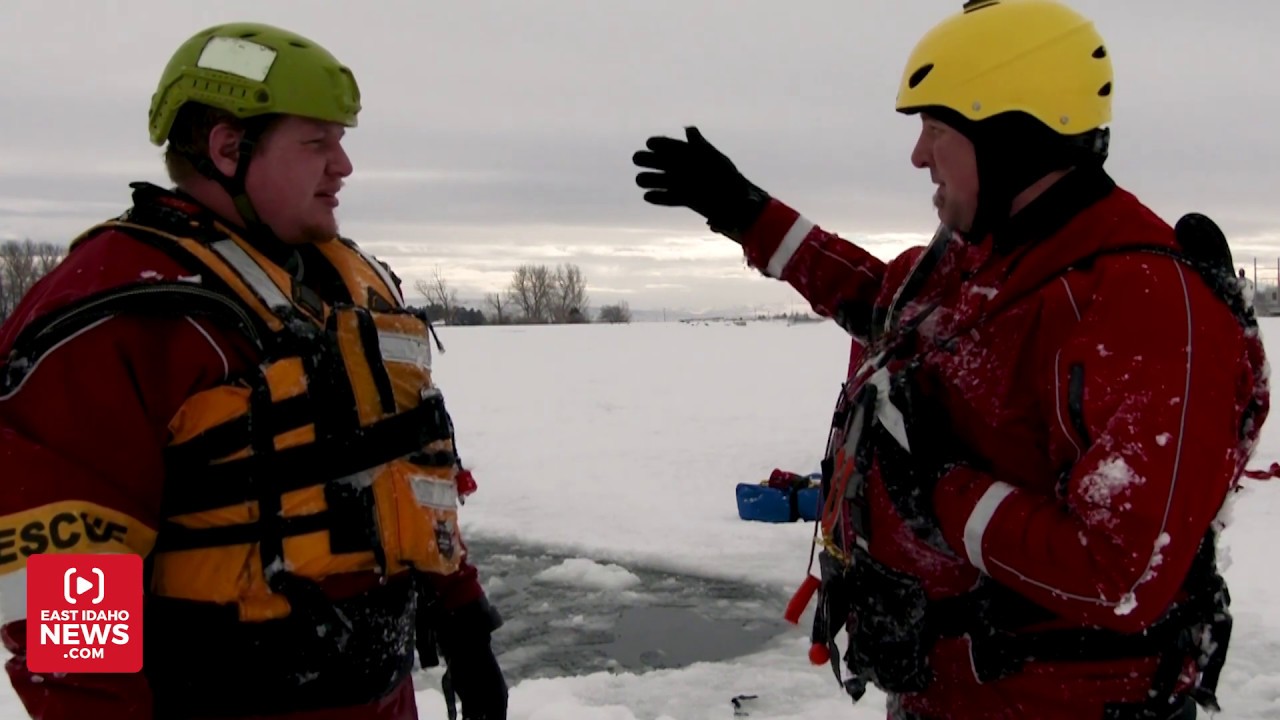
IDAHO FALLS — An EastIdahoNews.com reporter went into freezing water Tuesday, prompting rescue workers to spring into action.
But don’t worry. It was all a training exercise, and that reporter was me. We were at the Gem State Dam, and I was “rescued” by the Idaho Falls Fire Department and Bonneville County Sheriff’s Office.
“We get half a dozen calls every year where people fall through the ice or people’s pets fall through the ice, (so) we come out here, and we practice and get all of our equipment ready and (practice) how to effect a rescue safely,” Idaho Falls Fire Department Capt. Ryan Carlson said.
I got to participate in the training exercise.
Once I changed into a dry suit, I jumped into the frozen waters, where I was then instructed to try to save myself. After a couple of attempts, I pulled myself out.
Carlson said the majority of calls they receive involving someone falling through ice is because that person’s pet fell through the ice, and the owner tried to rescue it.
“You can’t tell how thick the ice is by looking at the surface. Ice forms from the bottom down. It looks the same all across the top. We have good ice here, but you go out 100 yards, you may only have an inch or two of ice,” he explained.
After pulling myself out, I got right back in and tried to swim across the section cut out of the ice for the training exercise to try to experience what it might be like for someone who actually had fallen through the ice.
It was exhausting.
To be fair, I’m not in the best shape, but I also had a life jacket to keep me from sinking and a dry suit to keep me from freezing.
Carlson said once you fall through the ice, you have one minute to catch your breath. After that, you’ve got about 10 minutes to get yourself out before your energy runs out. Overall, the longest a person can survive on the surface of the water is an hour.
“As bad as it sounds, we tell people to freeze their arms to the ice, so that way they’re still on the surface by the time we get there, and there’s a high likelihood we could get them out,” he said.
He cautioned people who are not familiar with being out on ice to stay off it.
Though I was completely safe, it was still an eye-opening experience. I concur with Carlson: Stay off the ice unless you know what you’re doing.
Sentinel Indexing in Progress
Metadata and chapters are available. Claim extraction for this episode is pending.
All video content is delivered via YouTube embedded players in accordance with the YouTube Terms of Service. Sentinel provides research tools that promote discovery and accountability across political media.