Elan Show
@elanshowofficial·28.6K subscribers·316 videos
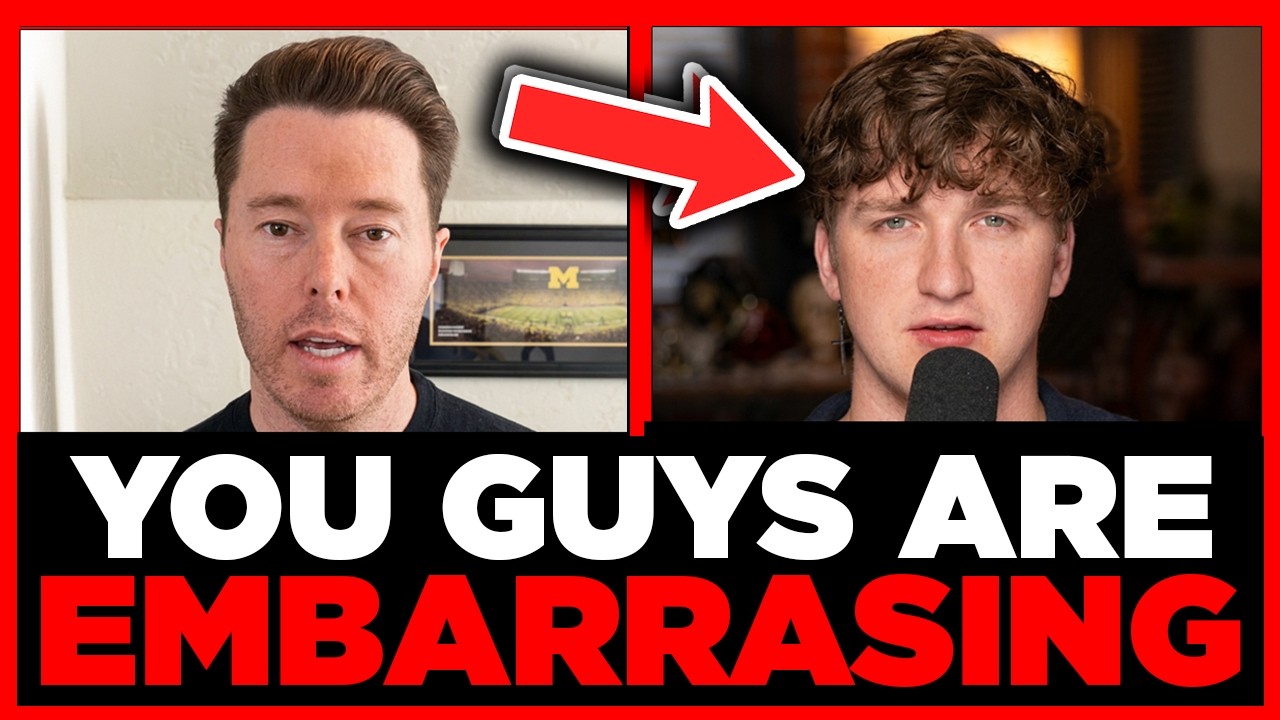
MAGA Supporter STUTTERS as Destiny EXPOSES Truth Social Posts They Didn't Even Know Existed
Posted
March 18, 2026
Views
5,630
Likes
211
Comments
83
Engagement
March 18, 2026
5,630
211
83
5.22%
Every word spoken in this episode is indexed. Type any phrase to jump straight to the moment it was said.
Type any word or phrase that may have been spoken. Click a result to seek the player to that exact moment.
Try a name, a topic, or a quoted line
 15:11Now Playing
In this intense political debate, a liberal and conservative go head-to-head over some of the most controversial issues in American politics today. The discussion centers on presidential authority, military deployment on U.S. soil, states' rights, and whether recent executive actions cross the line into authoritarianism.
The debate begins with a fundamental question: what defines fascism, and do current political leaders exhibit authoritarian tendencies? The conversation quickly escalates as the participants tackle the use of National Guard troops for domestic law enforcement, a historically unprecedented move that raises serious constitutional questions.
One of the most explosive moments comes when the liberal debater confronts the conservative about public statements directing the Attorney General to prosecute political opponents, including Leticia James, James Comey, and John Bolton. The conservative initially expresses disbelief, asking "Did he really though?" before being presented with evidence that these directives were posted publicly on social media. This moment exposes a critical gap in awareness about publicly documented actions.
The debate also explores the hypocrisy around states' rights, a principle conservatives have historically championed. The liberal asks a pointed hypothetical: would conservatives support a Democratic president deploying military forces to Texas against the governor's will? The conservative's answer, loaded with qualifiers about crime crises and states "not doing their job," reveals the conditional nature of these principles when political convenience is at stake.
Immigration enforcement, ICE operations, and sanctuary city policies are dissected in detail. The conversation examines whether local governments have an obligation to cooperate with federal authorities, and whether resistance to federal immigration enforcement constitutes insurrection. The Abrego Garcia deportation case is discussed as an example of chaotic policy implementation.
The debate takes a fascinating turn when discussing COVID mandates and lockdowns. The conservative attempts to blame certain political figures for 2020 lockdowns before catching himself and acknowledging who was actually president during that period. This self-correction becomes a teaching moment about historical revisionism.
Perhaps the most devastating exchange involves the conspiracy theory that one administration controlled the Department of Justice to protect family members. The liberal systematically dismantles this argument by pointing out the appointment of special prosecutors, Republican congressional investigations, and actual indictments that occurred. The logic is clear: if someone was controlling the DOJ for protection, why would there be independent investigations and criminal charges?
The debate culminates in a discussion about prosecutorial independence and the dangerous precedent of political leaders publicly calling for investigations of opponents. This isn't behind-closed-doors pressure; these are public statements that fundamentally threaten the separation of powers and the rule of law.
By the end of the exchange, one participant literally admits to being "lost for words" and having "lost my train of thought." This moment of speechlessness speaks volumes about what happens when narrative meets documented facts, when talking points collide with reality, and when assumptions are challenged with evidence.
This debate offers valuable insights into how Americans with different political perspectives interpret the same events, how partisan narratives shape understanding of facts, and how information gaps can lead to defending positions without full knowledge of the underlying details.
⭐️Fair Use Disclaimer:
This video may contain copyrighted material the use of which has not always been specifically authorized by the copyright owner. We are making such material available for purposes of criticism, comment, news reporting, teaching, scholarship, or research. We believe this constitutes a 'fair use' of any such copyrighted material as provided for in section 107 of the US Copyright Law.
Content Context: The videos on this channel may explore unverified information or theories gathered from public sources and media reports. They are intended for educational and informational purposes only and should not be interpreted as confirmed facts.
Intent: Elan Show does not seek to discredit or defame any individuals, organizations, or groups. The goal is to promote thoughtful dialogue and critical analysis.
Sentinel Indexing in Progress
Metadata and chapters are available. Claim extraction for this episode is pending.
All video content is delivered via YouTube embedded players in accordance with the YouTube Terms of Service. Sentinel provides research tools that promote discovery and accountability across political media.