Farron Cousins
@FarronBalanced·1M subscribers·9.1K videos
Republican Bill Would Make Libraries Virtually Illegal In Arkansas
Posted
January 3, 2024
Views
79,998
Likes
7,516
Comments
1,339
Engagement
January 3, 2024
79,998
7,516
1,339
11.07%
Every word spoken in this episode is indexed. Type any phrase to jump straight to the moment it was said.
Type any word or phrase that may have been spoken. Click a result to seek the player to that exact moment.
Try a name, a topic, or a quoted line
 5:18Now Playing
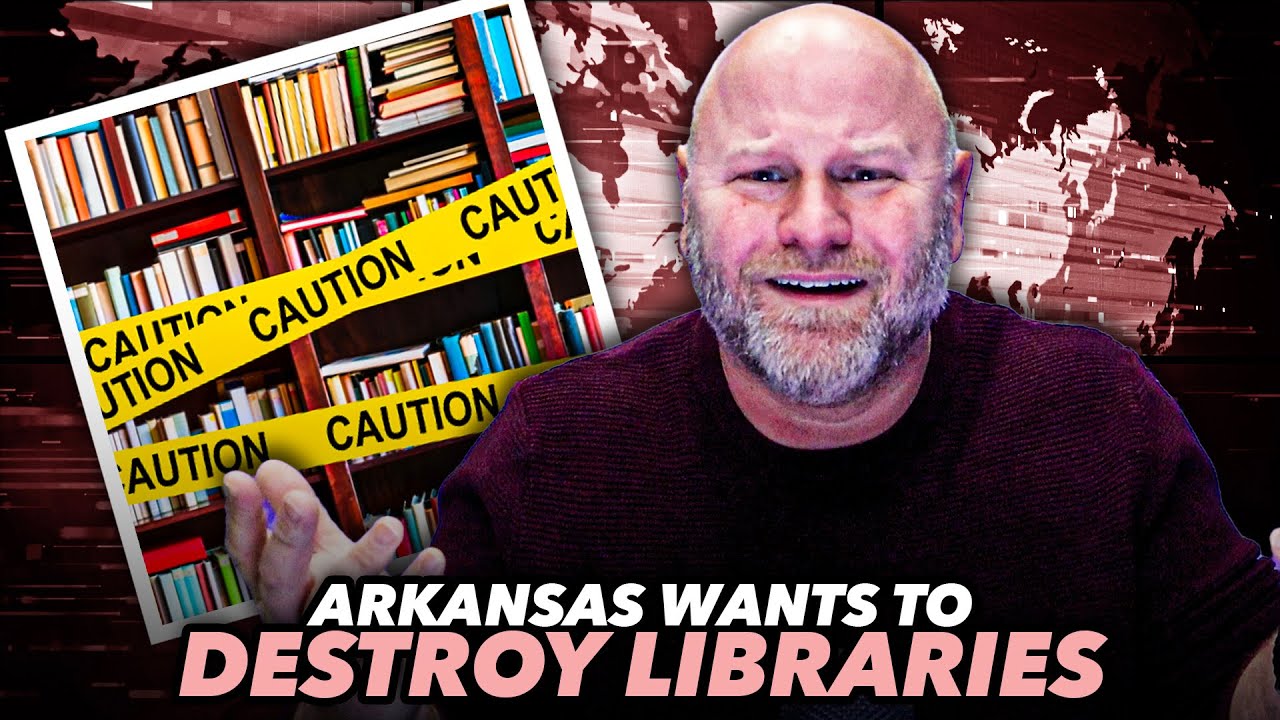
Republicans in Arkansas are pushing legislation that would make it easy for parents to press criminal charges against librarians for loaning books to students that parents don't feel are appropriate. The bill would also target librarians who "indoctrinate" children, but the law is so vaguely written that they don't tell us what the terms "indoctrinate," "obscene," or "harmful to minors" actually mean. Farron Cousins explains what's happening.
Listen to our videos in an audio format by subscribing to our podcast
Don't forget to like, comment, and share! And subscribe to stay connected!
Connect with Farron on Twitter
*This transcript was auto-generated. Please excuse any typos.
Last year, the state of Arkansas passed two separate laws signed. Of course, by their one year in. At that point, she had just been freshly sworn in. Governor Sarah Huckabee Sanders, who really has no business running a state at all. Her first year was just mired in controversy after controversy. She didn't do much for the state, but she did manage to sign these two laws that essentially make libraries and librarians almost illegal. Here's these two pieces of legislation. One of them is Act 3 7 2, which creates criminal liability for librarians who distribute content that some consider quote, obscene or quote harmful to minors. Two terms that the law does not define, and put the availability of challenge books in the hands of elected officials. The second piece of legislation was called the Learns Act, and that one prohibits indoctrination of children in schools, but does not define the term.
Those who oppose indoctrination in libraries and classrooms often cite LGBTQ plus topics and systemic racism as the information they do not want children to have. Now, last year, a judge in Arkansas did put the implementation of parts of these laws on hold because immediately following their passage, they were challenged in court and the judge said, eh, let me put it on hold. I'm, I'm not getting rid of it. I'm just gonna put it on hold. So if these full laws go into effect this year, as they are expected to do, any parent in the state of Arkansas can say, Hey, this librarian lent my child a book that I find obscene, therefore criminally prosecute this librarian. Send them to jail. Because I believe this book is obscene. And because the law, as I said, does not define what obscene means, it does not, uh, define what harmful to minors means.
It doesn't define what indoctrination means. The vagueness of that law would work against these librarians who would likely be sent to criminal trial. But it is at that point where the silver lining emerges because you'll see the vagueness of this law, the way that these terms are just thrown in there without any definition benefits. The parent accusing the lib librarian at first. But once it gets to trial, that vagueness then switches and benefits the accused. Because what is obscene? What is obscene? You may find things obscene that I find not obscene. Vice versa. Same thing in a court of law. If you do not have clearly defined terms, or at least terms with universally accepted
Meanings, then that vagueness is going to cause that conviction of these innocent librarians to be thrown out, and that's a good thing. But here's the kicker. As I said this judge last year, last summer, it was back in June, you know, put the law on hold right before it was supposed to be implemented, parts of it. Some parts are still there, so librarians can still get in trouble. They can still face charges from these, you know, backwards parents in Arkansas who don't want their kids reading books that may have a gay character, because that's what this all about.
The judge at that point, rather than temporarily postponing the implementation of this, should have immediately thrown the law out. The way this was written was so vague that it is almost unenforceable, because you may have the most, you know, stuffy, puritanical parent out there in Arkansas who finds, you know, everything offensive. Everything is obscene. Two people kissing on tv. There's people who find that obscene. So how can that be enforced? That's not a universally accepted term because it means different things to different people. But folks, this is the year we're living in. This is the time period we're living in. These people want to take us back hundreds of years because they don't like the L-G-B-T-Q community because they don't like children learning that, hey, slaves were treated very badly. And yes, systemic racism still exists. Those are the specific things mentioned in this piece.
Sentinel Indexing in Progress
Metadata and chapters are available. Claim extraction for this episode is pending.
All video content is delivered via YouTube embedded players in accordance with the YouTube Terms of Service. Sentinel provides research tools that promote discovery and accountability across political media.