
What Happens When a Culture Loses the Sacred?
June 18, 2026
1,944
105
39
7.41%
Search the Record
IndexedEvery word spoken in this episode is indexed. Type any phrase to jump straight to the moment it was said.
Type any word or phrase that may have been spoken. Click a result to seek the player to that exact moment.
Try a name, a topic, or a quoted line
John Vervaekes Lectern Episodes Around June 18, 2026
See what was published immediately before and after this episode.


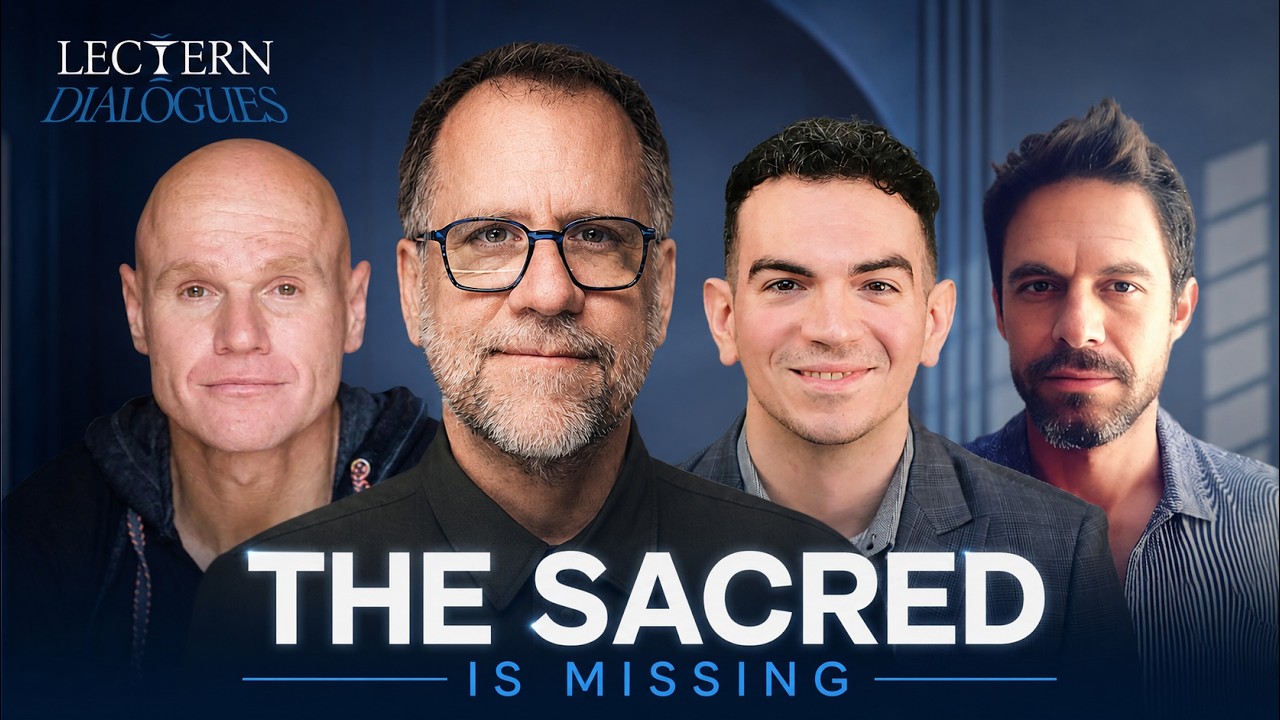 1:40:03Now Playing
What Happens When a Culture Loses the Sacred?




Chapters
YouTube Description
as posted by the channelWhat happens when a society possesses extraordinary technological power but lacks a shared sense of what that power is for?
John Vervaeke, Jordan Hall, Guy Sengstock, and Christopher Mastropietro reunite for a sustained inquiry into normativity: the structures by which human beings perceive direction, value, responsibility, and the difference between better and worse action. The question becomes urgent in the context of artificial intelligence, where increasingly consequential decisions are being made inside a culture that struggles to articulate a coherent basis for judgment.
The conversation begins with Guy's encounters with the AI community and the fear that humanity may soon make decisions it cannot reverse. From there, the group investigates modernity's technological understanding of being, the reduction of creation to artifacts, and the modern self's attachment to sole authorship. John and Jordan propose that meaning is participatory: intelligibility is not manufactured by isolated selves but emerges through shared authorship with other people, traditions, practices, and reality itself.
The dialogue then turns toward virtue. If the problem is not simply ignorance but malformed attention and desire, knowing what should be done is insufficient. The deeper difficulty is how people become capable of wanting, perceiving, and participating in what is good. Socratic aporia, vulnerability, kenosis, embodied practice, pilgrimage, and dialogue are explored as ways of undergoing reorientation rather than merely acquiring information.
In the final movement, the speakers discuss bad-faith dialogue, leisure, lingering, tourism, linguistic lostness, and doomscrolling. These apparently different subjects converge on one insight: when people remain sealed inside environments engineered around their existing capacities and preferences, they lose access to the forms of friction, surprise, and participation that can transform them.
Timestamps
Key Insights
Normativity is the directional structure through which actions appear better, worse, appropriate, or necessary.
The AI crisis exposes a deeper cultural inability to answer what technology should serve.
Modernity often confuses participation in creation with ownership of the resulting artifact.
Meaning and intelligibility require shared authorship rather than sovereign individual control.
Virtue cannot be transmitted as information alone; it requires transformed attention and participation.
Embodied practices can reorganize abstractions because higher cognition remains rooted in sensorimotor life.
Pilgrimage, leisure, and dialogos help people cross boundaries between worlds rather than consuming only familiar inputs.
Doomscrolling is an efficient example of technology feeding hypertrophied capacities while narrowing participation in reality.
Explore courses and teachings from The Lectern
Support the Lectern and join a growing community of wisdom seekers
John Vervaeke:
Social
Guests & Subjects Covered
Sentinel Indexing in Progress
Metadata and chapters are available. Claim extraction for this episode is pending.
All video content is delivered via YouTube embedded players in accordance with the YouTube Terms of Service. Sentinel provides research tools that promote discovery and accountability across political media.