Minnesota Senate Media Services
@mnsenatemedia·10.8K subscribers·6.8K videos
Session Update: Bill Allowing Businesses to Open with COVID-19 Plan Passes
Posted
February 26, 2021
Views
56
Likes
1
Engagement
1.79%
February 26, 2021
56
1
1.79%
Every word spoken in this episode is indexed. Type any phrase to jump straight to the moment it was said.
Type any word or phrase that may have been spoken. Click a result to seek the player to that exact moment.
Try a name, a topic, or a quoted line
 8:42Now Playing
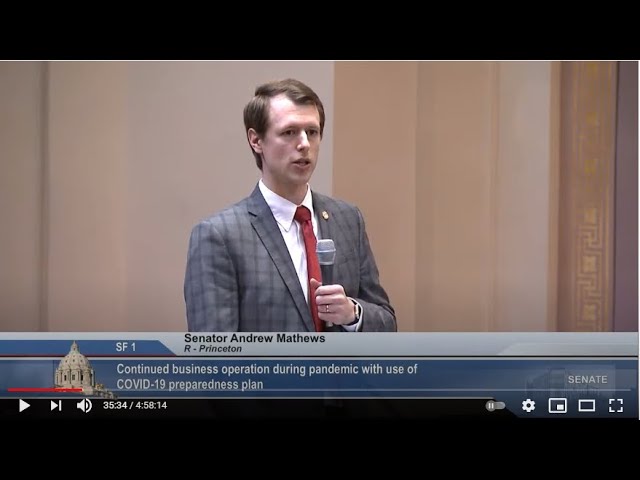
Minnesota businesses would be allowed to open without restrictions as long as they have implemented a COVID-19 safety plan and make good faith efforts to protect the health and safety of their staff and patrons under a bill passed by the Senate Thursday, February 25. The bill, SF 1, also requires that any future executive orders involving business closures issued under Chapter 12 gain legislative approval.
Senator Andrew Mathews, R-Milaca, the bill’s author, said, “The issue of closing businesses… is not a partisan issue. It’s a livelihood issue for many people around the state of Minnesota, and that’s why they need a strong voice here out of the Minnesota Senate to say we will go back and trust our workers. We’ll trust our business owners. We’ll trust that you will get strong plans in place to keep you safe and that you can get out ahead of that and do it faster than a governor or a state agency can do it.”
DFL lawmakers offered a number of amendments to increase worker protections. The amendments failed to gain approval. Senator Jennifer McEwen, DFL-Duluth, said that many Minnesota employers do protect their workers, but not all. “We’ve heard a lot of representation today on behalf of small businesses… But most Minnesotans don’t own a business. Most Minnesotans work at a business,” she said. “Protecting workers has nothing to do with what is happening today,” she concluded.
The bill passed, with bipartisan support, on a vote of 38-29.
Sentinel Indexing in Progress
Metadata and chapters are available. Claim extraction for this episode is pending.
All video content is delivered via YouTube embedded players in accordance with the YouTube Terms of Service. Sentinel provides research tools that promote discovery and accountability across political media.