Reading Through History
@readingthroughhistor·106K subscribers·437 videos
History Brief: The Berlin Wall Explained
Posted
May 20, 2017
Views
345,741
Likes
1,900
Comments
176
Engagement
0.60%
May 20, 2017
345,741
1,900
176
0.60%
Every word spoken in this episode is indexed. Type any phrase to jump straight to the moment it was said.
Type any word or phrase that may have been spoken. Click a result to seek the player to that exact moment.
Try a name, a topic, or a quoted line
 4:36Now Playing
Teachers, get our Cold War workbook here
Like our Facebook page
Follow us on Instagram
Follow us on Twitter
Check out our TpT store
Check out our website
Copyright Disclaimer Under Section 107 of the Copyright Act 1976, allowance is made for fair use for purposes such as criticism, comment, news reporting, teaching, scholarship, and research. Fair use is a use permitted by copyright statute that might otherwise be infringing. Non-profit, educational, or personal use tips the balance in favor of fair use.
***
Transcript:
The Berlin Wall was one of the most intimidating symbols of the Cold War era. Who built the Berlin Wall? Why did they build it?
At the conclusion of World War II, Germany was divided into two separate nations, East Germany and West Germany. The western portion was assisted by the United States and the United Kingdom, whereas, the eastern portion was assisted by the Soviet Union. Berlin, the capital city, was also divided into West and East Berlin, in a similar fashion.
For the first several years that the two nations existed, people were allowed to travel in between the two sides. However, as time progressed and conditions worsened in communist East Germany, many people began escaping to the Western side.
The East Germans were determined to put an end to these defections. In August of 1961, the East Germans ordered that the border between East and West Germany be closed. This included cutting the city of Berlin in half and erecting a border between the two. East German soldiers began demolishing the streets between the two halves and established a temporary barbwire fence.
With the splitting of Berlin, many lives were thrown into chaos. Families were no longer able to visit their relatives, and in some cases, East Berliners were cut off from their jobs on the West Berlin side.
The East Germans then erected a permanent wall made of concrete, which came to be known as the Berlin Wall. The wall was an 87-mile-long fortified structure featuring 116 watch towers, dogs, additional chain link fences, barbwire, and trenches to prevent vehicles from driving across. It also included a secondary wall on the East Berlin side. The space between the two walls became known as “the Death Strip” as East German guards were instructed to shoot anyone attempting to escape.
The border between the two halves of Berlin wasn’t completely closed, however. There were several checkpoints where visitors could pass into East Berlin (although, very few East Berliners were allowed to travel into West Berlin). The most well-known of these crossings was “Checkpoint Charlie”, and it was the only crossing where Americans and many other foreigners were allowed to pass.
The wall stood without contest for 26 years. But, in the late 1980s, many Germans began openly criticizing the wall's presence. In 1987, US President Ronald Reagan delivered a speech in front of the wall, in honor of Berlin's 750th anniversary. In this speech, President Reagan made a bold appeal to the Premier of the Soviet Union, Mikhail Gorbachev, when he said, “Mr. Gorbachev, tear down this wall!”
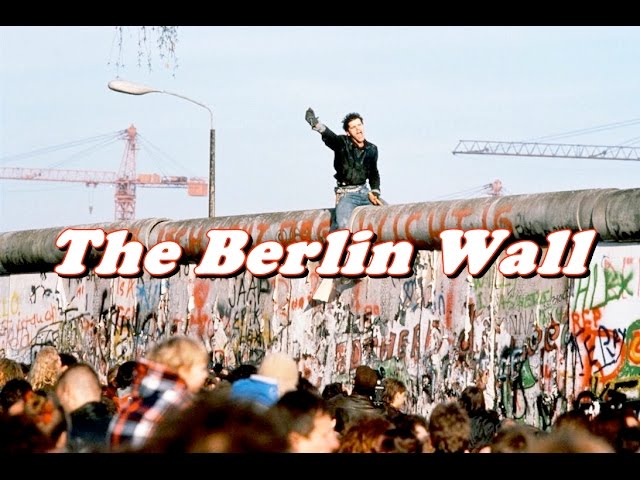
Finally, two years later, in 1989, the people of East Berlin could bear it no longer. They began protesting the wall's existence in September of that year. On November 9th, 1989, crowds of people approached the wall with hammers, chisels, and other tools, and began destroying the wall by hand.
The Berlin Wall had endured for 28 years, but it was finally torn down. To this day, the towering and divisive structure remains one of the most chilling and powerful memories of those who lived through the Cold War.
Sentinel Indexing in Progress
Metadata and chapters are available. Claim extraction for this episode is pending.
All video content is delivered via YouTube embedded players in accordance with the YouTube Terms of Service. Sentinel provides research tools that promote discovery and accountability across political media.