Sam Seder
@TheMajorityReport·2M subscribers·30.1K videos
NYT’s Thomas Friedman Tells CNBC The Market Can Defeat Mother Nature
Posted
November 3, 2021
Views
15,595
Likes
700
Comments
167
Engagement
5.56%
November 3, 2021
15,595
700
167
5.56%
Every word spoken in this episode is indexed. Type any phrase to jump straight to the moment it was said.
Type any word or phrase that may have been spoken. Click a result to seek the player to that exact moment.
Try a name, a topic, or a quoted line
 11:28Now Playing
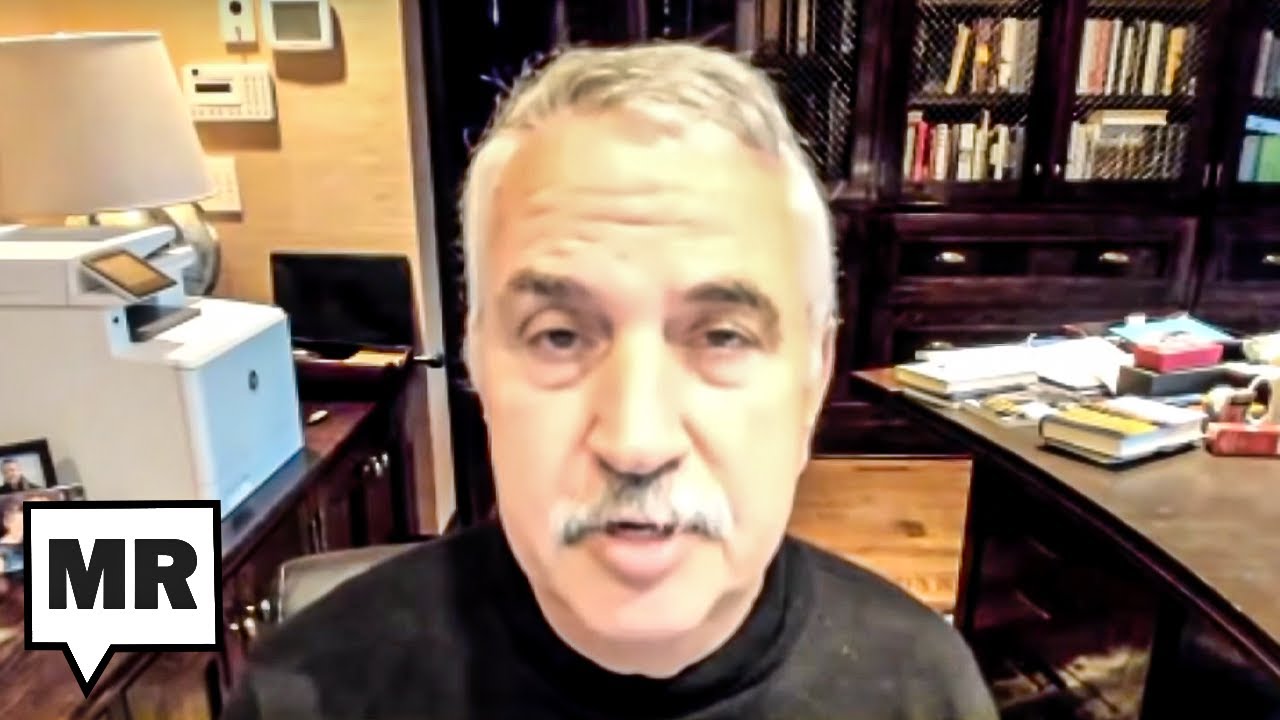
Thomas Friedman, of "The New York Times," appeared on @CNBC' to talk about energy sources and climate change. Thomas Friedman states that "no one" is willing to do anything that might "diminish living standards" but affect climate change in a positive way. If he means politicians, institutions, and corporations, he is almost entirely correct. If he means people, including people within the institutions, corporations, and even politicians, well, he's very wrong. But this is CNBC, and we're here to talk about MONEY! Money is what we love. The Majority Report crew then catches the vapors as Mr. Friedman says that the global economy can defeat... nature.
We stream our live show every day at 12 PM ET.
We need your help to keep providing free videos! Support the Majority Report's video content by going to
Watch the Majority Report live MF at 12 p.m. EST at youtube.com/samseder or listen via daily podcast at
Download our FREE app
SUPPORT the show by becoming a member
We Have Merch!!!
LIKE us on Facebook
FOLLOW us on Twitter
SUBSCRIBE to us on YouTube
Sam Seder: This is just unbelievable. First off, I don't know how the eff they let this guy back on TV, ever, but you recall Tom Friedman. He's never been wrong about anything. It's not just that he's never been wrong about anything because he's of course been wrong about everything. But I think there are, Colin Powell was definitely one, those people... Tom Friedman: If you took 20 people and put them in a room, or I think even if you put 10 people and put them in a room, and as to what helped in the march to the illegal invasion and occupation of Iraq costing the lives of hundreds of thousands of people and you took 10 and you wanted to pick 10 people to be in a room maybe 20 to be in a room who but for those people and what positions they took publicly and how they espoused it, that war wouldn't have happened, Thomas Friedman would be in that room.
Emma Vigeland: Well certainly maybe the number one person outside of the Bush administration.
SS: Arguably. You know, Judy Miller did some work.
NK: But it cost her.
SS: It cost her, right. Bill Kristoff and you know didn't cost him. There are other non-lawmakers, I should say Friedman probably tops the list. Friedman's pretty darn close because he convinced a lot of like "New York Times" readers, "So this must be the thing to do."
EV: So did Judith Miller.
SS: Yeah well Judy Miller did, too, but like you say, she paid some bit of a price. Here is Thomas Friedman. I can't... I don't know...
EV: It's his take on how climate change is gonna be fixed by, you guessed it the almighty market.
Nomiki Konst: Oh my god, look at him.
Becky Quick: ...situations that the president has been put in conflict. President Biden was asked at the press conference last night, "Look you are asking countries to to reach these new standards, these new Paris Accords, and to do more on this front. At the same time, you are asking the Middle East nations to pump more oil because you need it. Prices are too high for your liking right now." That does put them at a weird juxtaposition. How do you solve both sides of that equation? Wanting to be able to make sure that people don't freeze, that they can drive their cars, that it doesn't cost too much? Oh and by the way, we don't want to use any of these fossil fuels. Again, it's a weird position.
Thomas Friedman: Well you know Beck, it's really is kind of a depiction of of the core problem we have here. So we started off by saying, we're not going to do anything on clean energy, let's say you know 15, 20 years ago. Then we moved to, we'll do whatever's easy. That is, whatever will be easy for me as a politician and not put any stress on my consumers or or my industries. And really not as getting anyone to do anything hard. As for the next generation, the next step would actually be asking people to do things that are really hard, and the next step would be doing things that are urgent. So we're stuck in stage two here. Everyone's ready to do kind of the low-hanging fruit, but when it comes to asking people to do anything that might [ __ ] my economy by the way this is understandable, and really maybe even diminished living standards, no one's ready to do that. And the contradiction you've pointed out there is just a manifestation of this.
SS: Just contemplate, the guy just spoke for at least 60 seconds or 90 seconds and said absolutely nothing.
Sentinel Indexing in Progress
Metadata and chapters are available. Claim extraction for this episode is pending.
All video content is delivered via YouTube embedded players in accordance with the YouTube Terms of Service. Sentinel provides research tools that promote discovery and accountability across political media.