United States Institute of Peace
@unitedstatesinstituteofpeace·110K subscribers·2.2K videos
Now Comes the Hard Part: Can the Taliban Govern Afghanistan?
Posted
November 4, 2021
Views
4,169
Likes
50
Comments
8
November 4, 2021
4,169
50
8
1.39%
Every word spoken in this episode is indexed. Type any phrase to jump straight to the moment it was said.
Type any word or phrase that may have been spoken. Click a result to seek the player to that exact moment.
Try a name, a topic, or a quoted line
 1:21:30Now Playing
For the Taliban, it seems that defeating the Afghan military and overthrowing the elected government as U.S. troops departed was the easy part. Now, the insurgency faces the daunting challenge of governing a weak and divided country. Their failure to provide basic services like health, education and a functioning economy is already causing a growing humanitarian disaster — one that will only worsen as winter approaches. The politics of the takeover are daunting too: Rival factions within the Taliban are competing for influence in the new government while non-Pashtun ethnic groups, women and skilled officials from the former government are left out.
The consequences of a Taliban failure to govern are far reaching. Afghans could see mass starvation over the winter if economic conditions do not improve. Meanwhile, new terrorist safe havens are likely to emerge and the movement of refugees, terrorists and narcotics from Afghanistan will threaten regional security.
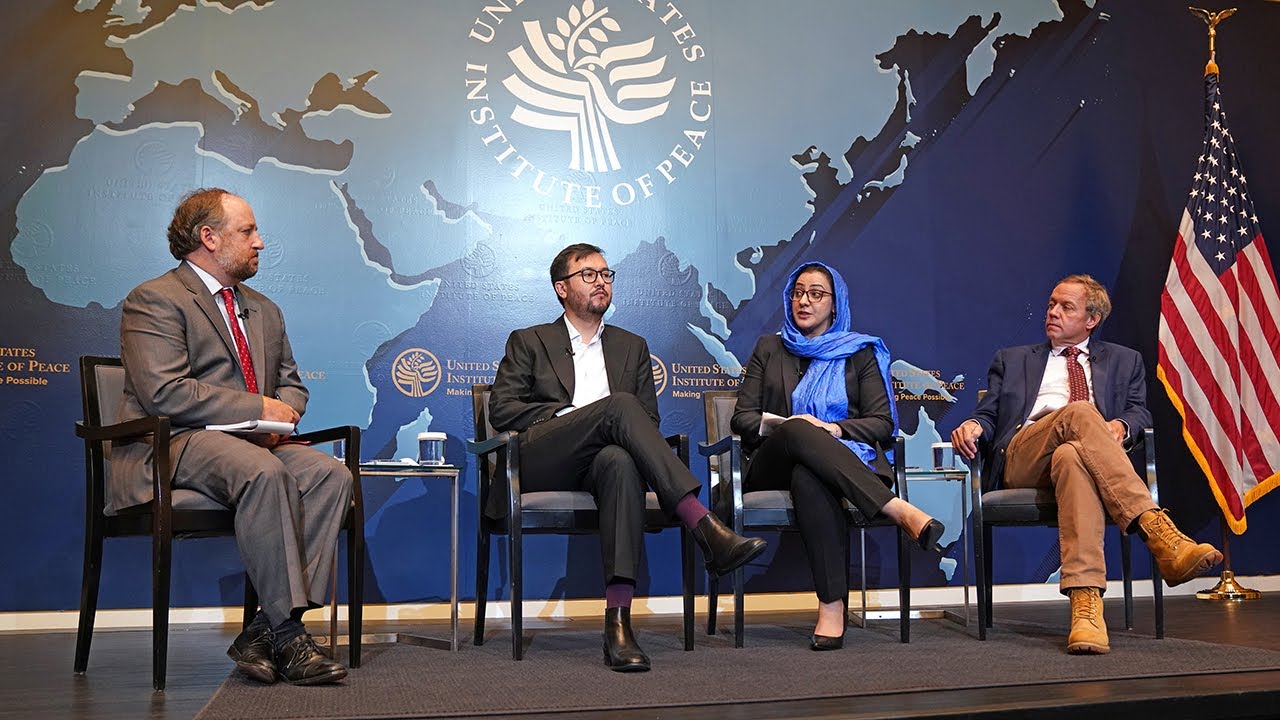
With so much at stake, join USIP for a discussion with Afghanistan experts on the current political, economic and human rights situation in Afghanistan. The conversation will look at how the Taliban are likely to respond to internal and external pressure to govern more inclusively as conditions inside Afghanistan worsen, as well as what the United States and the region can do to avoid the worst consequences of failed governance and mitigate a looming disaster.
Take part in the conversation on Twitter with #AfghanistanUSIP.
Speakers
Andrew Wilder, welcoming remarks
Vice President, Asia Center, U.S. Institute of Peace
Stephen Brooking
Former Peace Process Special Advisor, U.N. Assistance Mission in Afghanistan
Naheed Farid
Chairperson of House Standing Committee for Human Rights, Civil Society and Women Affairs
Lotfullah Najafizada
Director, TOLO News
Scott Worden, moderator
Director, Afghanistan and Central Asia Programs, U.S. Institute of Peace
For more information about this event, please visit
Connect with us!
Subscribe to our YouTube channel
Newsletters
The United States Institute of Peace is a national, nonpartisan, independent institute, founded by Congress and dedicated to the proposition that a world without violent conflict is possible, practical and essential for U.S. and global security. In conflict zones abroad, the Institute works with local partners to prevent, mitigate, and resolve violent conflict. To reduce future crises and the need for costly interventions, USIP works with governments and civil societies to build local capacities to manage conflict peacefully. The Institute pursues its mission by linking research, policy, training, analysis and direct action to support those who are working to build a more peaceful, inclusive world. Learn more about USIP
Sentinel Indexing in Progress
Metadata and chapters are available. Claim extraction for this episode is pending.
All video content is delivered via YouTube embedded players in accordance with the YouTube Terms of Service. Sentinel provides research tools that promote discovery and accountability across political media.