Big Think
@bigthink·8.8M subscribers·10.1K videos
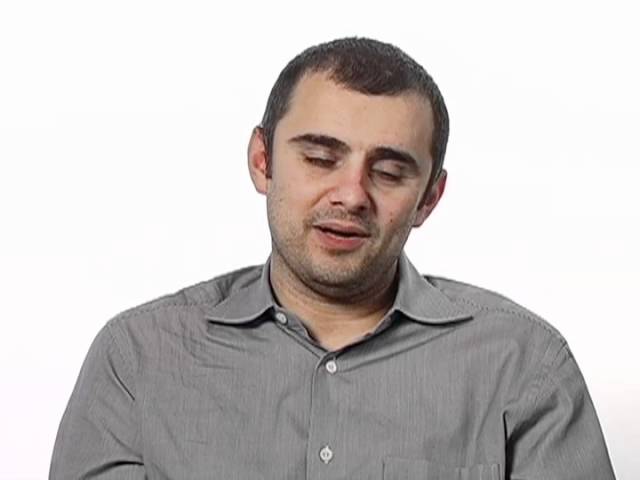
Bees in a Hive Jonathan Haidt | Big Think
Posted
April 24, 2012
Views
508
Likes
11
Comments
2
Engagement
2.56%
April 24, 2012
508
11
2
2.56%
Every word spoken in this episode is indexed. Type any phrase to jump straight to the moment it was said.
Type any word or phrase that may have been spoken. Click a result to seek the player to that exact moment.
Try a name, a topic, or a quoted line
Episode Timeline
Every episode in order around the one you’re watching — click any card and the page flips straight to it.
 7:49Now Playing
Bees in a Hive
New videos DAILY
Join Big Think Edge for exclusive videos
----------------------------------------------------------------------------------
We did not evolve simply to fight with each other.
----------------------------------------------------------------------------------
Jonathan Haidt:
Jonathan Haidt is the Thomas Cooley Professor of Ethical Leadership at New York University’s Stern School of Business. He is the author of The Righteous Mind and The Happiness Hypothesis.
----------------------------------------------------------------------------------
TRANSCRIPT:
Question: Do we see meaning where there is none?
Jonathan Haidt: I believe that we are shaped by group level selection processes so that we can be like bees in a hive. We are not just primates who evolved to fight it out with other primates. We are part way through a major transition evolutionary history that allows us to be temporarily like bees in a hive.
We see this after attacks. We saw it after 9/11. We can come together. Our propensity to find meaning, even though it may have evolved from simpler cognitive mechanisms, as Richard Dawkins and others maintain, I believe that our ability to find connection, to see connections in the stars.
If we look up at the sky, we see stories about people wandering around and going on missions. I believe that our ability to find connections and meaning helps us merge together into groups that can function as one. So this is part of the psychology that allows us to create these emergent super organisms, at least temporarily.
Anyone who’s ever been in a chorus or a band, or played a team sport, or been initiated into a fraternity, knows the joys, the ecstasy of losing yourself in part of a larger group.
I think this is the next frontier for psychology and for the social sciences, is understanding that we are not radical individuals. We are actually, in part, bees in a hive, but we don’t live that way, and that’s the reason for much of our unhappiness.
Sentinel Indexing in Progress
Metadata and chapters are available. Claim extraction for this episode is pending.
All video content is delivered via YouTube embedded players in accordance with the YouTube Terms of Service. Sentinel provides research tools that promote discovery and accountability across political media.