Big Think
@bigthink·8.8M subscribers·10.1K videos
Big Think Interview with Mitchell Joachim | Big Think
Posted
April 24, 2012
Views
1,477
Likes
18
Comments
2
Engagement
1.35%
April 24, 2012
1,477
18
2
1.35%
Every word spoken in this episode is indexed. Type any phrase to jump straight to the moment it was said.
Type any word or phrase that may have been spoken. Click a result to seek the player to that exact moment.
Try a name, a topic, or a quoted line
Episode Timeline
Every episode in order around the one you’re watching — click any card and the page flips straight to it.
 27:24Now Playing
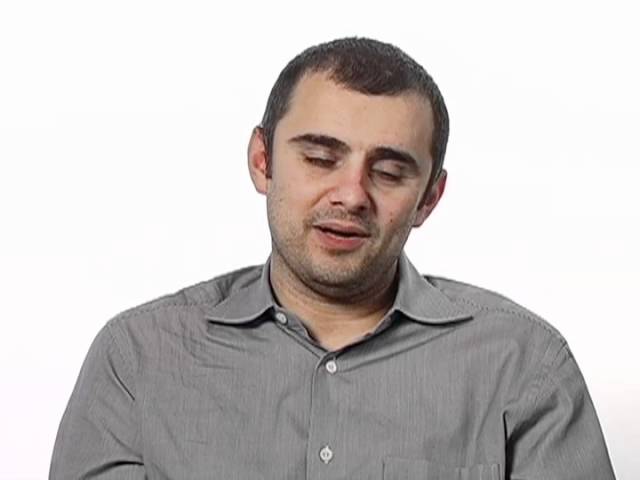
Big Think Interview with Mitchell Joachim
New videos DAILY
Join Big Think Edge for exclusive videos
----------------------------------------------------------------------------------
Big Think sits down with the Columbia and Parsons professor and cofounder of Terraform One.
----------------------------------------------------------------------------------
Mitchell Joachim:
Mitchell Joachim is a Co-Founder at Terrefuge and Terreform ONE. Currently he is faculty at Columbia University and Parsons. Formerly an architect at Gehry Partners, and Pei Cobb Freed. He has been awarded the Moshe Safdie Research Fellowship, and the Martin Family Society Fellow for Sustainability at MIT. He won the History Channel and Infiniti Design Excellence Award for the City of the Future, and Time Magazine Best Invention of the Year 2007, Compacted Car w/ MIT Smart Cities. His project, Fab Tree Hab, has been exhibited at MoMA and widely published. He was selected by Wired magazine for "The 2008 Smart List: 15 People the Next President Should Listen To". Rolling Stone magazine honored Mitchell as an agent of change in "The 100 People Who Are Changing America".
----------------------------------------------------------------------------------
TRANSCRIPT:
My name is Doctor Mitchell Joachim.
I’m a professor at Columbia University and Parsons The New School for Design. I’m cofounder of the nonprofit, philanthropic organization Terraform One, here in Brooklyn, New York.
Question: How is Terre Form rethinking New York City?
Mitchell Joachim:Well, one of the many projects we’re working on in Terraform, Terraform One, is to rethink New York City. To look at New York City as if it was 100 percent self sufficient. New York City with no inputs or outputs. Imagine this place where the only thing that would come and go would be something like culture but waste, water, energy, food would all be produced inside the confines of New York City proper with inside its geopolitical boundaries.
So what would the reification of this city look like? Can you imagine a future where everything that needs to happen in New York City, especially when it relates to its sufficiency, happens in its own boundaries? So you’d be producing food here in New York City in something like a vertical farm. There’s a project that my colleague at Columbia, Dickson Despommier, often promotes. So we would change the landscape, for instance, of Central Park to have some of these vertical farms which are towers that contain lots of food, dwarf wheat, dwarf corn, that could feed 30,000 to 80,000 people per tower.
We also look at New York City being self sufficient when it comes to energy. If we were to, for instance, fill up all of Staten Island and about 18 percent of the surface area of Brooklyn with solar panels, we would power New York City just like a solar calculator. We would need no other power sources. All of those **** **** with storage and batteries running at around 20 to 23 percent efficiency and costing $46 billion adjusted for 2007, would power New York from the sun.
Of course, this is not exactly what we’re proposing. There’s around 3,000 acres of unshaded roof space in the city of New York City. So instead of covering Brooklyn and all of Staten Island with solar panels, we propose putting them on roof tops. And logically, integrating them with other kinds of renewable sources to produce energy, newer technology such as – or renewable technology such as wind turbines or wave harvesting, etcetera.
The idea here is to think about New York in a provocative like design or urban design statement. Not that Mayor Bloomberg’s plan isn’t good. His plan is fairly green. A lot of his principles are hard to argue with. Everyone in New York, for instance, needs to be a ten minute walk from a park. That is something he plans on doing with PLANYC. We’re thinking of an approach that is much more provocative. That’s a grander solution to the largest problem we’ve encountered.
That is this global problem of climate change. So we want to propose larger answers that meet this criteria, the solution, that just spans all sorts of issues. So having a prototype city, like New York, being completely self sufficient, especially when it comes to its energy, waste, food, etcetera, would be a salient example so that others could get the idea of how to do it and do it right and do it green.
W when we’re thinking about making New York City completely self sufficient, it’s really a theoretical proposition. The actual changing of a city takes an incredible amount of time. For instance, if you think of telecommunications technology, the cell phone takes about five to seven years before everyone starts to buy into this new technology.
Read the full transcript at
Sentinel Indexing in Progress
Metadata and chapters are available. Claim extraction for this episode is pending.
All video content is delivered via YouTube embedded players in accordance with the YouTube Terms of Service. Sentinel provides research tools that promote discovery and accountability across political media.