Big Think
@bigthink·8.8M subscribers·10.1K videos
Rachel Resnick on Treating Addiction | Big Think
Posted
April 24, 2012
Views
181
Likes
2
Engagement
1.10%
April 24, 2012
181
2
1.10%
Every word spoken in this episode is indexed. Type any phrase to jump straight to the moment it was said.
Type any word or phrase that may have been spoken. Click a result to seek the player to that exact moment.
Try a name, a topic, or a quoted line
Episode Timeline
Every episode in order around the one you’re watching — click any card and the page flips straight to it.
 7:02Now Playing
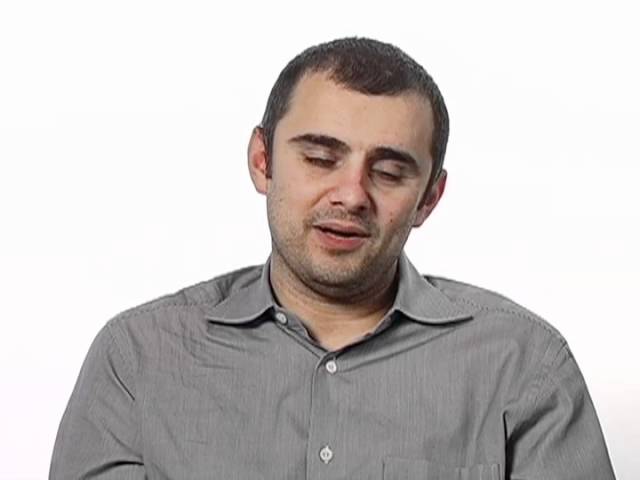
Rachel Resnick on Treating Addiction
New videos DAILY
Join Big Think Edge for exclusive videos
----------------------------------------------------------------------------------
According to Rachel Resnick, 12-step programs help to create a sense of community that is lacking in modern life.
----------------------------------------------------------------------------------
Rachel Resnick:
Rachel Resnick is the author of the Los Angeles Times bestseller Go West Young F*cked-Up Chick and Love Junkie. She has published articles, essays, and celebrity-profile cover stories in the Los Angeles Times, Women's Health, and BlackBook, The Time of My Life, Damage Control, The Dictionary of Failed Relationships, The Best American Erotica 2004, Women on the Edge, L.A. Shorts, and Absolute Disaster. She is also a contributing editor at Tin House magazine. Resnick is the founder and CEO of Writers on Fire, provider of luxury writing retreats both in the United States and abroad.
----------------------------------------------------------------------------------
TRANSCRIPT:
Question: What are your preferred methods—both psychological and physiological—for treating addiction?
Rachel Resnick: In my experience, what worked for me was 12-Step Programs and I absolutely would like to add other elements into that which is therapy on a regular basis as well as trauma work. Now, that I’ve uncovered that there really was trauma in my background, which has an effect on neurochemistry, and then falling in love and sexual arousal has a certain impact and fulfills a certain need chemically. But, my experience and my understanding is that this particular addiction can be healed and that’s what’s really cool and exciting about it from what I know that the brain wasn’t fed the way it needed to be because of the initial attachment disorder and lack of bonding way back in the beginning, but that there’s a chance to like reroute and dig new convolutions through healthy intimate relationships. One way that I found was fabulous for creating those is in this alienated culture that we have, 12-Step Programs are kind of fascinating. They’re not for everybody and they’re flawed because people are in them and they run like a pure democracy, so it’s rotating leadership and all that kind of stuff. But if you have enough presence of mind and you’re vigilant, there’s an extraordinary experience that’s just it’s a community that I don’t think we achieve in other ways or ways that would appeal to someone who has my background and other people I know. So, there’s a way that you can forge bonds with other people who are struggling with the same kinds of things that you are that has a healing effect.
Question: What are the benefits of a 12-step program?
Read the full transcript at
Rachel Resnick: It's a community but it’s also about values that it seems like it have gone out of the window in a lot of other ways and coming in an organic way through the group goes back to your assertion that there’s a self absorption in both love and sex addiction manifesting in men and women online with porn dating sites, whatever in the real world. One of the basic tenets of 12-Step Program is all about being of service for other people like getting outside yourself and being useful. Because, I mean, my God, one example of how I was so obsessive and wastes so much time and energy and vitality, I was given my first major newspaper assignment. It’s totally exciting for the L.A. Times and I felt like I just didn’t have enough time to write it and yet at that same period of time I was very obsessed with this guy who wasn’t working and I wasn’t letting go. I was like pitbull clamp on to it, jaws tight. And at 0148 hour period, I wrote him 64 e-mails. Okay. But I didn’t have time I thought to write this article, and in fact, it took me a year to write it and I didn’t write until I had broken up with this guy. So, there’s this complete lack of perception and distortion and wasted energy that’s focused on other things and 12-Step groups, one of the things that it’s provided for me is I didn’t see it growing up, nobody was… everyone was out of their mind, [laughs] I’m like spinning around, helping other people, you know, that that’s actually a way of becoming more human and this goes back to all the internet stuff too where we’re losing touch with what it means to be human, which is more about giving. I know the story sounds like a hokey kind of stuff, but truly we’re in such a take, take, take, we’re trained to be consumers, we’re spending all this time online and there’s an obsessive thing, there’s an ADD kind of thing, you know, more, more, more, fast, fast, fast or whatever, and not really connecting with anybody and what else, you know, were going to take with us to the grave, you know.
Sentinel Indexing in Progress
Metadata and chapters are available. Claim extraction for this episode is pending.
All video content is delivered via YouTube embedded players in accordance with the YouTube Terms of Service. Sentinel provides research tools that promote discovery and accountability across political media.