Big Think
@bigthink·8.8M subscribers·10.1K videos
Big Think Interview With Terry Teachout | Big Think
Posted
April 24, 2012
Views
1,485
Likes
22
Comments
6
Engagement
1.89%
April 24, 2012
1,485
22
6
1.89%
Every word spoken in this episode is indexed. Type any phrase to jump straight to the moment it was said.
Type any word or phrase that may have been spoken. Click a result to seek the player to that exact moment.
Try a name, a topic, or a quoted line
You’re on April 24, 2012. Earlier episodes are to the left, later ones to the right — the row keeps loading as you go. Click any card to open it.
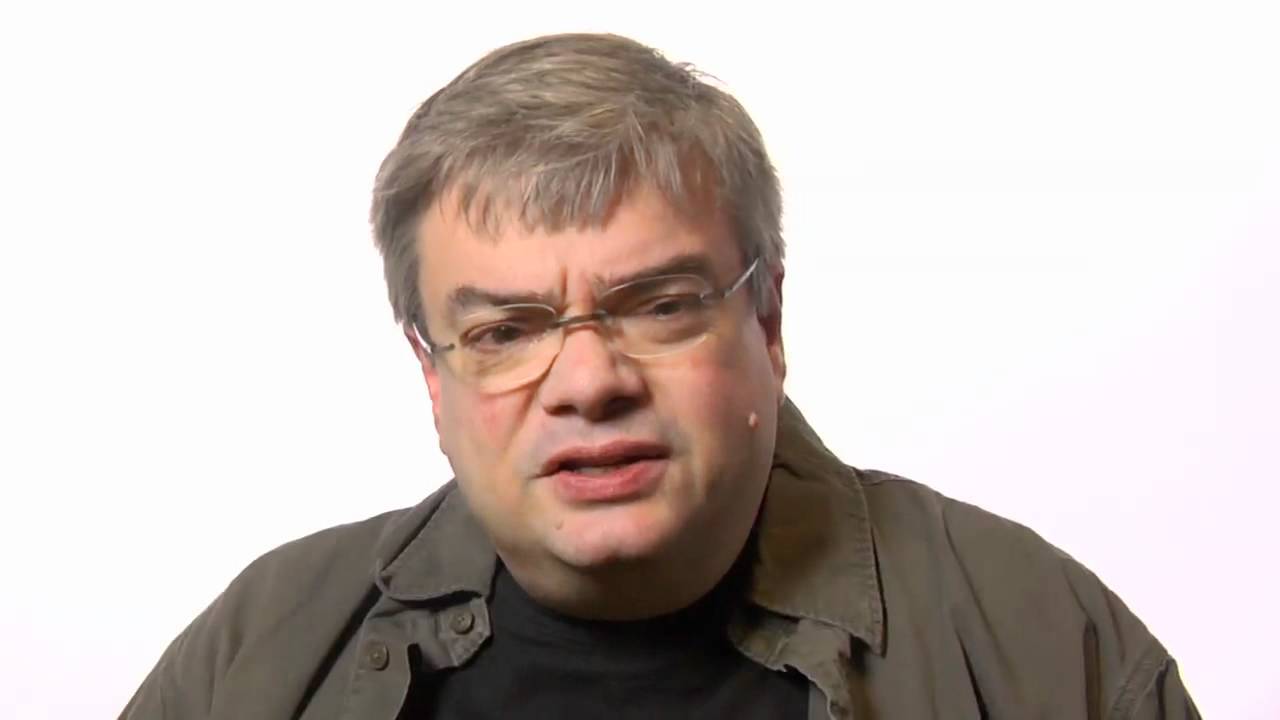 Apr 24, 201238:29Now Playing
Big Think Interview With Terry Teachout
New videos DAILY
Join Big Think Edge for exclusive videos
----------------------------------------------------------------------------------
A conversation with the Wall Street Journal drama critic and author of “Pops.”
----------------------------------------------------------------------------------
Terry Teachout:
Terry Teachout is the drama critic for The Wall Street Journal and the chief culture critic for Commentary magazine. His writings on theater, music, and the arts have appeared in a variety of publications, including The New York Times and National Review. His most recent book, "Pops: A Life of Louis Armstrong" (Houghton Mifflin Harcourt), was published in December 2009. Teachout is also the librettist for The Letter (composer Paul Moravec), an operatic version of Somerset Maugham's 1927 play, which was commissioned by the Santa Fe Opera in 2006 and premiered there in 2009.
----------------------------------------------------------------------------------
TRANSCRIPT:
Question: What plays and music did you most admire when you were young?
Terry Teachout: The first play I ever saw, I was in junior high school, was a high school production of Noel Coward's "Blithe Spirit," which seemed to me absolutely magical. I had never seen people performing on a stage before. It was so different from television and movies. Of course, I didn't know at the age of 12, or however old I was, that I was going to end up being the drama critic of the newspaper, but the experience of seeing people on the stage, sharing the air that you breathe, being part of your world instead of people on a flat screen was very powerful for me and I know it pushed me in the direction of wanting to be a performer of some kind.
I loved music from earliest childhood; from as long as I can remember. The house was full of records. My father had lots of old records; 78's, big bands, Jazz, that's how I first heard Armstrong really, and all the other kinds of music I ended up writing about and ultimately playing. I became a professional musician and played all kinds of music. I played Bluegrass, I played Classical Music, and for many years I played Jazz.
But it was the records. There wasn't a lot of live music that you could hear where I came from, which was a small town in southeast Missouri. There was an occasional concert that came through, but basically, my experience of music, and largely of the arts, came through television more than anything else. Back in the '60's, when I was a boy, you could turn on Ed Sullivan on Sunday night and see ballet companies and Jazz and Classical musicians along with ventriloquists and people who spun plates on the ends of poles. And I think the fact that television brought you all of these experiences on a kind of plane of equality had a real effect on how I ultimately came to view the arts because for me, all the arts are one. They're all -- music, drama, and film, and painting, they are different ways of trying to do the same thing, and I've always experienced them on this plane of equality. Really, from the time I started writing about the arts, I've wanted to write about all of the arts. I wanted to have the opportunity to do that and finally I got it. Now I write about whatever interests me.
Question: How did you transition from performance to criticism?
Terry Teachout: I was writing throughout the time that I was performing. I started – I edited my school newspaper, I did the things that a young writer does. And they were parallel tracks for me. Criticism was simply an opportunity that came up when I was in college to do some reviewing and I found that I liked it. I found that I liked the idea of being able to communicate your own enthusiasm, your own excitement, to try to get people to come see something that you saw and maybe see in it what you saw. Somewhere along the way, I came to the conclusion that I was a better writer than I was a musician, I was just better at it, and I decided that that was what I wanted to do.
Question: Is music or theater criticism more personal for you?
Terry Teachout: Neither. All the arts are personal and important to me. Obviously, somewhere deep within me there is the fact that I have been a musician and it's as though that is my first language. But, I’ve been writing about other things for so long that the thing that excites me the most is the thing I'm going to see tonight.
Question: Who is your intended audience?
Terry Teachout: Ordinary readers. The people who read the paper who simply want guidance about what they might come to see, what might interest them.
Read the full transcript at
Sentinel Indexing in Progress
Metadata and chapters are available. Claim extraction for this episode is pending.
All video content is delivered via YouTube embedded players in accordance with the YouTube Terms of Service. Sentinel provides research tools that promote discovery and accountability across political media.