Big Think
@bigthink·8.8M subscribers·10.1K videos
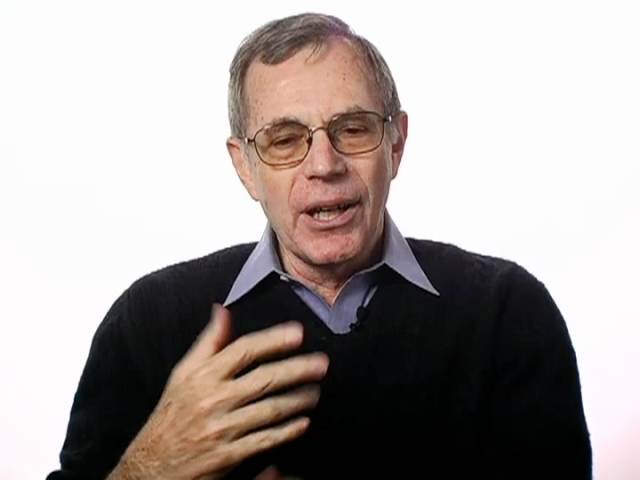
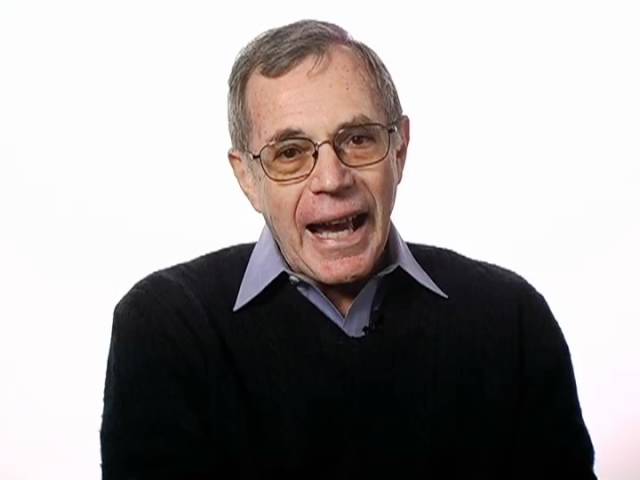
Eric Foner on Presidential Powers | Big Think
Posted
April 24, 2012
Views
1,199
Likes
16
Engagement
1.33%
April 24, 2012
1,199
16
1.33%
Every word spoken in this episode is indexed. Type any phrase to jump straight to the moment it was said.
Type any word or phrase that may have been spoken. Click a result to seek the player to that exact moment.
Try a name, a topic, or a quoted line
 5:33Now Playing
Eric Foner on Presidential Powers
New videos DAILY
Join Big Think Edge for exclusive videos
----------------------------------------------------------------------------------
The author characterizes Lincoln as a president who was unafraid to
suspend some basic rights for the betterment of the union
----------------------------------------------------------------------------------
Eric Foner:
Eric Foner, DeWitt Clinton Professor of American History at Columbia University, is the author of numerous works on American history, including Free Soil, Free Labor, Free Men: The Ideology of the Republican Party Before the Civil War; Tom Paine and Revolutionary America; and The Story of American Freedom, and Our Lincoln. He has served as president of both the Organization of American Historians and the American Historical Association, and has been named Scholar of the Year by the New York Council for the Humanities.
----------------------------------------------------------------------------------
TRANSCRIPT:
Question: Was Lincoln’s suspension of habeas corpus an abuse of executive power?
Foner: Lincoln suspended the writ of habeas corpus a number of times during the Civil War. And at first in 1861, he suspended it first along the railroad line between New York, Philadelphia and Washington because there were riots going on in Maryland, people trying to block troops coming down to protect Washington. So, in a sense, at first, it was in a military district and, you know, it was part of a war, you know. Later, the writ of habeas corpus is suspended for the whole country, and, certainly, there were abuses of civil liberties under Lincoln. No questions about it. People arrested who just for giving speeches criticizing the war. There were newspapers temporarily suspended. Now, we should not think that Lincoln was a dictator, a tyrant. There was great criticism all through the war of him and the elections went on. Nobody said let’s suspend the election because, you know, the war is on. But, certainly, I think Lincoln established a dangerous precedent that the Constitution doesn’t really apply in war time. And now, unlike our recent president, Lincoln directly addressed this question. He went to Congress. He said, “I may have stepped over the line here. Here is my problem. Here is my situation. I was faced with this thing. Do I abide by the law and let the whole country fall apart or do I violate this one law and therefore save the whole country?” Well, that’s a difficult question to answer, you know, and there was no simple answer, but at least Lincoln put it on the agenda. He said, “This is a serious problem.” President Bush has never even admitted there’s any kind of problem. He just [blithely] goes his own way acting as if there is no Constitution. Now, the other thing is in the Civil War, the United States face the greatest crisis in its history and the greatest threat to its existence as a nation. The attack of 9/11 was a tragic thing but it didn’t threaten the existence of the United States and there was no thought that Al Qaeda today is actually going to overthrow the government of the United States. They can commit, you know, heinous acts but they are not going to take over the government. I don’t think Osama Bin Laden will be president anytime soon. So, we don’t face the kind of threat to our national existence that Lincoln faced. On the other hand, history shows that almost any government conducting a war will find the Constitution an inconvenience and will try to get around it, and this has happened during World War I with the suppression of freedom of speech. It happened in World War II with the internment of Japanese-Americans. So, you know, what is the lesson? It simply that we have to be very vigilant about our liberties and that, you know, to realize you can conduct a war and still respect civil liberties.
Question: Would Lincoln endorse Bush’s use of his executive mandate?
Foner: Lincoln is saying and this is a Democratic view, if people think I have abused my power or I have not conducted the war properly or intelligently, they’ll vote me out of power. That’s what democracy is. It gives you a chance to [boot] the guys out. And Lincoln ran for president, reelection in 1864, and even though he won a very large majority, we should not forget that in August, not long before the election, Lincoln and most politicians thought he was going to lose, that the war was at a stalemate. There was a great deal of discontent. Lincoln and the Republican Party thought he was going to lose. In fact, there were people who came to him and said, “You’ve got to rescind the Emancipation Proclamation.” People think that it is prolonging the war. That if you tell the South come back and you can keep slavery, they’ll come back now.
Read the full transcript at
Sentinel Indexing in Progress
Metadata and chapters are available. Claim extraction for this episode is pending.
All video content is delivered via YouTube embedded players in accordance with the YouTube Terms of Service. Sentinel provides research tools that promote discovery and accountability across political media.