Big Think
@bigthink·8.8M subscribers·10.1K videos
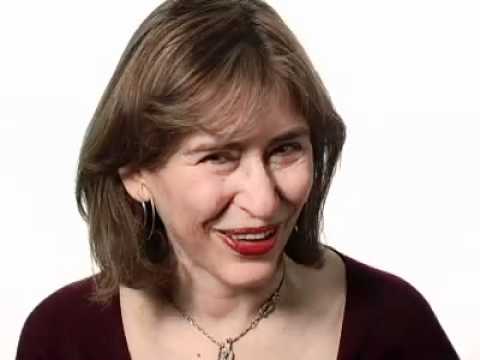
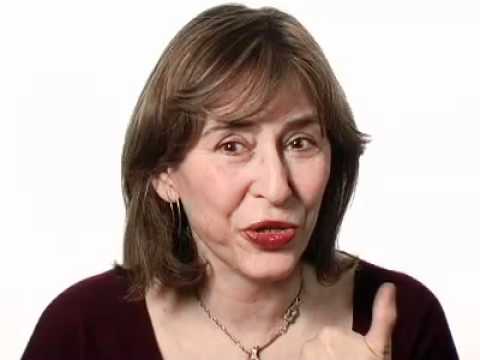
John Micklethwait Reflects on Africa and Modern Islam | Big Think
Posted
April 24, 2012
Views
508
Likes
5
Engagement
0.98%
April 24, 2012
508
5
0.98%
Every word spoken in this episode is indexed. Type any phrase to jump straight to the moment it was said.
Type any word or phrase that may have been spoken. Click a result to seek the player to that exact moment.
Try a name, a topic, or a quoted line
See what was published immediately before and after this episode.
 8:09Now Playing
John Micklethwait Reflects on Africa and Modern Islam
New videos DAILY
Join Big Think Edge for exclusive videos
----------------------------------------------------------------------------------
The prospects for a peaceful Islam are not realistic in the short term.
----------------------------------------------------------------------------------
John Micklethwait:
John Micklethwait is Editor-in-Chief of The Economist. Before that he edited the US section of the newspaper (1999 - 2006) and ran the New York Bureau for two years, having edited the Business Section of the newspaper for the previous four years. His other roles have included setting up The Economist's office in Los Angeles, where he worked from 1990 - 1993 and being Media Correspondent. He has covered business and politics from the United States, Latin America, Continental Europe, Southern Africa and most of Asia. He is a frequent broadcaster and has appeared on CNN, ABC News, BBC and NPR. He is the co-author of "The Witch Doctors", "A Future Perfect: the Challenge and Hidden Promise of Globalisation" and "The Company: A Short History of a Revolutionary Idea" and "The Right Nation", a study of conservatism in America, with Adrian Wooldridge, also an Economist journalist.
----------------------------------------------------------------------------------
TRANSCRIPT:
Question: What are the trends in mainstream Islam?
Micklethwait: Islam is a difficult issue. On the one hand, you have… you know, the big question about Islam is will it have some version… and they hate this word of sort of reformation or enlightenment or some version of that and the kind of negative answer on that is it’s extremely difficult because if you look at the number of the genuine kind of real reformers in Islam or the sort of people who Westerners, rightly or wrongly, might think of was reformers as sort of people who might allow women to say much more in services, all the tough stuff, that’s a tiny, tiny portion of the whole… and the main argument is the reformed tradition of Islam is actually arguing that we should look at things 300 years after the prophet, rather than the prophet’s time. It’s all based on quite elderly arguments and there’s additional structural reasons why Islam might find it difficult to move. One is that, when you look at the Koran, the Koran is a literal word of God, you know, it is not like the Bible which is essentially reportage, if you can base it in that way, the Bible is a collection of stories about something people describing what happened, it’s easier, much easier to reinterpret the Bible than it is to change the Koran. The Koran… most Muslims insist that it has to be in Arabic because this is actually what he said and it’s much more difficult for religion to find ways in which to adapt to modernity that way. But secondly also on top of that, they have the problem of who they were. Jesus Christ was a sort of form of special social difficulty, he was causing… he was an outcast, a bit of a… he was described in the old days, a sort of a community organizer, you know, he was causing trouble. Mohammad by contrast was… the prophet, he was a rule giver, he was handing out laws on how you live. Again, that makes it harder to change. Of all those reasons, Islam is harder to change, against that, look around the world, it’s based on what we look at. America is an area where you have a large amount of Muslims living actually very successfully. In Europe, again, you have people entering a pluralistic society and again doing pretty well. You have the experiments now at Turkey and particularly in Indonesia, I think, is really interesting. All those areas strike me as areas where Muslims will come back and say, we need to… we need to be more tolerant, at least, of other religions. I mean, if you have a system where there’s anyone who converts away from Islam is immediately under, in some places, is under really severe punishment, that’s really the acid test of the modernity of a religion, how tolerant is it about how people being able to choose what they want and that is a bit which Islam finds particularly difficult. But within the main heartlands, there isn’t much sign of change but I would be quite optimistic actually about what in the end will come out of European Islam and actually particularly what would come out of American Islam. And if you want a parallel, there is actually one is that the 2nd Vatican council is actually pushed particularly by an American Catholic who put across… we’ve got to face up to what’s happening around the world and he went back to Rome persuaded then Pope to do it. And that’s… there is some degree of unprecedented… but I’m not… nobody should expect this to happen immediately.
Question: What impact is Islam having on Africa?
Read the full transcript at
Sentinel Indexing in Progress
Metadata and chapters are available. Claim extraction for this episode is pending.
All video content is delivered via YouTube embedded players in accordance with the YouTube Terms of Service. Sentinel provides research tools that promote discovery and accountability across political media.