Big Think
@bigthink·8.8M subscribers·10.1K videos
A Conversation with Fabrice Grinda | Big Think
Posted
April 24, 2012
Views
5,735
Likes
47
Comments
3
Engagement
0.87%
April 24, 2012
5,735
47
3
0.87%
Every word spoken in this episode is indexed. Type any phrase to jump straight to the moment it was said.
Type any word or phrase that may have been spoken. Click a result to seek the player to that exact moment.
Try a name, a topic, or a quoted line
See what was published immediately before and after this episode.
 8:13Now Playing
A Conversation with Fabrice Grinda
New videos DAILY
Join Big Think Edge for exclusive videos
----------------------------------------------------------------------------------
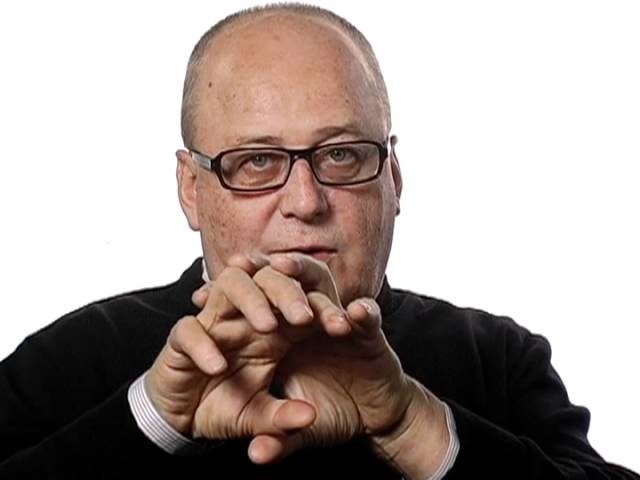
Fabrice Grinda, founder of OLX and Zingy, talks about the mindset of starting your own business and when to use strategic thinking and discusses his nine business selection criteria.
----------------------------------------------------------------------------------
TRANSCRIPT:
Fabrice Grinda: You need to be a fundamental optimist, because the reality is, if you look at the statistics, if you start a company today, there’s only five percent chance that it will still be around in five years. So there’s a 95 percent failure rate. So you need to believe that you’re going to beat those odds, because either your idea’s great, or you know how to do something different, or better, and you’re so good that you’re going to be able to go with that.
You also need be very adaptive, in the sense that things are going to happen very differently from the script that you usually imagine in terms of the way it plays out, and so as soon as something is thrown your way, you need to adapt, adjust, and always think or rethink your model.
Fabrice Grinda: The reality is I never share them, because to your employees, you always have to be cheerful. Even if you’re about to miss payroll, you’re like, “No, everything’s going to be great. The money’s about to arrive,” etcetera.
In terms of your own doubts, you know, I think through what are the different downsides, or not downsides, but the differences. There are differences you can do, and I evaluate the scenarios, and sometimes I might be wrong, but the reality is, just try it. You try it, and you see if it works out, and if it doesn’t, you know, it’s okay, you move on.
And if your company fails, you know, it’s okay. You’ll have learned something, and had a fantastic experience, and the reality is you can probably go back and, you know, get another job, and maybe even a better position because of all the experience you’ll have accumulated as a small business owner.
Fabrice Grinda: Oh, absolutely.
In fact, I’d rather invest in someone who has created a company and failed than somebody who has never created a company, because he will know all the mistakes not make. Because I would argue the job I do today is pretty much exactly the same job I was doing ten years ago when I started my first large start-up.
The difference is now I don’t make all the same mistakes.
Fabrice Grinda: The most difficult thing is usually raising the money, which is, when you’re starting your business, especially the first time around, you have no reputation, you have no track record, you usually have very little money of your own, and so understanding how to raise money, if you need to raise money, and how to go about it, is key.
And the first time around, I made all the mistakes.
I had read that you need a big, 80 page complex business plan and financial model, which I wrote, and I was calling these venture capitalist, and emailing them the business plan. None of them ever replied. I never got a call back.
It took me a long time to realize that, they don’t have time to read a business plan that’s 80 pages long. You need like a ten, 15 page PowerPoint. You need to be introduced by people who know them.
And frankly, because you’re such an inexperienced entrepreneur, you need to show that you can execute, because they don’t want to take the execution risk. So you need to build the site for your company, you need to have some revenue and some clients. You need to show that you can actually deliver before you raise money, and then you should go and raise money using that ten, 15 page PowerPoint and introductions.
Fabrice Grinda: The reality is I don’t think that much preparation is required. I think you go and do it.
The only aspect that requires real strategic thinking is the business you’re entering. You need to make sure it’s the right business.
What’s the market size?
What are the margins in the business?
Is it scalable?
How much capital do I really need to enter the business?
So, I have my nine business selection criteria, and I make sure that every idea that I consider entering, I vet through these criteria, but once that’s set, you know, I just go for it. I incorporate, I try to find the key employees I’m going to need, and then you try it.
Fabrice Grinda: The criteria are somewhat personal, because they relate to my interest, but what’s a billion dollar market opportunity, and the reason is you need a big idea. Otherwise you’re not really fundable. No investor is going to fund you for a 20 or 30 million dollar business.
Read the full transcript at
Sentinel Indexing in Progress
Metadata and chapters are available. Claim extraction for this episode is pending.
All video content is delivered via YouTube embedded players in accordance with the YouTube Terms of Service. Sentinel provides research tools that promote discovery and accountability across political media.