Big Think
@bigthink·8.8M subscribers·10.1K videos
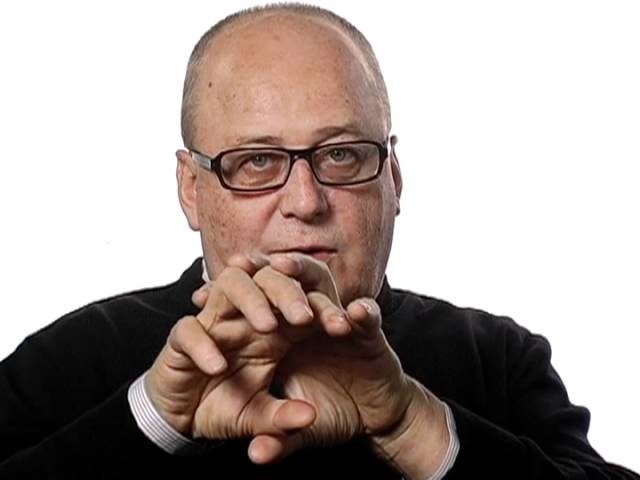
Nafisi: What is better in Iran? | Big Think
Posted
April 24, 2012
Views
1,733
Likes
16
Comments
1
Engagement
0.98%
April 24, 2012
1,733
16
1
0.98%
Every word spoken in this episode is indexed. Type any phrase to jump straight to the moment it was said.
Type any word or phrase that may have been spoken. Click a result to seek the player to that exact moment.
Try a name, a topic, or a quoted line
See what was published immediately before and after this episode.
 3:38Now Playing
Azar Nafisi: What is better in Iran?
New videos DAILY
Join Big Think Edge for exclusive videos
----------------------------------------------------------------------------------
Nafisi is puzzled by the simplification and self-righteousness she encounters in America.
----------------------------------------------------------------------------------
Azar Nafisi:
Azar Nafisi is best known as the author of the national bestseller Reading Lolita in Tehran: A Memoir in Books, which electrified its readers with a compassionate and often harrowing portrait of the Islamic revolution in Iran and how it affected one university professor and her students. The book has spent over 117 weeks on the New York Times bestseller list. Azar Nafisi’s new book, Things I Have Been Silent About: Memories, a memoir about her mother, was published in January 2009.
Azar Nafisi is a Visiting Professor and the executive director of Cultural Conversations at the Foreign Policy Institute of Johns Hopkins University’s School of Advanced International Studies in Washington, DC, where she is a professor of aesthetics, culture, and literature, and teaches courses on the relation between culture and politics. Azar Nafisi held a fellowship at Oxford University, teaching and conducting a series of lectures on culture and the important role of Western literature and culture in Iran after the revolution in 1979. She has taught at the University of Tehran, the Free Islamic University and Allameh Tabatabaii.
----------------------------------------------------------------------------------
TRANSCRIPT:
Azar Nafisi: There are two things. Obviously I have far more freedoms in any . . . in every way – the way I look; the way I act; the books I write; the fact that I go around saying anything I want, which is usually not favorable a lot of times. What surprised me when I came back was the degree of politicization and polarization. That was one thing that was amazing to me. It was almost like being in a . . . somewhere in Iran where people, because of lack of political freedoms, become polarize you know? And the simplifications which come with the sort of polarization . . . the self-righteousness. It is not just the administration who says if you’re with . . . if you’re not with us, you’re against us. A lot of people who opposed the administration used the same form of language. So it’s a self-righteousness when you think . . . I mean others are wrong. And as President Bush likes to say, evil does exist in the world. But that doesn’t make us all good. And that idea that we are good against evil is very frightening to me. One thing that I’ve become very involved in and very, very worried about is because of this sound bite culture and the simplifications, so little attention is being paid to things that are the cornerstones of every democratic society, which is humanities. Where I work . . . I mean at the universities you see . . . I’m not talking about Hopkins specifically. I’m talking about the trend, because individual universities okay. NYU has a wonderful humanities department. I was at Yale last week, and I was telling them you guys, you’re living in a paradise. You don’t understand what is going on. But as a whole, humanities is dropping. Funding for it is dropping. Students are being told that if you take philosophy or English you’ll get nowhere, you know? So science is being separated from that renaissance idea of knowledge. Science is not technology. Science used to be genuine knowledge. It had thought and ideas behind it. This worship of things that are crassly pragmatic . . . I think that we should . . . We need a march on Washington on these issues. I think we need a town hall meeting in every city. Worrying about where this is going to take our culture, you know. So these are some of the things . . . My students in Iran know far more about ..., or Mark Twain than my American . . . than some of my American students. This lack of attention to thought and imagination, at least for someone in my field, is the most terrifying thing.
Sentinel Indexing in Progress
Metadata and chapters are available. Claim extraction for this episode is pending.
All video content is delivered via YouTube embedded players in accordance with the YouTube Terms of Service. Sentinel provides research tools that promote discovery and accountability across political media.