Big Think
@bigthink·8.8M subscribers·10.1K videos
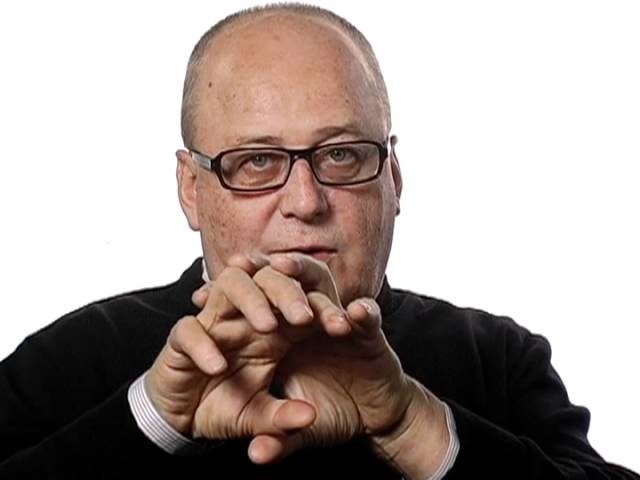
Sen. George Mitchell on Influences and Entering Politics | Big Think
Posted
April 24, 2012
Views
325
Likes
1
Comments
1
Engagement
0.62%
April 24, 2012
325
1
1
0.62%
Every word spoken in this episode is indexed. Type any phrase to jump straight to the moment it was said.
Type any word or phrase that may have been spoken. Click a result to seek the player to that exact moment.
Try a name, a topic, or a quoted line
See what was published immediately before and after this episode.
 6:43Now Playing
Sen. George Mitchell on Influences and Entering Politics
New videos DAILY
Join Big Think Edge for exclusive videos
----------------------------------------------------------------------------------
Sen. George Mitchell on Influences and Entering Politics
----------------------------------------------------------------------------------
George John Mitchell:
George John Mitchell is the American special envoy to the Middle East for the Obama administration. A Democrat, Mitchell was a United States Senator who served as the Senate Majority Leader from 1989 to 1995. He was chairman of The Walt Disney Company from March 2004 until January 2007, and was chairman of the international law firm DLA Piper at the time of his appointment as special envoy.
He is the Chancellor of Queen's University in Belfast, Northern Ireland. In 2006, he was asked by the Commissioner of Baseball to lead an investigation of the use of performance-enhancing drugs in professional baseball.
In addition to the Presidential Medal of Freedom, Senator Mitchell has received awards and honors including the Philadelphia Liberty Medal, the Truman Institute Peace Prize, the German Peace Prize and the United Nations (UNESCO) Peace Prize.In the Senate, he was closely associated with free trade and environmental legislation, and with aid to housing and education. He led the successful 1990 reauthorization of the Clean Air Act, including new controls on acid rain toxins. He was the author of the first national oil spill prevention and clean-up law. Mitchell led the Senate to passage of the nation's first child care bill and was principal author of the low income housing tax credit program. He was instrumental in the passage of the Americans with Disabilities Act, landmark legislation extending civil rights protections to the disabled. Mitchell's efforts led to the passage of a higher education bill that expanded opportunities for millions of Americans. Senator Mitchell was also a leader in opening markets to trade and led the Senate to ratification of the North American Free Trade Agreement and creation of the World Trade Organization.For six consecutive years he was voted "the most respected member" of the Senate by a bipartisan group of senior congressional aides. In 1994 George Mitchell declined an appointment to the Supreme Court of the United States in order to remain in the Senate and pursue the struggle for universal national health care.
----------------------------------------------------------------------------------
TRANSCRIPT:
Question: How did your parents influence you?
George Mitchell: My father was born in Boston. His parents emigrated from Ireland to the United States, prior to 1900. He was born in Boston in 1900. He never knew his parents. We don’t know much about the history, but apparently his mother died shortly thereafter. The father couldn’t care for the children, and so my father and his siblings were all placed in orphanages in the Boston area, so my father grew up in an orphanage in central Boston, and then back in those days- it’s quite an interesting story which I didn’t learn until after my father’s death because he never spoke about his early years-- back in those days, the nuns who ran these orphanages used to take these kids out on the weekends to Catholic parishes in the rural parts of New England. And at the end of the Sunday Mass, a group of children would be lined up in the front of the church at the altar rail and anybody who wanted to adopt a child would just take one by the hand and walk out the door with them. As you can see, there’s a huge potential for abuse, and there was
+++ abuse, I think particularly in the rural areas. But in that manner, my father was adopted in Bangor, Maine by an elderly, childless couple. They then moved shortly thereafter to Waterville, Maine, which is where I grew up, and where my father grew up with his adoptive parents. It was a slum. They were very poor. My grandparents ran a small store of some kind, and back in those days, the textile mills were booming, and a lot of immigrants came in to work the textile mills, not just in Waterville, but throughout northern New England. The workers tended to be largely French-Canadian, who were emigrating from Quebec. That’s a whole different story, very interesting, but they emigrated to many cities in northern New England, particularly those which were on rivers and had textile and footwear mills.
Read the full transcript at
Sentinel Indexing in Progress
Metadata and chapters are available. Claim extraction for this episode is pending.
All video content is delivered via YouTube embedded players in accordance with the YouTube Terms of Service. Sentinel provides research tools that promote discovery and accountability across political media.