Big Think
@bigthink·8.8M subscribers·10.1K videos
Tom Perrotta on Screenwriting | Big Think
Posted
April 24, 2012
Views
10,477
Likes
78
Comments
4
Engagement
0.78%
April 24, 2012
10,477
78
4
0.78%
Every word spoken in this episode is indexed. Type any phrase to jump straight to the moment it was said.
Type any word or phrase that may have been spoken. Click a result to seek the player to that exact moment.
Try a name, a topic, or a quoted line
 7:27Now Playing
Tom Perrotta on Screenwriting
New videos DAILY
Join Big Think Edge for exclusive videos
----------------------------------------------------------------------------------
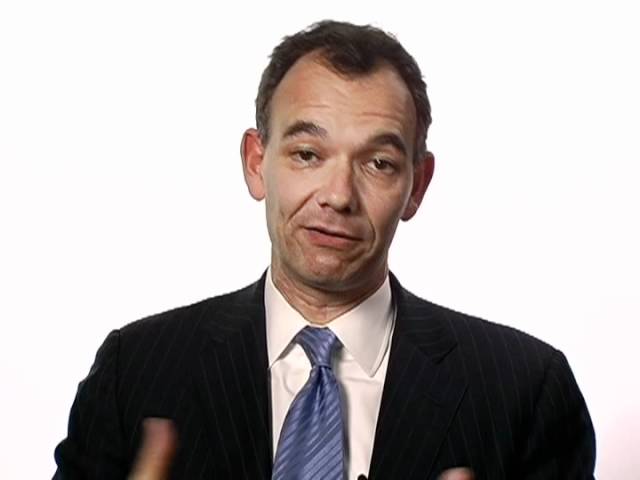
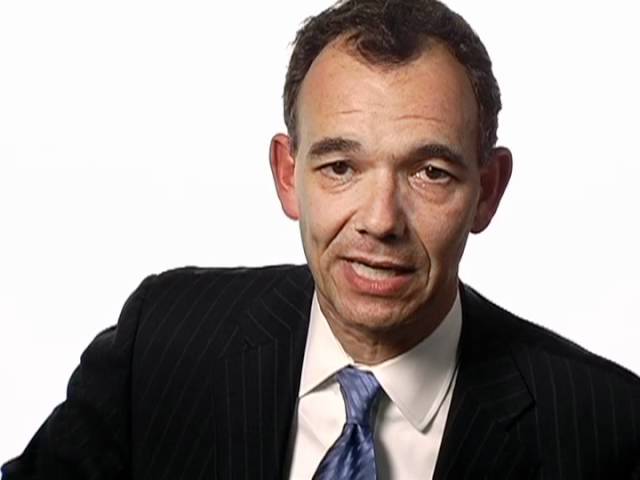
Tom Perrotta on the joy of writing movies.
----------------------------------------------------------------------------------
Thomas R. Perrotta:
Thomas R. Perrotta is an American novelist and screenwriter best known for his novels Election (1998) and Little Children (2004), both of which were made into critically acclaimed, Golden Globe-nominated films. Perrotta co-wrote the screenplay for the 2006 film version of Little Children with Todd Field, for which he received an Academy Award nomination for Best Adapted Screenplay.
----------------------------------------------------------------------------------
TRANSCRIPT:
Question: Why did you get into screenwriting?
Perrotta: I think that one of the reasons that I got into screenwriting had to do with the sense that my own position, my own ability to make a living as a novelist was pretty precarious a few years ago. That’s changed a bit, you know, with my last two books, but I, “Joe College” was my fourth book and, you know, I hadn’t really made any kind of a living as a writer. I was teaching and I’d had, you know, a little bit of luck with “Election” being made as a film, but I was really trying to think like how am I going to keep going as a writer economically and I got some opportunities, because “Election” was so well received, to write some screenplays and, you know, I was definitely responding to a kind of economic imperative. I wanted to make a living writing as opposed to teaching but I was also well aware that, you know, if you make a movie, millions of people see it, and if you write a book, if you’re lucky, tens of thousands of people will read it and I think that if you want, like, something like “Election” I thought, when I wrote the book, this is a political novel. I would love for people to talk about this book in relation to the American political system. When it came as a book, nobody did. It was hardly reviewed and when it was reviewed, it was reviewed, and I think in terms that were smaller than I’d hoped, but when the movie came out, people immediately saw that it was a political allegory. They still talk about it now. I mean, in this election, Tracy Flick has come up both in terms of Hilary Clinton and in terms of Sarah Palin and, you know, just, it’s very clear to me as a writer that if “Election” only existed as a book, none of that would have happened. Tracy Flick would not have become this iconic figure within the culture that people just… It’s just a shorthand. Now, you say the name and people know what that is. So, it will be, I think… it would just be disingenuous of me to say that I wasn’t aware of that disparity in terms of audience and just in terms of impact on the culture.
Question: How is screenwriting different from writing a novel?
Perrotta: Screenplay is a much more rigid form. It’s got to be a certain length. It’s got to have a certain characteristics if it’s going to survive in the Hollywood marketplace or even the indie marketplace. And what happened was “Election” came out, people really responded to it in Hollywood and I suddenly got, I got an offer from the WB Network, which well, you know, makes no sense to me, really. But they said, you know, we want you to write TV pilots for us and they gave me an offer of, you know, 2 pilots, a half-hour sitcom and an hour drama, and so I got paid to do that and, you know, it’s a sort of on-the-job training. You know, I read the books that everybody reads in film school about writing screenplays, but I actually found it was a fairly intuitive thing for me. I have been a huge movie fan since I was kid and, you know, spent a lot of… I took a lot of film classes in college and in the years since [I was out of] college I went to movies constantly. So, I trained in a way without knowing I was training for it because when it came time to write a script I had a pretty good idea of what it was. I also feel like I write my fiction in a kind of scenic way, you know. It’s, you know, very often the conversation at the heart of a scene, the narrative structure is pretty tight. It’s not so voice driven that you can’t make a translation from the page to the screen without doing some crazy thing. So, even though it was a craft and I had to learn the craft, and I’m still learning it, I think I could write a competent screenplay pretty early on.
Question: How has writing “The Abstinence Teacher” informed your screenwriting?
Read the full transcript at
Sentinel Indexing in Progress
Metadata and chapters are available. Claim extraction for this episode is pending.
All video content is delivered via YouTube embedded players in accordance with the YouTube Terms of Service. Sentinel provides research tools that promote discovery and accountability across political media.