Big Think
@bigthink·8.8M subscribers·10.1K videos
Southern Discomfort | Augusten Burroughs | Big Think
Posted
April 24, 2012
Views
519
Likes
9
Comments
1
Engagement
1.93%
April 24, 2012
519
9
1
1.93%
Every word spoken in this episode is indexed. Type any phrase to jump straight to the moment it was said.
Type any word or phrase that may have been spoken. Click a result to seek the player to that exact moment.
Try a name, a topic, or a quoted line
Episode Timeline
Every episode in order around the one you’re watching — click any card and the page flips straight to it.
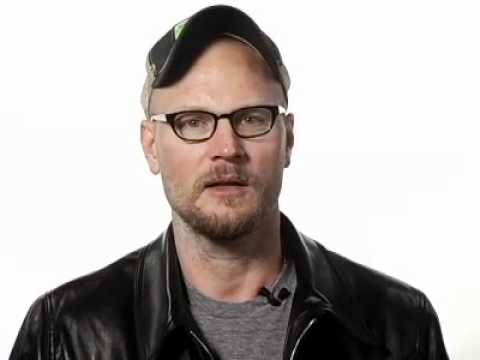 6:23Now Playing
Southern Discomfort
New videos DAILY
Join Big Think Edge for exclusive videos
----------------------------------------------------------------------------------
Northerner by birth, Southerner by everything else?
----------------------------------------------------------------------------------
Augusten Burroughs:
Augusten Burroughs was born Christopher Richter Robison in Pittsburgh, PA on October 23, 1965 and raised in Western Massachusetts. Augusten's parents struggled with alcoholism and mental illness and they separated when he was twelve. Augusten stopped attending school and his parents' longtime psychiatrist became his legal guardian. At seventeen, he moved to the Boston area and graduated from Control Data Institute with a diploma in Computer Programming and System's Analysis and Design but never worked in the technology industry. Instead he moved to San Francisco and at 19 became the youngest copywriter in the city. His work attracted national acclaim and in 1989 he was invited by Ogilvy & Mather, New York, to work on their flagship American Express account. Augusten found great success in the Manhattan advertising community, eventually working for many of the top agencies where he created global ad campaigns for worldwide brands. Almost eighteen years after accepting his first advertising job, Augusten left the industry to pursue a career as an author. Two years later, his 2002 memoir, Running with Scissors, became a publishing phenomenon, spending over three consecutive years on the NYT bestseller list. It was made into a movie starring Annette Bening and Alec Baldwin. All of Augusten's subsequent books — Dry, Magical Thinking, Possible Side Effects, A Wolf at the Table, You Better Not Cry & This is How — were instant NYT bestsellers. In 2013, Augusten married his literary agent and best friend, Christopher Schelling, received a Lambda Literary Award, and was honored with a Doctorate of Letters from the Savannah College of Art and Design. Augusten is also a self-taught gemologist with a special interest in jade. He collects and sells vintage and estate jewelry, photographs people, and recently directed his first music video. Augusten and his husband Christopher live in a 200 year old house in rural Connecticut with their three dogs.
----------------------------------------------------------------------------------
TRANSCRIPT:
Question: How were you shaped by geography?
Augusten Burroughs: I was raised in western Massachusetts. I am the child of two southerners. My brother is also southern and my family is southern way back before the Mayflower so I was the only Yankee in the family for all generations, and it definitely shaped me in my tastes. I was the only little Yankee boy who liked boiled peanuts and puts salted peanuts in his Coke and liked grits for breakfast.
Question: Does the South influence your work?
Augusten Burroughs: Well, southerners I think have a number of traditions one of which is storytelling so my southern relations when we get together-- It’s just one story after another after another after another. Thanksgiving when I go down to visit my Uncle Bob and Aunt Relda and all the cousins are there my stomach will hurt for days afterward because it’s just so funny, and they’re all great storytellers and that’s kind of how family knowledge is passed on from generation to generation is through stories.
It’s a cliché but there is a certain level of dysfunction I suppose that goes along with being part of a southern family, secrets and all these entanglements, and there is a sort of gentility, a courtesy. I was very polite as a child, very well mannered as a child, and that’s something else that you find in the South.
Question: Where do manners come from?
Augusten Burroughs: I think probably it all started with the Astors and the Vanderbilts in New York City in the Gilded Age when society was constructed of layers upon layers upon layers of etiquette. You didn’t call somebody on the phone or you didn’t text them and say, “Let’s go grab lunch.” You would have your person send your handwritten note over by carriage to your acquaintance’s or your friend’s house and they would receive the note and respond in kind, and there were just very many layers to society and how we behaved and how we reacted appropriately.
Now because New York is and always has been sort of the Zeitgeist from which everything radiates out, this is the- sort of the taste center and the design center of America and certainly was back then, I think a lot of people emulated that stratified sort of concept of society and Chicago certainly did.
Read the full transcript at
Sentinel Indexing in Progress
Metadata and chapters are available. Claim extraction for this episode is pending.
All video content is delivered via YouTube embedded players in accordance with the YouTube Terms of Service. Sentinel provides research tools that promote discovery and accountability across political media.