Big Think
@bigthink·8.8M subscribers·10.1K videos
Who are you? | Big Think
Posted
April 24, 2012
Views
118
April 24, 2012
118
Every word spoken in this episode is indexed. Type any phrase to jump straight to the moment it was said.
Type any word or phrase that may have been spoken. Click a result to seek the player to that exact moment.
Try a name, a topic, or a quoted line
See what was published immediately before and after this episode.
 7:16
7:16 4:10Now Playing
Who are you?
New videos DAILY
Join Big Think Edge for exclusive videos
----------------------------------------------------------------------------------
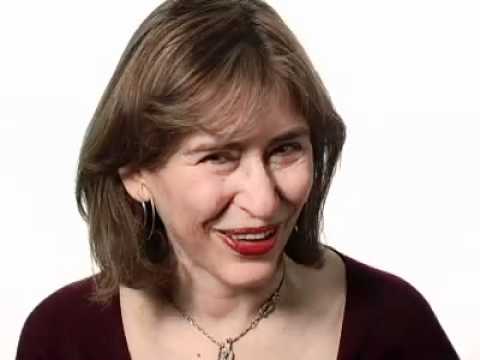
Nancy Koehn describes the operating system of her mind.
----------------------------------------------------------------------------------
Nancy Koehn:
Nancy Koehn is a historian at the Harvard Business School where she holds the James E. Robison chair of Business Administration. Koehn's research focuses on how leaders, past and present, craft lives of purpose, worth, and impact.
Her new book, Forged in Crisis: The Power of Courageous Leadership in Turbulent Times is an enthralling historical narrative filled with critical leadership insights that will be of interest to a wide range of readers—including those in government, business, education, and the arts—Forged in Crisis spotlights five masters of crisis: polar explorer Ernest Shackleton; President Abraham Lincoln; legendary abolitionist Frederick Douglass; Nazi-resisting clergyman Dietrich Bonhoeffer; and environmental crusader Rachel Carson.
Koehn is the author of numerous books, articles, and Harvard Business School cases. She writes frequently for the New York Times, the Washington Post, and the Harvard Business Review Online. She is also a weekly commentator on National Public Radio and has appeared on many national television programs. She has spoken at the World Economic Forum in Davos, the Aspen Ideas Festival, and in many other venues.
A Phi Beta Kappa graduate of Stanford University, Koehn earned a Master of Public Policy from Harvard's Kennedy School of Government before taking her MA and PhD in History from Harvard. She lives outside Boston and is a dedicated equestrian.
----------------------------------------------------------------------------------
TRANSCRIPT:
Question: Who are you?
Nancy Koehn: Nancy Koehn. And I am the James Robison Professor of Business Administration at the Harvard Business School. I was born in Chicago. I lived in Illinois, and in Maine, and in Texas as a child. I went to school in California; came to Boston 25 years ago for two years and never left. I think of myself as a traveler. That was how I intended to answer the first question, “Who are you?" And I had not connected it to a childhood that included a lot of stops along the journey; but I think living in so many different parts of the country and seeing so many different ways of life probably did affect my interest in traveling through the past and into the present. I'm very comfortable with traveling without a set destination, and that may have something to do with being a child that, you know, changed schools so many times. Until I reached sixth grade, I think I was in a different school every year. So maybe that proclivity to travel metaphorically is part of who I am as a professional and as a human traveler and as a traveler on a life journey.
I don't think there was a pivotal moment in my childhood. If I was asked to think about a critical point or juncture, it would be in my adult life. And whether that moment or those moments, you know, hearkened back or had a taproot into older points along my childhood journey may indeed be so; but I'm less conscious of them. And a piece of that is an increasing impatience with living in the past, which I think even as a historian being paid to do that in many ways, I have spent as a human traveler too much time doing. So I . . . Perhaps my mental operating system is my desktop, if you will it just has more file folders that are closer in time to this moment than it does moments in my childhood. My father was a very important influence in my life. I thought for most of my adult life thus far that he was much more important than my mother. But I think now in my middle age and I feel like I'm aging as I speak like my mother is very important also. My father as a role model professionally, he was a philosopher. And he was a very athletic man, and that was incredibly important to me growing up and still is. He was a driven man, and I think for good and less good, I took some of my drive and my natural operating system from him and his intensity. From my mother I actually gained more subtle gifts like an eye for the large landscape … for the large landscape of the times; the large landscape of a moment or a situation; for the large landscape of our lives. She's a … She has a wide angle lens on her, and it took me a long time to realize how much of that I've benefited from. There was one teacher in particular as well that I think really affected who I am today. And her name was Mrs. Powers, and she was my teacher in sixth grade. And she taught me to write.
Read the full transcript at
Sentinel Indexing in Progress
Metadata and chapters are available. Claim extraction for this episode is pending.
All video content is delivered via YouTube embedded players in accordance with the YouTube Terms of Service. Sentinel provides research tools that promote discovery and accountability across political media.