Big Think
@bigthink·8.8M subscribers·10.1K videos
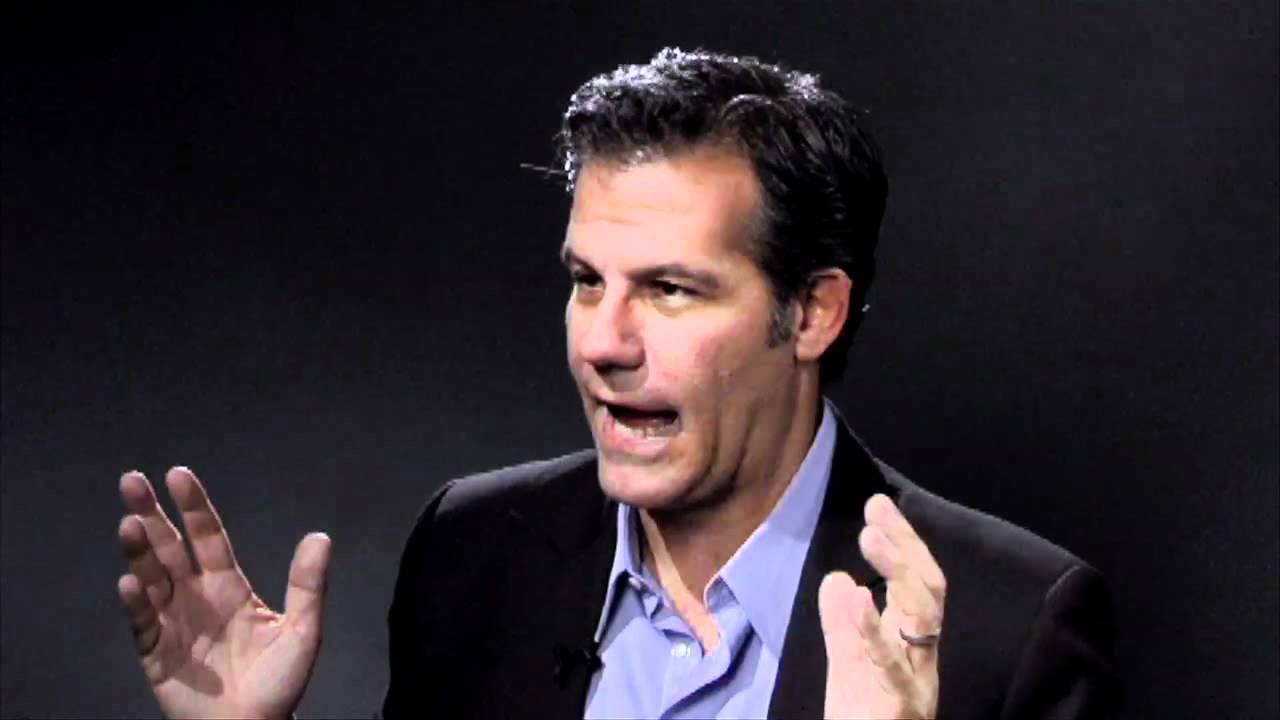
Why Friends Make All The Difference | Laurence Steinberg | Big Think
Posted
April 24, 2012
Views
915
Likes
11
Engagement
1.20%
April 24, 2012
915
11
1.20%
Every word spoken in this episode is indexed. Type any phrase to jump straight to the moment it was said.
Type any word or phrase that may have been spoken. Click a result to seek the player to that exact moment.
Try a name, a topic, or a quoted line
You’re on April 24, 2012. Earlier episodes are to the left, later ones to the right — the row keeps loading as you go. Click any card to open it.
 Apr 24, 20123:59Now Playing
Why Friends Make All The Difference
New videos DAILY
Join Big Think Edge for exclusive videos
----------------------------------------------------------------------------------
A developmental psychologist explains the surprising cognitive effect of having friends near.
----------------------------------------------------------------------------------
Laurence Steinberg:
Laurence Steinberg is the Distinguished University Professor of Psychology at Temple University. An internationally renowned expert on psychological development during adolescence, he is the author of more than 250 articles and essays on growth and development during the teenage years, and the author or editor of eleven books, including Adolescence the leading college textbook on adolescent development. A graduate of Vassar College and Cornell University, he was named as the first recipient of the Klaus J. Jacobs Research Prize in 2009, one of the largest prizes ever awarded to a social scientist, for his contributions to improving the lives of young people and their families.
----------------------------------------------------------------------------------
TRANSCRIPT:
Question: What is one of your most unexpected recent findings?
Laurence Steinberg: The more recent finding is this peer effect, where -- we did a study where we had people come into the lab to take a batter of risk-taking and decision-making measures on a computer. And we asked them to come and bring two friends with them. And then we randomly assigned them to either do these tasks by themselves or to do it with their friends watching them. And we had teenagers, college undergraduates and adults, you know, 30 or so years old. And so what we found in this study was that the mere presence of peers doubled the number of risks that adolescents took. It had a 50 percent increase among college students and no effect at all among adults. Now, this was really interesting to me. Nobody had shown this experimentally before, although it's consistent with the idea that most adolescent risk-taking occurs when they're in groups and with their friends.
So we just recently -- my colleague Jason Chein, who's a neuroscientist, and I just recently took this experiment into the FMRI. So we have the subjects with their brains being scanned, and they're lying down on the magnets, the computer screen is in there, they can do the task, the same task. We have them come with two friends; their friends are in the next room. Their friends can see their performance on a monitor that's in the next room, and their friends are miked into the magnets. So on cue, when we tell the friends, they say, okay, Dave, I'm watching you now, all right? And we compare people's performance on these tasks when they know their friends are watching them and when they know their friends can't see them at all. So they're not even in the same room with them; they're just aware of their presence. I mean, they're not encouraging them to take risks or anything like that, because we script what they're allowed to say. And we've just discovered --we're in the process of writing this up right now to send out to a journal -- that the presence of peers activates the brain systems that are in this reward circuit that we've been talking about, in kids, but it doesn't in adults.
And so we think that the reason that we saw the peer effect is that when you are with your friends when you are a teenager, it increases the salience of the rewarding aspects of a risky decision, which then of course is going to make you pursue the risky decision rather than be risk-averse. So we're really excited about this finding. And we are just working on a paper this morning in which we looked at the impact of the presence of friends on people's preferences for immediate versus delayed rewards. And we're just doing this in the scanner now, but in our behavioral research we see the same thing. So we have a sample of 19-year-olds, and they do this task -- it's called a delay discounting task -- where it basically measures how much less of a reward you'd be willing to take to get it now rather than waiting. When the 19-year-olds do this with their friends watching them, they make decisions that are comparable to what 14-year-olds make. But when 19-year-olds do it with their friends not watching them, they behave like adults. And so again it's this impact of peers on reward processing that seems to be going on that may play a role in understanding risk-taking. So when we first saw -- you ask what gets me excited -- you know, when we first saw these brain scans, we couldn't believe it because it looked too beautiful to be true. And we peaked kind of early on; we'd only run, you know, a couple dozen subjects. And now we've done the whole experiment, and it's just amazing. It has held up, so we're really, really jazzed about this.
Sentinel Indexing in Progress
Metadata and chapters are available. Claim extraction for this episode is pending.
All video content is delivered via YouTube embedded players in accordance with the YouTube Terms of Service. Sentinel provides research tools that promote discovery and accountability across political media.