Big Think
@bigthink·8.8M subscribers·10.1K videos
Television Did a Good Job | Andrew Ross Sorkin | Big Think
Posted
April 24, 2012
Views
126
Likes
1
Engagement
0.79%
April 24, 2012
126
1
0.79%
Every word spoken in this episode is indexed. Type any phrase to jump straight to the moment it was said.
Type any word or phrase that may have been spoken. Click a result to seek the player to that exact moment.
Try a name, a topic, or a quoted line
You’re on April 24, 2012. Earlier episodes are to the left, later ones to the right — the row keeps loading as you go. Click any card to open it.
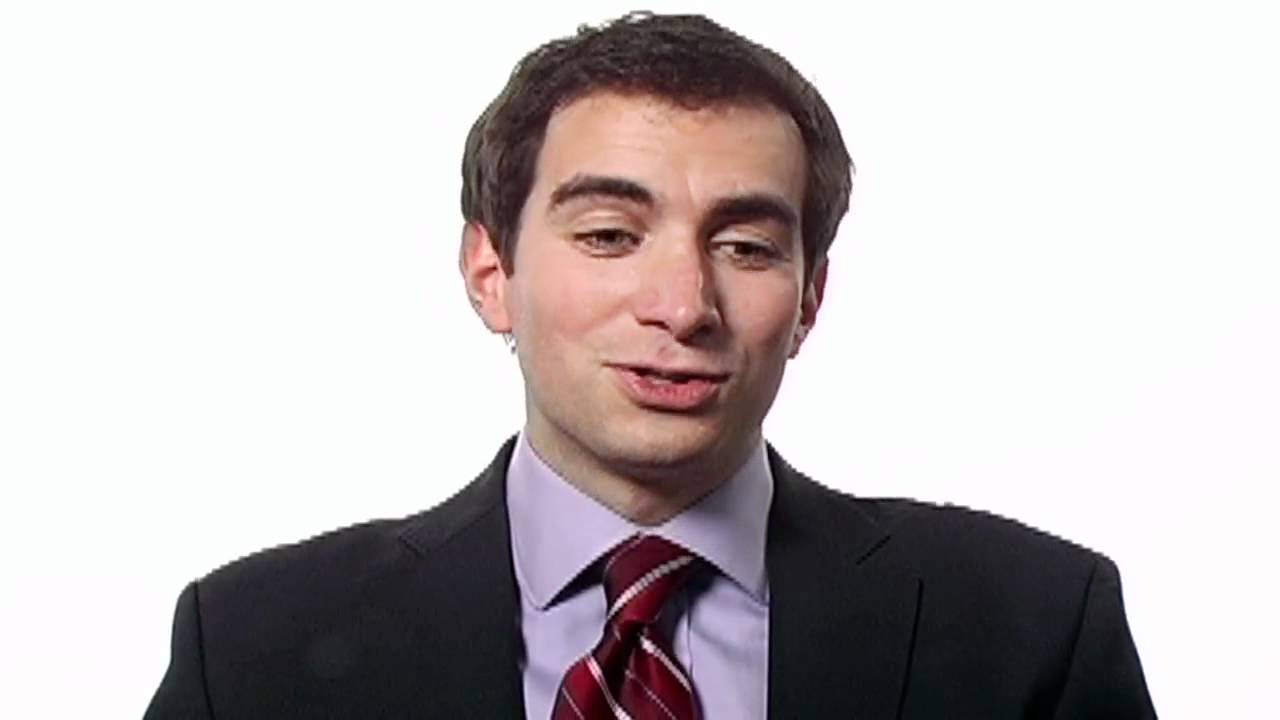 Apr 24, 20126:09Now Playing
Television Did a Good Job
New videos DAILY
Join Big Think Edge for exclusive videos
----------------------------------------------------------------------------------
Contrary to popular belief, Andrew Ross Sorkin thinks TV coverage of the financial meltdown stood up quite well.
----------------------------------------------------------------------------------
Andrew Ross Sorkin:
Andrew Ross Sorkin is The New York Times’s chief mergers and acquisitions reporter and a columnist. He is also the author of the 2009 book, "Too Big To Fail." Mr. Sorkin, a leading voice about Wall Street and corporate America, is also the editor of DealBook, an online daily financial report he started in 2001. In addition, Mr. Sorkin is an assistant editor of business and finance news, helping guide and shape the paper’s coverage.Mr. Sorkin, who has appeared on NBC's “Today” show and on “Charlie Rose” on PBS, is a frequent guest host of CNBC’s “Squawk Box.” He won a Gerald Loeb Award, the highest honor in business journalism, in 2004 for breaking news. He also won a Society of American Business Editors and Writers Award for breaking news in 2005 and again in 2006. In 2007, the World Economic Forum named him a Young Global Leader. Mr. Sorkin began writing for The Times in 1995 under unusual circumstances: he hadn’t yet graduated from high school. Mr. Sorkin lives in Manhattan.
----------------------------------------------------------------------------------
TRANSCRIPT:
Question: How do you develop Wall Street sources? (Dan Indiviglio, Atlantic Business Channel)
Andrew Ross Sorkin: When I started doing this about 10 years ago in London, and when I first started this job, I used to literally make lists of people on Wall Street that I wanted to try to meet every given month. So I would sit and make a list of 30 people. And I would cold call, literally, and introduce myself as a reporter who planned to be on the beat for a very long time and thought it was important that we get to know each other in some way. And I think hopefully over the years people have taken those calls and occasionally those meetings, and a trust level has developed. And I think that's probably true of any reporter. It's really about hard work, shoe-leather reporting, getting on the telephone, running around, in my cases, to meetings or events to see different people, and whispering in their ear, and hopefully they're going to whisper back and tell you the information. You know, as a child I always enjoyed -- my parents used to have these little cocktail parties -- and I always loved trying to get the adults to tell me things they weren't supposed to say. And in many ways that's what my job is today; it's getting people to tell me things that they probably are otherwise not supposed to say. And I think you do that by developing some semblance of trust that you're going to be fair and that you get it. I think that's part of it. I've tried to study the industry. I've spent enormous amounts of time. I can, unfortunately, do a model, a DCF model, with the best of them. I wouldn't say I enjoy it, but -- and I also think that when you've studied it up, when you've come to the table with the right questions, when it's clear to the other side, the interviewee, that you know what you're talking about, you can get a lot more.
Question: What’s the biggest challenge for financial journalism going forward? (Dan Indiviglio, Atlantic Business Channel)
Andrew Ross Sorkin: The hardest part for a financial journalist going forward is actually going to be to get a straight take. It's very hard to truly get close to the action any more. I think there was a sense in the '80s and maybe even part of the '90s, and earlier, when you could really get the CEO on the phone any day. You could really get inside the story. But today most of these companies are pretty lawyered up. They have a PR apparatus. It's very hard in real time to actually get a story that hasn't come pre-spun. And while the government is requiring more and more disclosures, as we've seen, some of these disclosures are worthless. And so it makes it an enormous challenge to be able to really be able to spot the problems.
Question: Do you try to warn readers when you present the views of someone who is out to lunch in their assessment of the economy? (Dean Baker, Beat the Press)
Andrew Ross Sorkin: When I'm aware that they're out to lunch, my goal is usually to tell you that they're out to lunch. I can't promise I've gotten it right every time.
Read the full transcript at
Sentinel Indexing in Progress
Metadata and chapters are available. Claim extraction for this episode is pending.
All video content is delivered via YouTube embedded players in accordance with the YouTube Terms of Service. Sentinel provides research tools that promote discovery and accountability across political media.