Daniel Davis Deep Dive
@danieldavisdeepdive·442K subscribers·4.9K videos
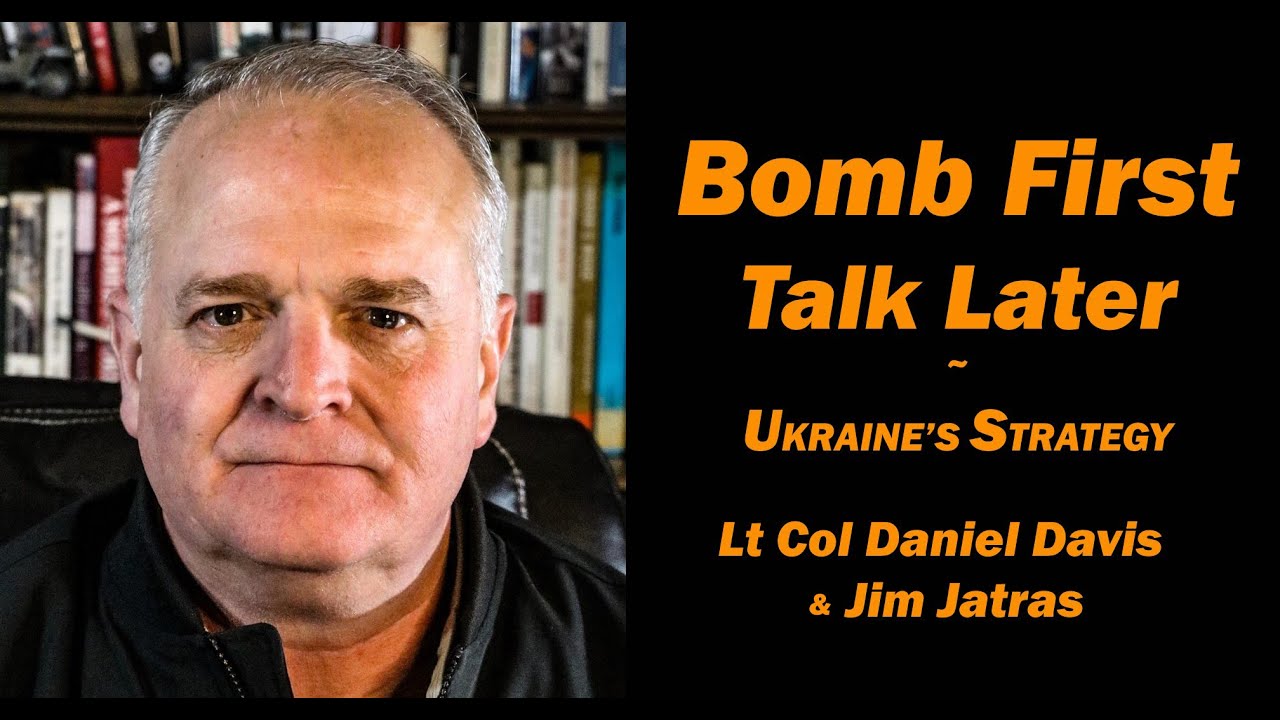
Bomb First, Talk Later: Ukraine's Strategy /Lt Col Daniel Davis & Jim Jatras
Posted
June 2, 2025
Views
38,670
Likes
2,422
Comments
283
Engagement
June 2, 2025
38,670
2,422
283
7.00%
Every word spoken in this episode is indexed. Type any phrase to jump straight to the moment it was said.
Type any word or phrase that may have been spoken. Click a result to seek the player to that exact moment.
Try a name, a topic, or a quoted line
 53:25Now Playing
Daniel Davis Deep Dive Merch: Etsy store
Low Expectations for Peace Talks: The speaker expresses skepticism that the second round of Russia-Ukraine direct negotiations will yield meaningful results. The notion that a figure like Trump could resolve the conflict swiftly is dismissed as unrealistic.
Russian Strategy – Pedagogical Warfare: Russia's approach is described as incremental, using military force to bring the opposing side to the negotiation table, repeatedly adjusting tactics when that fails. Moscow is seeking its terms to be met rather than full-scale military conquest—unless forced to do so.
Western Objectives – Containment, Not Victory: Western goals are not centered on Ukraine winning militarily but rather on achieving a "Korean-style" ceasefire line—a frozen conflict that can be militarized to contain Russia. This objective is embodied in proposals like the Kellogg Plan, which Russia is unlikely to accept.
European Motivation – Political Survival: European hardline stances are partly driven by internal politics—using the war to suppress populist opponents by branding them as pro-Russian. Civilian Ukrainian casualties are seen as a cost the West is willing to bear in pursuit of strategic outcomes.
Russian Restraint – Strategic or Misread?: Despite having military superiority, Russia is showing restraint—avoiding strikes on Ukrainian leadership or infrastructure like Dnipro bridges. The speaker suggests this may be to avoid provoking direct NATO involvement, though some interpret it as Russian weakness.
Mutual Distrust & Cynicism: Both sides appear to be negotiating in bad faith. Zelensky’s demands, like an unconditional ceasefire, are non-starters for Moscow and seem designed to justify continued sanctions rather than actual compromise.
West Seen as Untrustworthy: From Moscow’s perspective, treaties with the West are not credible. Even if the West agreed to Russia’s terms, the ceasefire would quickly override the formal agreements, as the West would not honor them.
Moral Framing – Existential Stakes: Both Russia and the West frame the conflict in existential terms—Russia as defending its survival; the West as fighting a battle of good versus evil akin to WWII. This ideological lens drives hardline policies on both sides.
Trump’s Role: The speaker doubts Trump has a clear strategy but believes he might at least try to de-escalate. However, his silence during key events is noted and his ability to shift policy is uncertain.
Sentinel Indexing in Progress
Metadata and chapters are available. Claim extraction for this episode is pending.
All video content is delivered via YouTube embedded players in accordance with the YouTube Terms of Service. Sentinel provides research tools that promote discovery and accountability across political media.