Daniel Davis Deep Dive
@danieldavisdeepdive·442K subscribers·4.9K videos
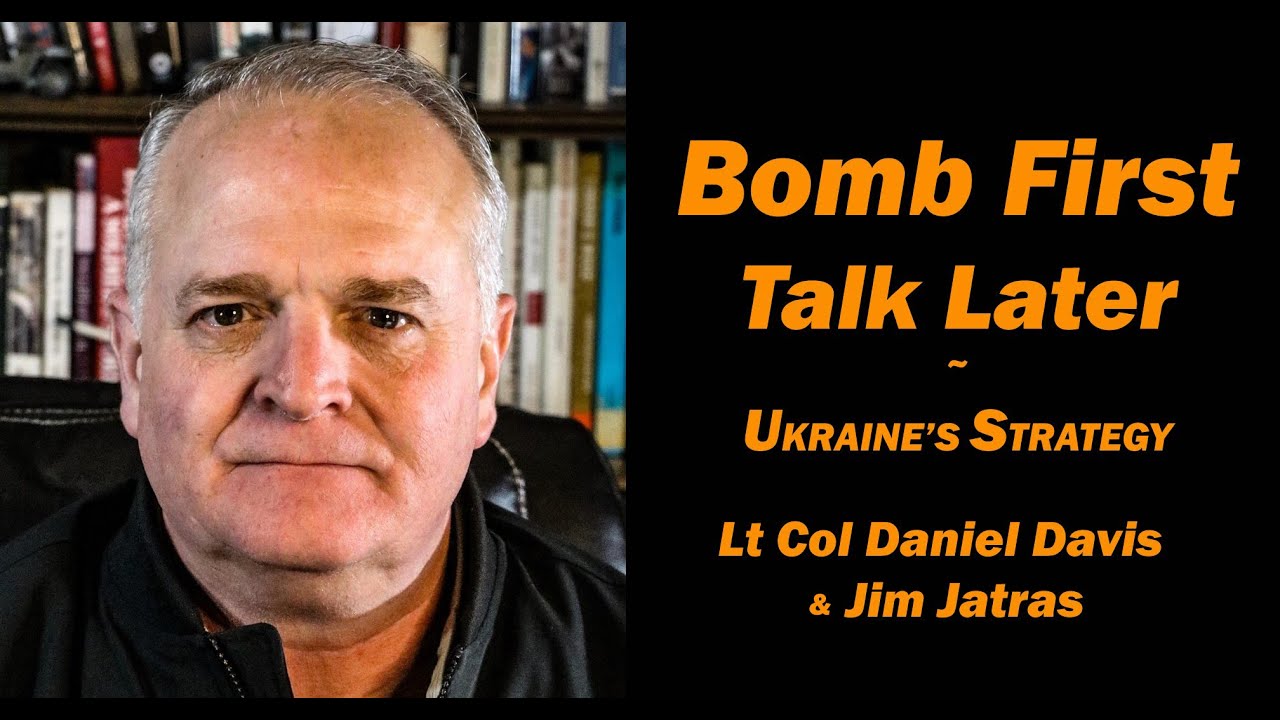
Ukraine Neutralitry an Impossibility/ Trump is Boxed In: Lt Col Daniel Davis & Jim Jatras
Posted
June 2, 2025
Views
33,603
Likes
1,484
Comments
288
June 2, 2025
33,603
1,484
288
5.27%
Every word spoken in this episode is indexed. Type any phrase to jump straight to the moment it was said.
Type any word or phrase that may have been spoken. Click a result to seek the player to that exact moment.
Try a name, a topic, or a quoted line
 18:17Now Playing
Daniel Davis Deep Dive Merch: Etsy store
The discussion centers on U.S. policy toward Russia and Ukraine, especially under Donald Trump’s influence, and how the evolving military and diplomatic landscape is shaped by internal and external pressures.
1. Sanctions and Strategic Cornering:
The U.S. has designed a sanctions path where Russia's rejection seems inevitable—Russia is offered terms they’re unlikely to accept, enabling the West to justify continued pressure and escalation.
This cornering tactic creates a "no off-ramp" scenario, pushing Russia to either escalate or continue a prolonged conflict.
2. Trump’s Position and Limitations:
Trump is seen as having some instinctive desire for better relations with Russia (akin to Nixon's détente) but lacks the strategy or leverage to enact meaningful change.
He's surrounded by hawkish advisors (e.g., Graham, Kellogg) and constrained by political forces in Washington, Europe, and even within his own administration.
3. Lindsey Graham’s Role:
Graham is portrayed as a manipulative figure with influence over Trump, advocating aggressive sanctions and military posturing.
His rhetoric aims at prolonging conflict rather than seeking resolution, with pressure on China and threats of trade penalties.
4. Russia’s Dual Messaging:
Official Russian diplomacy (via Lavrov, Medinsky) continues to speak about negotiation, but hardliners and military elements prefer decisive battlefield victory.
Russia offers peace terms they know Ukraine and the West won’t accept, likely to demonstrate reasonableness to the Global South (e.g., India, China), not the West.
5. Ukraine’s Position:
Ukrainian officials, echoing Zelensky, insist on a ceasefire as a prerequisite and warn of more sanctions if Russia doesn’t comply, reinforcing the status quo of attrition and international isolation for Russia.
6. Sanctions as a Long-Term Strategy:
Sanctions aren't expected to collapse the Russian economy but serve as a tool to keep Europe aligned with U.S. policy and entrench a Cold War-style divide.
They reinforce a siege mentality and eliminate political alternatives both in Russia and in European states that might favor détente.
7. The “Special Military Operation” vs. War:
Russia may be nearing a shift from its "special military operation" (SMO) framing to full-scale war, which would allow broader targeting and fewer constraints.
The SMO goals—demilitarization, denazification, and neutrality—are seen as increasingly unachievable without total control over Ukraine.
Neutrality, in particular, is viewed as obsolete since the West cannot be trusted to uphold it.
8. Endgame Scenarios:
For Russia, a sustainable peace may now require either:
A puppet regime in Kyiv,
Control over most of Ukraine,
Or a divided Ukraine with only the far-western regions remaining independent.
Sentinel Indexing in Progress
Metadata and chapters are available. Claim extraction for this episode is pending.
All video content is delivered via YouTube embedded players in accordance with the YouTube Terms of Service. Sentinel provides research tools that promote discovery and accountability across political media.