Daniel Davis Deep Dive
@danieldavisdeepdive·442K subscribers·4.9K videos
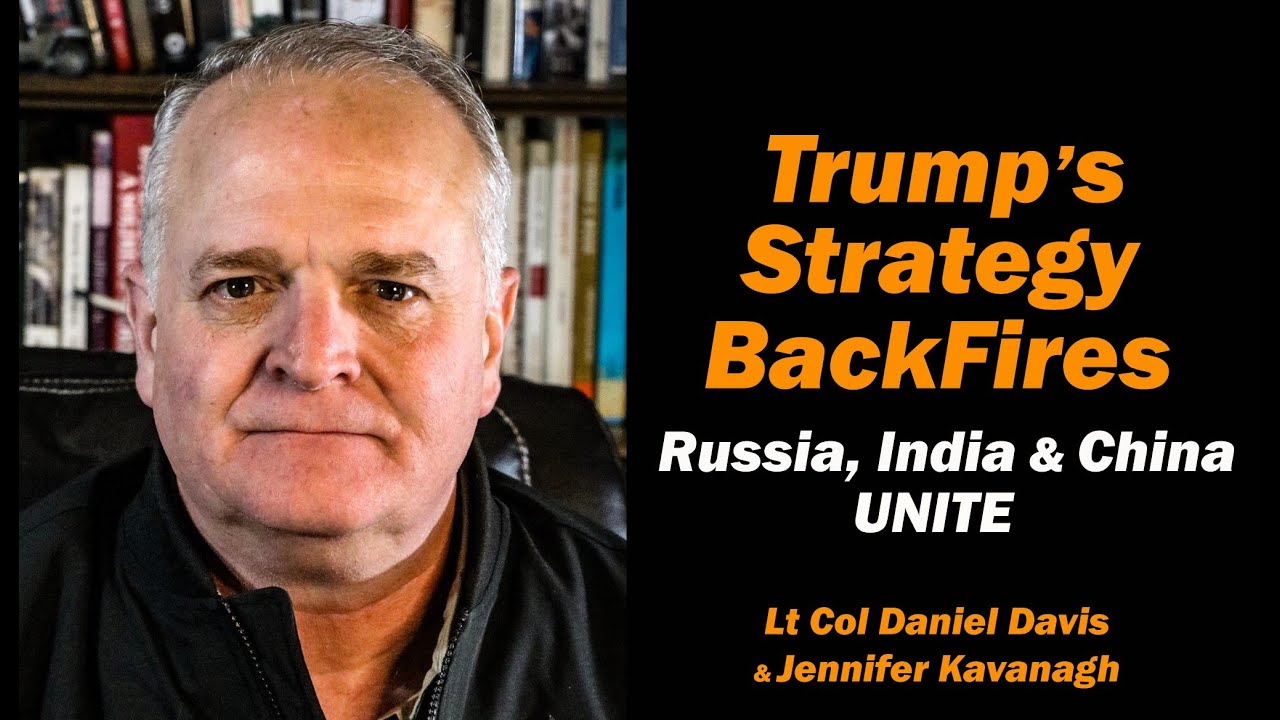
Trump's Strategy BackFires /Lt Col Daniel Davis & Jennifer Kavanagh
Posted
September 3, 2025
Views
7,296
Likes
317
Comments
51
Engagement
September 3, 2025
7,296
317
51
5.04%
Every word spoken in this episode is indexed. Type any phrase to jump straight to the moment it was said.
Type any word or phrase that may have been spoken. Click a result to seek the player to that exact moment.
Try a name, a topic, or a quoted line
 15:45Now Playing
Daniel Davis Deep Dive Merch: Etsy store
Analyst Jennifer Kavanagh noted that while U.S. officials often frame China, Russia, North Korea, and Iran as an “axis” against America, there’s little evidence of deep coordination. Still, events like the Beijing parade, where leaders like Xi, Putin, and Kim appeared together, contrast with recent U.S.-European meetings and highlight shifting global power balances.
She argued U.S. foreign policy—sanctions and efforts to isolate rivals—actually pushes these countries closer. Despite claims of isolation, Putin appears well-connected internationally. Kavanagh suggested the U.S. should shift from punitive approaches toward normalization and coexistence: ending the Ukraine war, reopening talks with adversaries, and easing pressure on countries like India.
Putin also emphasized that major states such as China and India cannot afford to look weak under U.S. pressure due to domestic political realities. India, for example, resists Trump’s tariff threats and maintains close ties with Russia, even deepening them. This reflects the broader erosion of U.S. “unipolar” dominance, as more countries have alternatives and are less willing to yield to Washington.
Sentinel Indexing in Progress
Metadata and chapters are available. Claim extraction for this episode is pending.
All video content is delivered via YouTube embedded players in accordance with the YouTube Terms of Service. Sentinel provides research tools that promote discovery and accountability across political media.