Daniel Davis Deep Dive
@danieldavisdeepdive·442K subscribers·4.9K videos
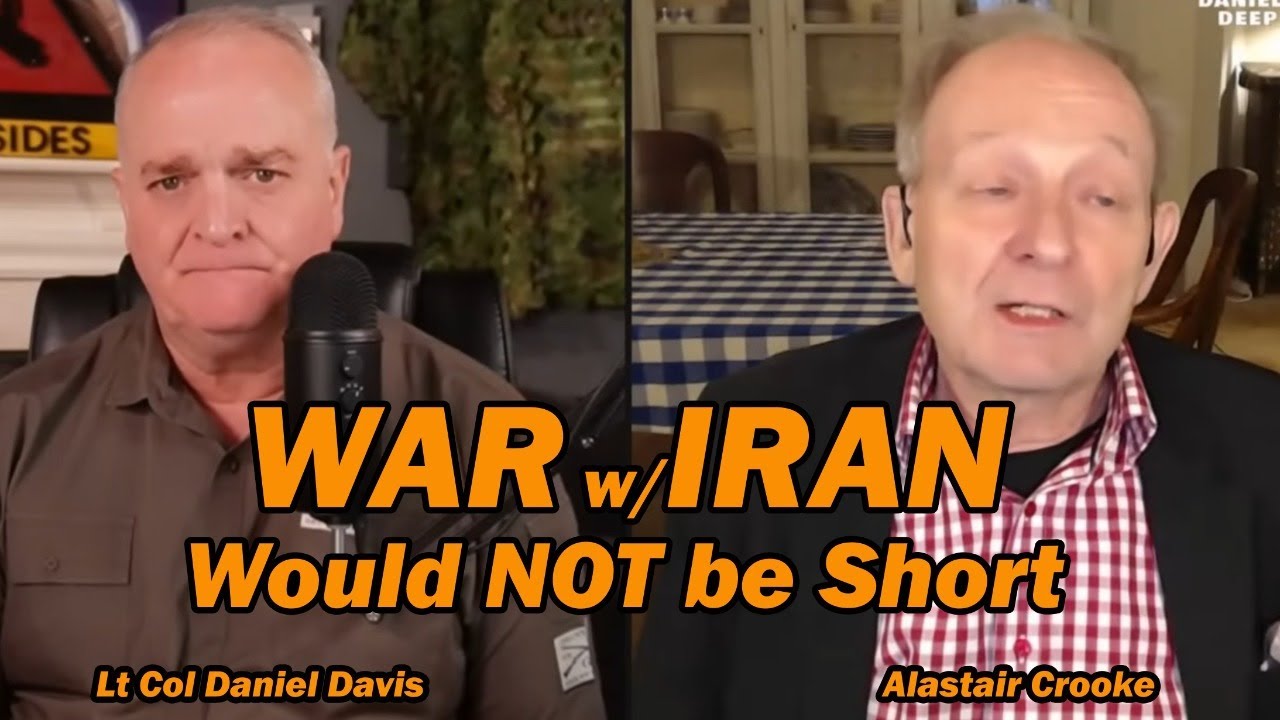
War w/Iran: Could it Trigger Another Arab Spring? /Alastair Crooke & Lt Col Daniel Davis
Posted
January 27, 2026
Views
31,256
Likes
1,162
Comments
167
January 27, 2026
31,256
1,162
167
4.25%
Every word spoken in this episode is indexed. Type any phrase to jump straight to the moment it was said.
Type any word or phrase that may have been spoken. Click a result to seek the player to that exact moment.
Try a name, a topic, or a quoted line
 20:33Now Playing
** NEW MERCH ** Jackets & Sweatshirts, Thermo Mugs!!
Daniel Davis Deep Dive Merch: Etsy store
Escalation framing: Over the past week, senior Shi’a religious authorities across the region—including Grand Ayatollah Sistani in Iraq—reportedly warned that any attack on Iran’s supreme religious leadership would trigger a mandatory, global jihad against the US and Israel. This has raised alarm in Gulf states with large Shi’a populations (Bahrain, Saudi Arabia, Yemen), who fear internal uprisings similar to the Arab Spring.
Regional mobilization: Shi’a movements across Iraq, Yemen, and elsewhere are said to be mobilizing, while Gulf monarchies worry about domestic instability given sectarian demographics and historical grievances.
Resistance strategy: According to the speaker, regional “resistance” groups initially sought to avoid an all-out war, coordinating strategy while limiting escalation. However, the situation is now viewed by them as existential, forcing a binary choice: confrontation or submission.
Energy and economic leverage: Iran has warned that any attack could lead to prolonged disruption of energy flows, with severe consequences for oil markets and global energy supplies.
Western discourse disconnect: The speaker argues Western media largely ignores key elements of this escalation, particularly religious edicts and regional mobilization.
US regime-change rhetoric: Statements by figures like John Bolton and Jack Keane are cited as evidence that US policy is focused on weakening or collapsing the Iranian regime rather than genuine negotiation.
Rejection of “Iranian opposition” narrative: The speaker claims there is no viable internal opposition in Iran, arguing that recent unrest involved externally trained militants (linked to the MEK, Kurdish groups, and others) rather than mass popular revolt. The Iranian state, military, and security forces reportedly remained intact.
Countermeasures: Iran allegedly disrupted Starlink communications, tracked users, and dismantled these networks, undermining external coordination efforts.
Israeli objectives (as alleged): Israel is accused of seeking not regime change but balkanization of Iran—encouraging ethnic fragmentation to produce long-term instability, similar to Syria or Libya.
Negotiations deemed impossible: US demands—zero uranium enrichment, surrender of enriched material, missile restrictions, and cutting regional alliances—are described as non-starters by Iran.
Will the US strike? While hardliners push for military action, the speaker believes an attack is not imminent, citing domestic US political constraints, including rising disapproval ratings for President Trump and the risks of a regional conflagration.
Sentinel Indexing in Progress
Metadata and chapters are available. Claim extraction for this episode is pending.
All video content is delivered via YouTube embedded players in accordance with the YouTube Terms of Service. Sentinel provides research tools that promote discovery and accountability across political media.