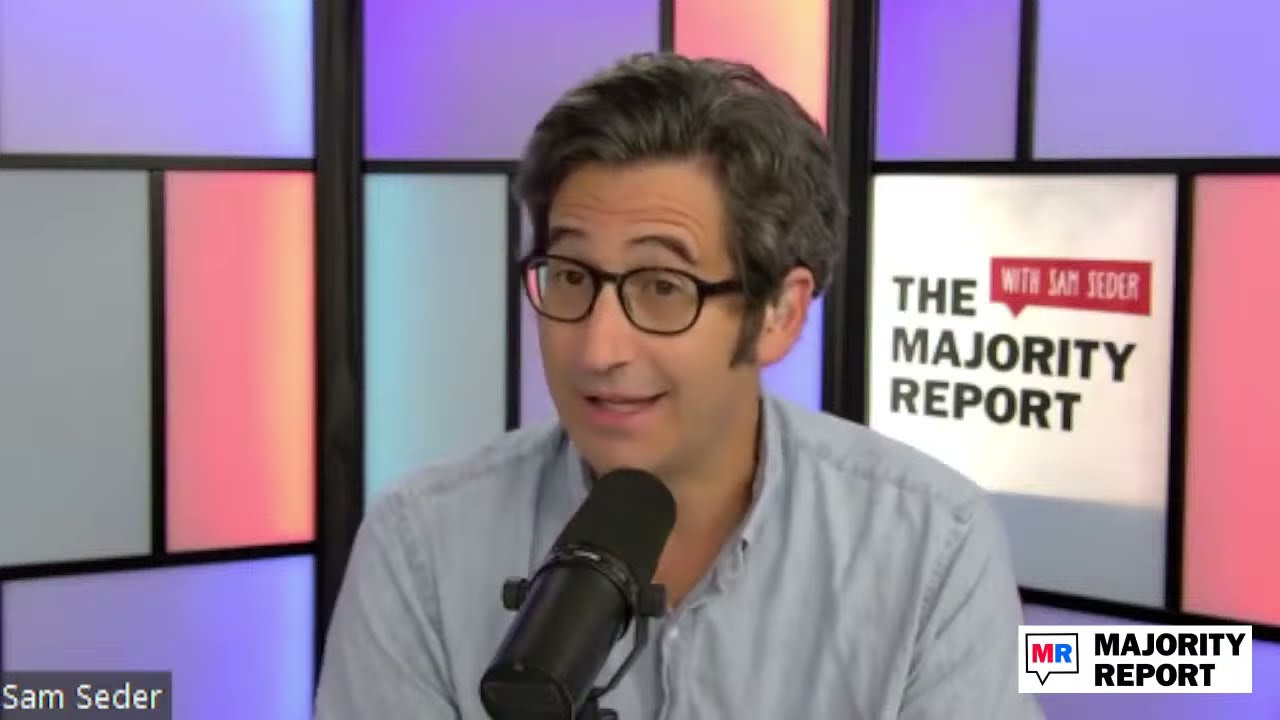
Sam Seder
@TheMajorityReport·2M subscribers·30.1K videos
Can Americans Believe In Democracy After This Redistricting Cycle? w/ David Daley
Posted
September 12, 2021
Views
14,303
Likes
655
Comments
139
Engagement
5.55%
September 12, 2021
14,303
655
139
5.55%
Every word spoken in this episode is indexed. Type any phrase to jump straight to the moment it was said.
Type any word or phrase that may have been spoken. Click a result to seek the player to that exact moment.
Try a name, a topic, or a quoted line
 11:15Now Playing
Despite receiving millions of more votes than Republicans, the Democrats in Congress have a very slim majority. This is because of redistricting. The Republicans control many statehouses and they draw the map of congressional districts in these states. They make sure to tilt the map to the maximum in the GOP's favor. This gerrymandering has been struck down by courts in the past but not nearly enough. This interview previously aired on Peacock on September 10, 2021. Sam Seder discusses gerrymandering with David Daley.
We stream our live show every day at 12 PM ET.
We need your help to keep providing free videos! Support the Majority Report's video content by going to
Watch the Majority Report live MF at 12 p.m. EST at youtube.com/samseder or listen via daily podcast at
Download our FREE app
SUPPORT the show by becoming a member
We Have Merch!!!
LIKE us on Facebook
FOLLOW us on Twitter
SUBSCRIBE to us on YouTube
Sam: You and I have spoken I think multiple times over the past several years starting with your book Ratf**ked. Which talked about the redistricting strategy of the Republican Party. And how it sort of I guess was injected with steroids. I hate to use this type of vernacular or but it was injected with steroids. It was basically the technological ability that changed the entire ballgame back in 2010. And so let's start and work our way back a little bit. let's talk about you know where we are in terms of the Democrats and the Republicans. And how tenuous the Democrats have in terms of a majority in this country. And what kind of swing will actually change the balance of power in the house at the very least.
Daley: You're right Democrats have this control in Washington right now right? They have the White House and they have both branches of Congress. But their control of the US senate is 50 50 and based on a tiebreaker by the vice president. And their control of the US House is a slender five-seat majority. And that is despite the fact that Democratic candidates for the u.s house in 2021 have 4.7 million more votes nationwide than Republican candidates. That is a really really large bulge there. And so when you go back to the previous time that victory was as large as that you have to look at the Republican victory back in 2014 when they won by a margin of about 4.4 million votes. That turned into 247 seats. So I think really what you see here is that Democrats have to win by huge majorities even to have slender advantages in the number of seats that they hold. And Republicans can win much bigger majorities when they win. But they can also hold on to power even with fewer votes. And that's what's got to scare Democrats as they head into 2022. Yeah.
Sam: Well I just want to just sit with this for a moment. because I think it's hard for people to sort of conceptualizing because it seems so wrong that it almost feels like it's impossible. and so just to be clear democrats won with over four million votes. if you add up how many people voted for Democrats for house races total across the country. four million people put voted for someone with a d behind their name. and the democrats have a four-seat is it a four-seat majority five-seat majority?
Daley: Five state majority right now yes.
Sam: And that is what 223 seats I think it is yes? okay and republicans when they won with a 4 million or so vote majority they had 247 seats they picked up 25 more seats than the democrats. and we have a dynamic like this in Wisconsin. I keep always reference to Wisconsin because it's such the perfect illustration of this. and it's mind-boggling they have redistricted their in their state legislature and democrats won something like 52 55 of the vote in the Wisconsin Democrats did. and yet the Republicans control the senate the Wisconsin senate 60 to 40 percent. I mean these are round numbers.
Daley: Even worse than that right? I mean democratic candidates won 203 000 more votes in Wisconsin in 2018 and yet they won 36 of 99 seats.
Sam: And so this is extraordinary I mean it's one thing people I think to understand like the electoral college okay that's anachronistic and it was put in there too to balance out who knows? I mean I don't buy the arguments of the electoral college but it is what it is. but there is no provision anywhere in any document anywhere that says one party if they win a vast majority of the votes still can't necessarily win in some instances a majority of the seats.
Sentinel Indexing in Progress
Metadata and chapters are available. Claim extraction for this episode is pending.
All video content is delivered via YouTube embedded players in accordance with the YouTube Terms of Service. Sentinel provides research tools that promote discovery and accountability across political media.