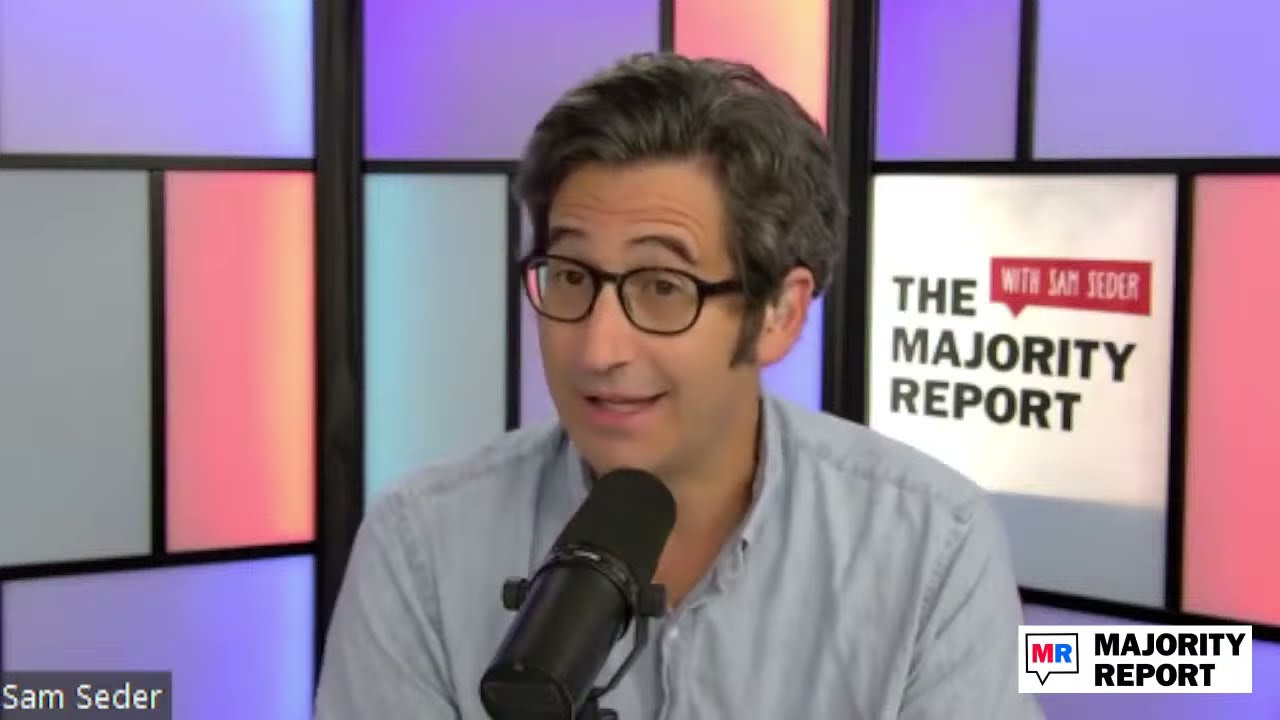
Sam Seder
@TheMajorityReport·2M subscribers·30.1K videos
What Does ‘Culture War’ Really Mean?
Posted
September 12, 2021
Views
15,378
Likes
600
Comments
168
Engagement
4.99%
September 12, 2021
15,378
600
168
4.99%
Every word spoken in this episode is indexed. Type any phrase to jump straight to the moment it was said.
Type any word or phrase that may have been spoken. Click a result to seek the player to that exact moment.
Try a name, a topic, or a quoted line
 5:38Now Playing
A listener asks for an official Majority Report definition of what "culture war" is. Sam goes on to discuss the origins of the current culture war and what its implications are. Is the culture war just a right-wing thing? Does it primarily center around Christian values on abortion? We discuss.
We stream our live show every day at 12 PM ET.
We need your help to keep providing free videos! Support the Majority Report's video content by going to
Watch the Majority Report live MF at 12 p.m. EST at youtube.com/samseder or listen via daily podcast at
Download our FREE app
SUPPORT the show by becoming a member
We Have Merch!!!
LIKE us on Facebook
FOLLOW us on Twitter
SUBSCRIBE to us on YouTube
Image credit
Sam: Max in BK. Hey, Sam, can we get an official MR definition of the culture war as used on the show? On Friday culture war was used as a bunch to discuss abortion but then material benefit was used to discuss health care. I think the label of the culture war is often used on the left to obscure and dismiss the material aspects of certain left-right disputes that may not universally impact people. I think for the right it is a culture war. there is no material benefit that you can gain by preventing abortions. there is not. I don't think that anybody and I don't think that there's. I mean it was an issue largely because of Paul Weirich I think it was and the moral majority. jones what university what is it? was going to have its tax-free status stripped by the Carter administration. because Doug Jones is it because they weren't allowing an integrated campus. and that was a hard thing to get Christian conservatives worked up about. and so they basically adopted abortion as a mechanism. it is a culture core culture war in that regard.
Matt: Yeah it has material impacts. but I mean it's also like you look back at history say the English civil war in the 1600s doesn't become dominated by like the levelers or diggers it's ultimately the sort of religious parts of that struggle that become emphasized. I mean that's how I kind of look at it like these are all sort of downstream of that. and when you come from just like political economy questions to these sorts of should we believe in the trinity or something like that. then you're it's it it it does they're related in that they show up often like sort of more in more heated environments at the same time. but I think that's a divide. like the ivermectin thing right like making it about horse paste that is about a more cultural issue than the thing we could be talking about which is about like publicly provided in vaccines and making sure like oh if you do have either covid complications or vaccine complications you're covered because now we have medicare for all now or something. Sam: right or we're subsidizing you're missing a day from work or something like that. I mean it's a material benefit issue for women obviously. it's also a culture war issue in so far as it's a material benefit for women that their healthcare covers you know appendicitis. but it's also a culture war issue in so far as a right to an abortion is also has big implications in terms of a woman's ability to be financially independent. and you know I mean so.
Matt: Yeah the best reactionary culture war issues are ones that also sort of coercing people to labor in some sort of way. and which happens if you have a child you need to start providing for that's going to change the type of jobs you're looking for and willing to put up with.
Sam: I don't know that there is an official definition of the culture war. I mean if you know in many respects if you want to get more specific what we're talking about very often is a war between religious values as perverse as they may be in some instances or perverted. I mean that's why culture is a better word because you know two people who believe in Christianity can believe very different things about the patriarchy. you know it so many stems from that. so culture and things can be added that really don't make any sort of theological sense. guns don't necessarily make any theological sense. the deficit you know hawkery at one time was I mean not long ago like six years ago it was basically like guns god and no deficits. and then that just went away.
Matt: I'd recommend Andrew Hartman's “A War for the Soul of America” who we've had on this show and I also talked to him more recently on left reckoning.
Sentinel Indexing in Progress
Metadata and chapters are available. Claim extraction for this episode is pending.
All video content is delivered via YouTube embedded players in accordance with the YouTube Terms of Service. Sentinel provides research tools that promote discovery and accountability across political media.