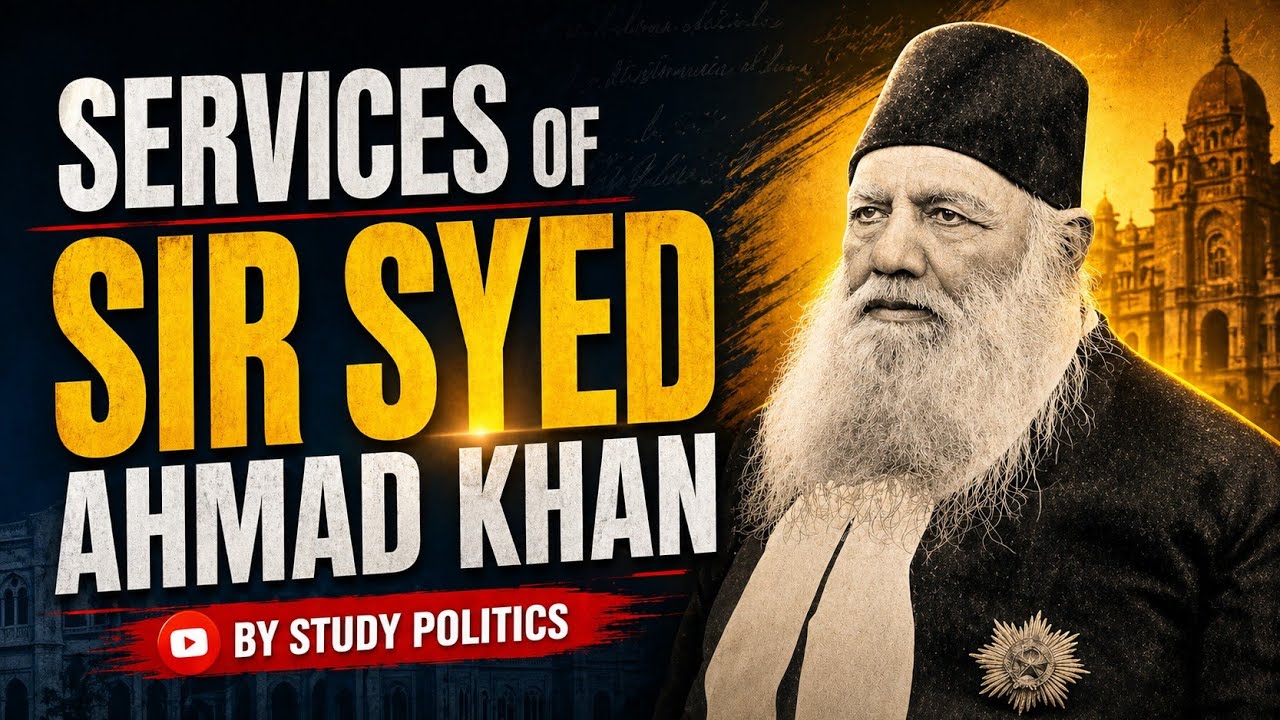
Sir Syed Ahmad Khan | Services for Indian Muslims |
October 21, 2024
1,613
38
6
2.73%
Search the Record
IndexedEvery word spoken in this episode is indexed. Type any phrase to jump straight to the moment it was said.
Type any word or phrase that may have been spoken. Click a result to seek the player to that exact moment.
Try a name, a topic, or a quoted line
Study Politics Episodes Around October 21, 2024
See what was published immediately before and after this episode.


 24:34Now Playing
Sir Syed Ahmad Khan | Services for Indian Muslims |

Chapters
Segments
YouTube Description
as posted by the channelAfter the War of Independence, Sir Syed Ahmad Khan emerged to uplift Muslims of the subcontinent. The services of Sir Syed Ahmad Khan were crucial for the Muslims of the subcontinent in those days.
Sir Syed was born on October 17, 1817 in Delhi. His family belonged to the Mughal Court. In April 1867, Sir Syed was appointed the lower court judge. In the year 1869, Sir Syed sailed to London to study the educational system of Oxford and Cambridge. In 1878, Lord Lytton appointed him as a member of the Imperial Legislative Council. He died in the year 1898.
Sir Syed wrote many books including Jam e Jam, Jila al Quloob Ba Zikar Al Mahboob, Tuhfa e Husb, and many others.
He established a scientific society on Jan 9, 1864. The purpose of this society was to translate foreign books into the Urdu Language. On Dec 24, 1874, he issued a magazine on the line of Spectator called Tahzeebul Akhlaq.
For the education of the Muslims of India, he established the MAO School on May 24, 1875. Henry Siddons was the first principal of this school. The school was upgraded to the college level on Jan 8, 1877. Lord Lytton, the then Governor General of India, laid the foundation of this collage. The college was upgraded to the level of university in the year 1920.
Sir Syed also established the All India Muhammedan Educational Conference for the better education of all the Muslims of India.
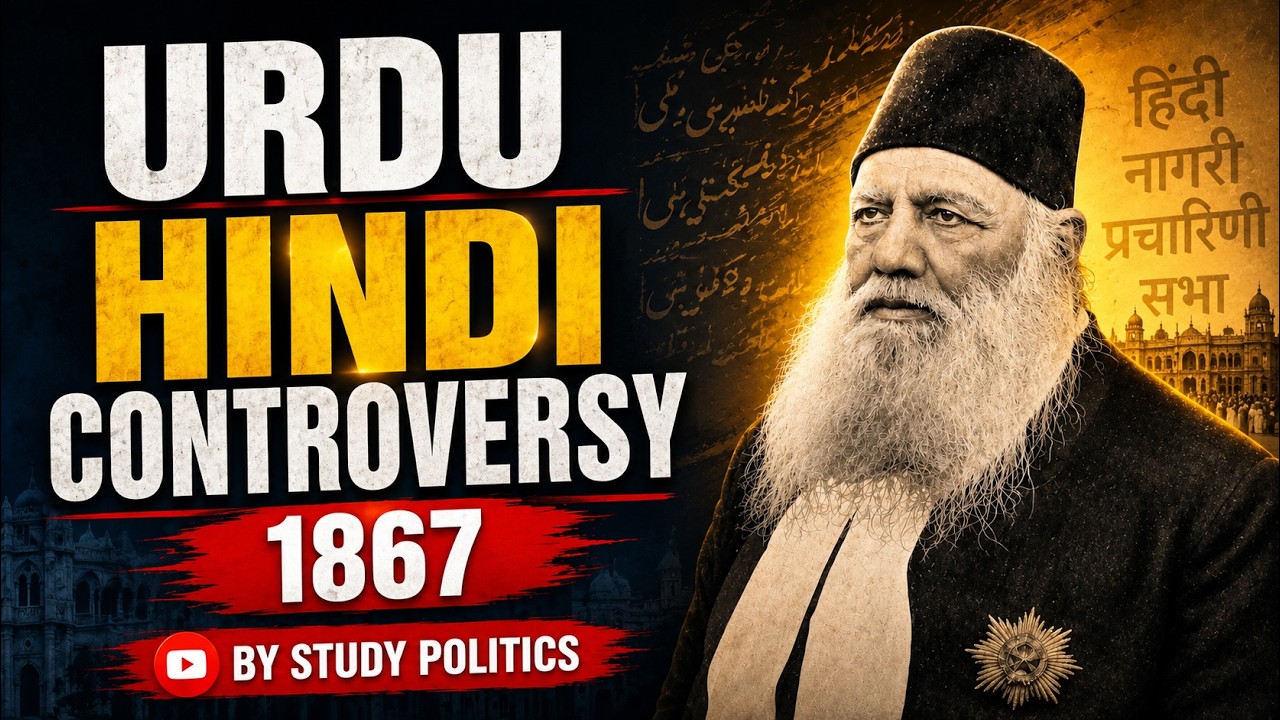
Initially, Sir Syed was in favour of Hindu-Muslim unity. But later, due to the Urdu-Hindi controversy, he changed his mind and started to think of two nations in terms of Muslims constituting one nation and Hindus as another. Sir Syed also opposed the Indian National Congress. Sir Syed was also not in favour of democracy in India. He believed that the system of Democracy suits where the people are of a homogenous nature. But in India, there are various nationals. Hence, the system of Democracy cannot work properly in India.
Watch other videos:
What is state
What is Political Science
What is sovereignty
What is Realism in International Relations
What is Brexit
Era of Zia Ul Haq
Treaty of Westphalia
What is Poverty
What is Executive
What is Legislature
To subscribe to my Channel you can click on the following link
About the Creator:
Education: BS Political Science, M. Phil Political Science, M.A English Literature
Study Politics is an educational Channel. The purpose of this channel is to provide information about different topics related to History, International Relations, Political Science, Sociology, Current Affairs, and other Social Sciences. The students of competitive exams like CSS, PMS, PPSC, PCS, ISP, UPSC, and others will find this channel extremely beneficial because of its simplified material and the nature of its content. Besides some specific students, other people who belong to other fields other than social sciences can also find this channel useful. It will provide them day-to-day news with an explanation.
You can also like my Facebook page, can follow me on Twitter and Linkedin.
Google: Studypoliticss@gmail.com
#StudyPolitics #sirsyedahmadkhan #history #indianhistory
Links & Promotions
Guests & Subjects Covered
Sentinel Indexing in Progress
Metadata and chapters are available. Claim extraction for this episode is pending.
All video content is delivered via YouTube embedded players in accordance with the YouTube Terms of Service. Sentinel provides research tools that promote discovery and accountability across political media.