
The Ring of Fire
@theringoffire·1.4M subscribers·27K videos
Auto Industry Looks To Migrant Labor As Workers Strike For Better Wages
Posted
September 23, 2023
Views
8,359
Likes
848
Comments
78
Engagement
September 23, 2023
8,359
848
78
11.08%
Every word spoken in this episode is indexed. Type any phrase to jump straight to the moment it was said.
Type any word or phrase that may have been spoken. Click a result to seek the player to that exact moment.
Try a name, a topic, or a quoted line
 5:06Now Playing
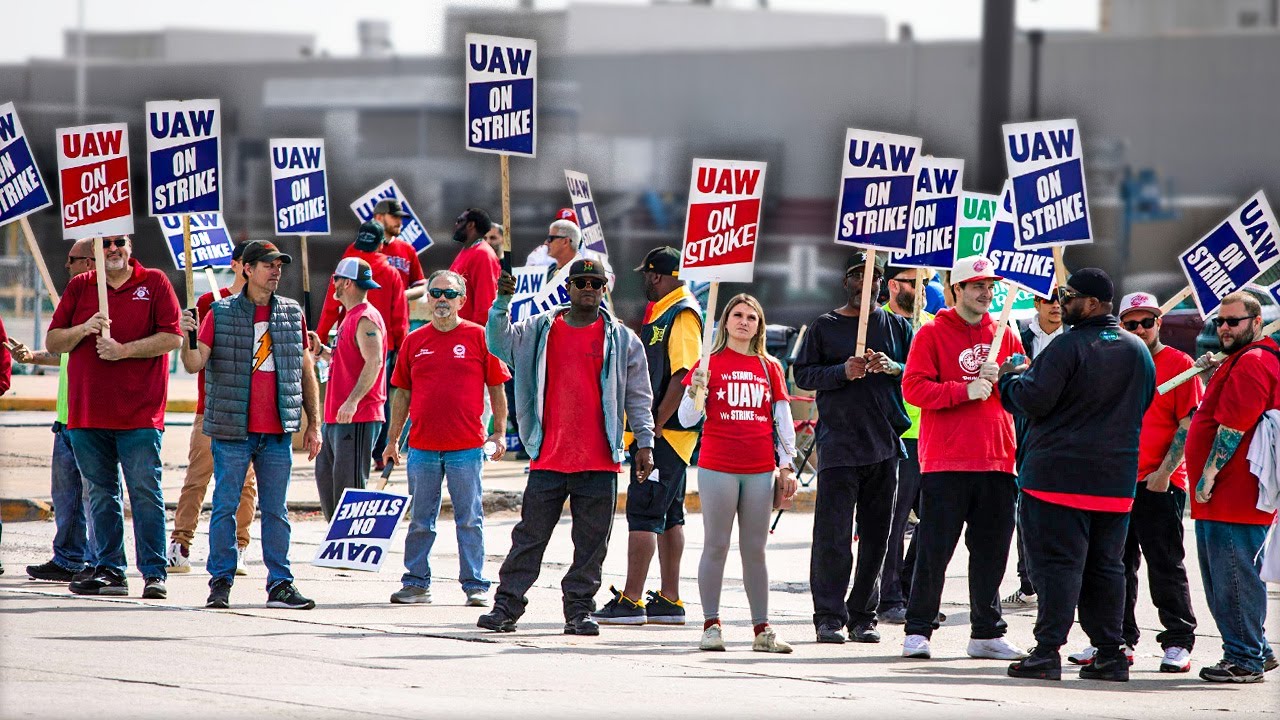
Roughly 13,000 auto workers in the United States went on strike last week as part of the United Auto Workers union’s attempt to get better working conditions and benefits for workers across the industry. Now the big 3 auto makers are going to face weeks or possibly months of factory slow downs and profit loss if they can’t reach an agreement soon. Mike Papantonio & Farron Cousins discuss more.
Check out our merch by visiting our store
Subscribe to our podcast
Become a member today!
Support us by becoming a monthly patron on Patreon, and help keep progressive media alive!
Spread the word! LIKE and SHARE this video or leave a comment to help direct attention to the stories that matter. And SUBSCRIBE to stay connected with Ring of Fire's video content!
Support Ring of Fire by subscribing to our YouTube channel
Be sociable! Follow us on:
*This transcript was generated by a third-party transcription software company, so please excuse any typos.
Roughly 13,000 auto workers in the United States went on strike last week as part of the United Auto Workers Union attempt to get better working conditions and benefits for workers across the industry. Now, the big three automakers are gonna face to face, they're gonna face weeks, months possibly with factory slowdowns and maybe even stops. You know what's the most bothersome about this? Is the industry, the auto industry, the three big made almost $170 billion, with a B, $170 billion in revenue is what they had last year. And they say, well, we can't pay you this little extra money. We can't change anything we're doing.
Yeah. As the CEO is getting grilled. Why did you make an extra $30 million last year? But you can't raise these workers wages over a period of four years. And that's the thing people need to understand. These workers are not going out there saying, give me all my demands today. I need these by the end of the day. They're saying, look, over the next four years, let's create a structure where we get an increase this year. We get an increase next year.
It's totally reasonable.
It really is.
Everything about this, even though some people have said, I mean, I think even some of the folks running the strike says, I know we're asking for a lot. But really? Are they really asking for a lot? I don't think so. Not when a company is making $170 billion. The three major companies, they have money to spread around and when they have money, they should do that. These workers took a big cut, didn't they? When there was a decline, workers said, okay, you're right. We wanna keep our jobs, we gotta do our jobs. And they did it. They delivered what was asked of them. Here's the real problem I see. You've got the Chamber of Commerce, you've got associated industries, you've got the White House that say, come on across our border. Now why do you think that's happening? What do you think's going on there? Because they know that's a whole generation that's going to replace these folks that feel, that have the right to strike. That's the plan. US Chamber of Commerce has spent a gazillion dollars trying to open the borders, so has associated industries. White House, Biden has fallen right into it. Yeah, we're gonna open our borders. It has nothing to do, it's all about a financial thing. These people are gonna come over, they're gonna take these jobs eventually, just like they did where they came from. Mexico, what does an auto worker make $5 an hour? So they're gonna come here and make $6 or $7 an hour and that's gonna be like, that's gonna be big, big deal to 'em. This is another paradigm shift, just like we talked about in the Hollywood story. This is a paradigm shift. It's happening right before eyes. Lower wages, declining share increase, bottom economy up, forget it. If a guy can't make enough money to buy a new house, buy a new car, have just the basics of life, the economy suffers. But when you put $35 in some of these folks' hands, they can live a better quality of life. They can vacation. They can do all of these things that really matter, and the economy grows from the bottom. And that's what we're gonna lose here with what's getting ready to happen.
And look, on the immigration issue, we have more demand here in the United States than we have workers. So the studies are very clear on this. If we do not get people coming across the borders, not necessarily in the auto industry, but there's tons of industries that cannot exist if we don't have these people coming across.
Exactly.
Sentinel Indexing in Progress
Metadata and chapters are available. Claim extraction for this episode is pending.
All video content is delivered via YouTube embedded players in accordance with the YouTube Terms of Service. Sentinel provides research tools that promote discovery and accountability across political media.