Bbc Archive
@bbcarchive·780K subscribers·1.9K videos
1968: The Whole World in a Box | Towards Tomorrow | BBC Archive
Posted
March 16, 2026
Views
48,015
Likes
1,455
Comments
266
Engagement
3.58%
March 16, 2026
48,015
1,455
266
3.58%
Every word spoken in this episode is indexed. Type any phrase to jump straight to the moment it was said.
Type any word or phrase that may have been spoken. Click a result to seek the player to that exact moment.
Try a name, a topic, or a quoted line
 26:49Now Playing
"I don't see why we should think that the human species will last forever... What we are seeing now is the beginning of another evolutionary stage; the change from biological evolution to inorganic evolution. Perhaps literally, the computers may be taking over from us." - Arthur C. Clarke.
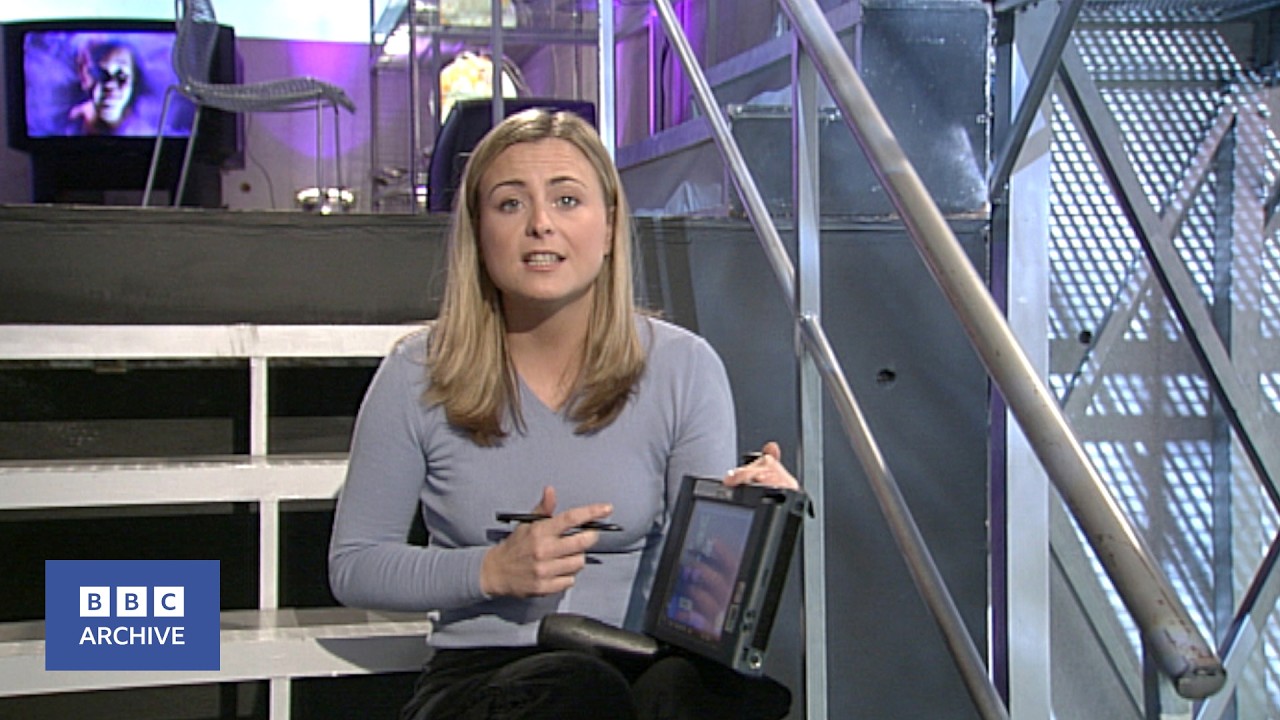
Towards Tomorrow looks at what may happen to our television sets in the future - how they will not simply dispense programmes, but may also give us any information we want, when we want it. Will this future be better, or worse?
Anthony Smith presents the programme. With the help of his own 'world box,' he calls in reports from Britain and America. His first port of call is to Professor John R. Pierce at Bell Telephone Labs - who demonstrates the "picturephone" by calling his colleague Rudi Kompfner in a lab 30 miles away. Next, Science fiction writer Arthur C. Clarke shares his thoughts on how people might use advanced communication technology in future, and what the ramifications of this technology might be. Back in the United States, we see how the Chicago Police Department is embracing computer technology, using it to collect and share vast amounts of information. Meanwhile, in the Medical Physics Department of Edinburgh University, Dr James P. Neilson is conducting pioneering medical research using ECGs combined with computers.
At the Massachusetts Institute of Technology, we watch as a computer is taught - much like a child - to recognise letters written using a light-pen. It's not all work and no play at MIT though, where a computer has been programmed to provide entertainment, in the form of Spacewar! - a two player game that provides MIT engineers with the opportunity to engage in some virtual spaceship battles. Back on Earth, we hear from Arthur C. Clarke again, as he imagines a time when humans are eclipsed by, and ultimately replaced by, their own technology. A sequence imagines a wayward aircraft being landed by an unseen artificial intelligence. In Britain, most people are likely to first experience the computer revolution via the Post Office - which is investing heavily in computer technology, with the view to creating a national computer grid, which could bring computing power to all corners of the country.
In the United States, the author and social critic, Vance Packard warns about the potential threat that the mass storage of personal data on computers - a proposed National Data Centre - could present to individual citizens. He urges that safeguards must be put in place to protect Americans from future misuse of their information. Back at MIT, Richard Mills - the Director of Information Processing Services - details the sheer amount of computing power he already has at his disposal, and expresses his desire that at some point in the future the entire body of human knowledge will be accessible to all, online, via computer.
Professor Joseph Weizenbaum is working on ways to make interfacing with computers more naturalistic for humans. Professor Weizenbaum demonstrates his "Eliza" computer program - which enables people to talk to computers using simple language - by requesting details of his bank balance. The computer dutifully informs him of his bank balance - but can it tell him how to boil an egg?
Clip taken from Towards Tomorrow: The World in a Box, originally broadcast on BBC One, 18 January, 1968.
You have now entered the BBC Archive, a time machine that will transport you back to the golden age of TV to educate, entertain and enlighten you with classic clips from the BBC vaults.
Make sure you subscribe so that you never miss a single stop on our amazing journey through the BBC Archive
You can also dive into plenty more BBC Archive on our website
Sentinel Indexing in Progress
Metadata and chapters are available. Claim extraction for this episode is pending.
All video content is delivered via YouTube embedded players in accordance with the YouTube Terms of Service. Sentinel provides research tools that promote discovery and accountability across political media.