Big Think
@bigthink·8.8M subscribers·10.1K videos
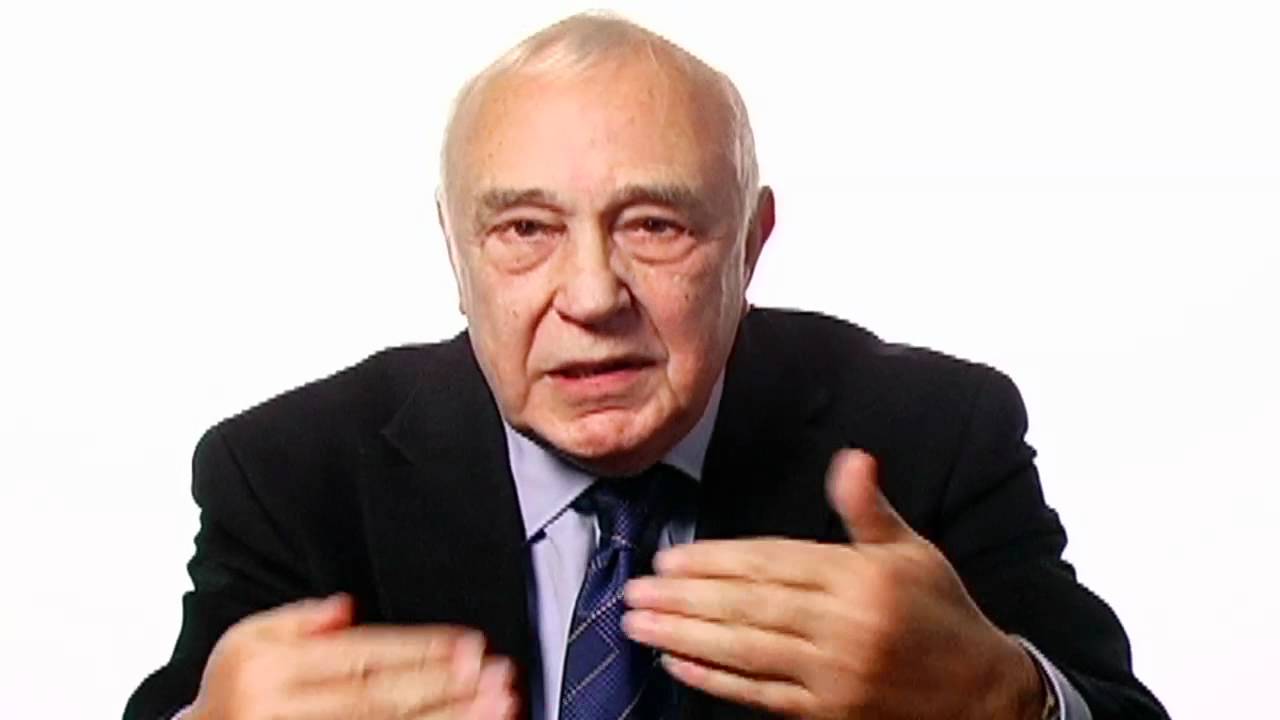
Big Think Interview with John Taylor | Big Think
Posted
April 24, 2012
Views
235
Likes
4
Engagement
1.70%
April 24, 2012
235
4
1.70%
Every word spoken in this episode is indexed. Type any phrase to jump straight to the moment it was said.
Type any word or phrase that may have been spoken. Click a result to seek the player to that exact moment.
Try a name, a topic, or a quoted line
You’re on April 24, 2012. Earlier episodes are to the left, later ones to the right — the row keeps loading as you go. Click any card to open it.
 Apr 24, 201238:29Now Playing
Big Think Interview with John Taylor
New videos DAILY
Join Big Think Edge for exclusive videos
----------------------------------------------------------------------------------
A conversation with the Stanford University Economics Professor.
----------------------------------------------------------------------------------
John B. Taylor:
John B. Taylor is the Mary and Robert Raymond Professor of Economics at Stanford University and the George P. Shultz Senior Fellow in Economics at the Hoover Institution. He formerly served as director of the Stanford Institute for Economic Policy Research, where he is now a senior fellow, and he was founding director of Stanford’s Introductory Economics Center.
Taylor’s academic fields of expertise are macroeconomics, monetary economics, and international economics. He is known for his research on the foundations of modern monetary theory and policy, which has been applied by central banks and financial market analysts around the world. He has an active interest in public policy. Taylor is currently a member of the California Governor’s Council of Economic Advisors, where he also previously served from 1996 to 1998. In the past, he served as senior economist on the President’s Council of Economic Advisers from 1976 to 1977, as a member of the President’s Council of Economic Advisers from 1989 to 1991. He was also a member of the Congressional Budget Office’s Panel of Economic Advisers from 1995 to 2001. For four years from 2001 to 2005, Taylor served as Under Secretary of Treasury for International Affairs where he was responsible for U.S. policies in international finance, which includes currency markets, trade in financial services, foreign investment, international debt and development, and oversight of the International Monetary Fund and the World Bank. He was also responsible for coordinating financial policy with the G-7 countries, was chair of the working party on international macroeconomics at the OECD, and was a Member of the Board of the Overseas Private Investment Corporation. His book Global Financial Warriors: The Untold Story of International Finance in the Post-9/11 World chronicles his years as head of the international division at Treasury.
His recent book Getting Off Track: How Government Actions and Interventions Caused, Prolonged, and Worsened the Financial Crisis was one of the first on the financial crisis, and he has since followed up with two books on preventing future crises, co-editing The Road ahead for the Fed and Ending Government Bailouts As We Know Them in which leading experts examine and debate proposals for financial reform and exit strategies.
Taylor was awarded the Alexander Hamilton Award for his overall leadership in
international finance at the U.S. Treasury. He was also awarded the Treasury
Distinguished Service Award for designing and implementing the currency reforms in Iraq, and the Medal of the Republic of Uruguay for his work in resolving the 2002 financial crisis. In 2005, he was awarded the George P. Shultz Distinguished Public Service Award. Taylor has also won many teaching awards; he was awarded the Hoagland Prize for excellence in undergraduate teaching and the Rhodes Prize for his high teaching ratings in Stanford’s introductory economics course. He also received a Guggenheim Fellowship for his research, and he is a fellow of the American Academy of Arts and Sciences and the Econometric Society; he formerly served as vice president of the American Economic Association.
Before joining the Stanford faculty in 1984, Taylor held positions of professor of
economics at Princeton University and Columbia University. Taylor received a B.A. in economics summa cum laude from Princeton University in 1968 and a Ph.D. in economics from Stanford University in 1973.
----------------------------------------------------------------------------------
TRANSCRIPT:
Question: Why did the asset inflation created by the Fed occur primarily in housing? (Jeffrey Friedman, Causes of the Crisis)
John Taylor: You know, the thing about monetary policy is, just to get to your question about why asset prices were the place where some of the stresses took place, you never know exactly where the impact will take place, sometimes it's in broad measures of inflation, sometimes it's certain sectors first. Energy has been a common place where price pressures first build up. In this case, a lot of them were more in the housing market. I think that was because we already had the beginning of a housing boom going. So in a sense what the low interest rates did was accelerate that. Plus, of course, with the adjustable rate mortgages around and available, though very low interest rate enabled there to be more teaser rates, more very low starting rates, .....
Read the full transcript at
Sentinel Indexing in Progress
Metadata and chapters are available. Claim extraction for this episode is pending.
All video content is delivered via YouTube embedded players in accordance with the YouTube Terms of Service. Sentinel provides research tools that promote discovery and accountability across political media.