Big Think
@bigthink·8.8M subscribers·10.1K videos
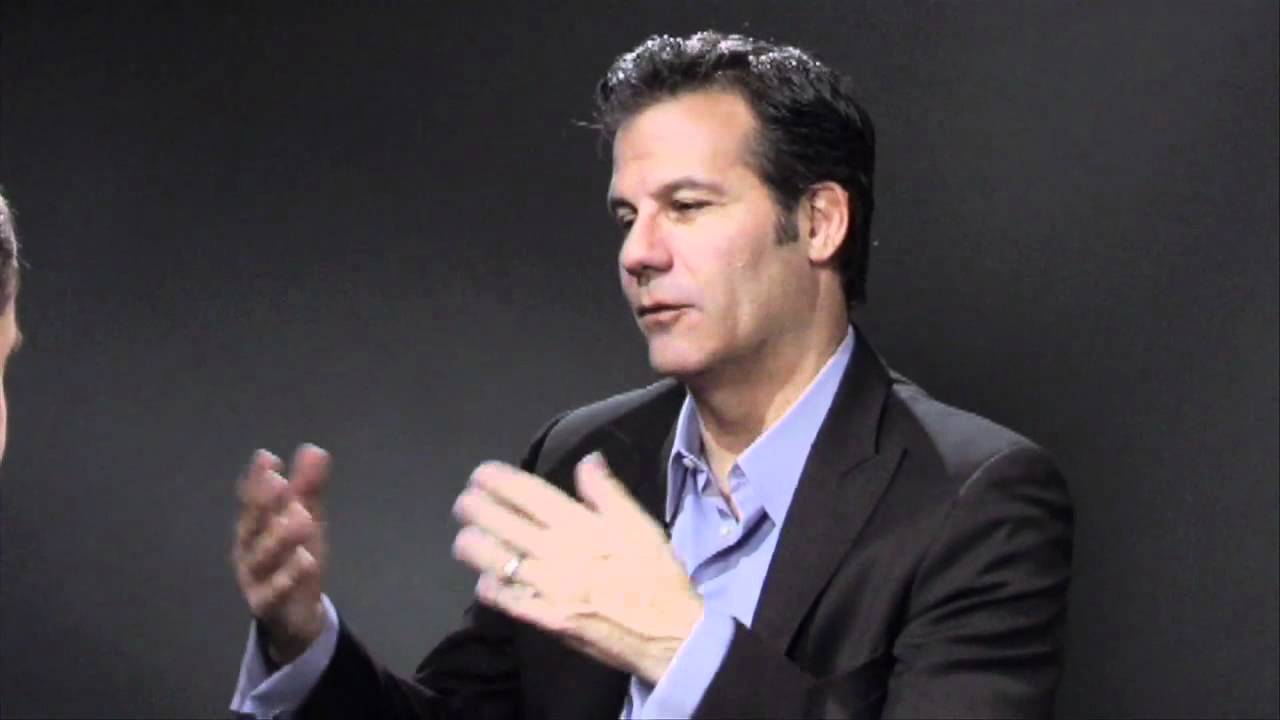
Can Gay Rights Boost Economic Prosperity? | Richard Florida | Big Think
Posted
April 24, 2012
Views
303
Likes
8
Comments
1
Engagement
2.97%
April 24, 2012
303
8
1
2.97%
Every word spoken in this episode is indexed. Type any phrase to jump straight to the moment it was said.
Type any word or phrase that may have been spoken. Click a result to seek the player to that exact moment.
Try a name, a topic, or a quoted line
You’re on April 24, 2012. Earlier episodes are to the left, later ones to the right — the row keeps loading as you go. Click any card to open it.
 Apr 24, 20129:31Now Playing
Can Gay Rights Boost Economic Prosperity?
New videos DAILY
Join Big Think Edge for exclusive videos
----------------------------------------------------------------------------------
Communities that allow self-expression will gain an entrepreneurial edge.
----------------------------------------------------------------------------------
Richard Florida:
Richard Florida is author of the global best-seller "The Rise of the Creative Class." His latest books are the "The Great Reset," and "The Rise of the Creative Class Revisited," a revised and expanded tenth anniversary edition of his classic work.
He is also the author of "The Flight of the Creative Class" and "Cities and the Creative Class." His previous books, especially "The Breakthrough Illusion" and "Beyond Mass Production," paved the way for his provocative looks at how creativity is revolutionizing the global economy.
Florida is a regular correspondent for the Atlantic Monthly and a regular columnist for The Globe and Mail. He has written for The New York Times, The Wall Street Journal, The Washington Post, The Boston Globe, The Economist, and The Harvard Business Review. He has been featured as an expert on MSNBC, CNN, BBC, NPR and CBS, to name just a few.
----------------------------------------------------------------------------------
TRANSCRIPT:
Question: Is there an economic dimension to the gay rights discussions taking place in the U.S.?
Richard Florida: At the highest level, I actually think that when we look back on the history of understanding economic growth, we’re going to recognize, of course – Robert Solo won a Nobel Prize for this idea that technology matters to economic growth. We are surely going to understand, and we’re understanding now, that human capital, knowledge accumulation matters. Whether it’s Ed Glacier or Paul Romer at Stanford, that human capital accumulation, knowledge accumulation – Robert Lucas at Chicago, I think what we’re going to finally understand is that these things that we thought were social and cultural characteristics, particularly with regard to openness to diversity, meritocracy. I call them the three “T’s,” technology, talent, and tolerance. This tolerance dimension, this social and culture dimension is not just something we do because it’s right and it’s ethical and it’s moral and it’s the right way to treat people. We’re going to find that these social and cultural factors really add a lot to economic growth and it’s not just the Protestant ethic of thrift and hard work that Max Vaber identified a century ago, it’s actually I think what made America great in the Great American Century was this idea that people could come from all over the world and make a life if they want, have a dream if they wanted, do the kind of work, and without regard to ethnicity. So, one of the things that we found, of course, when we look at the history of entrepreneurship, there are lots of foreign born people. Whether it’s Andrew Carnegie in steel, or Andy Grove, the great semi-conductor inventor at Intel, or anyone in the high tech. You know, there was a great study where they looked at Silicon Valley and found that between a third and 50% of all those companies were founded by somebody that wasn’t born in the United States.
Well, the thing with gays was really interesting to me. I was working on this at Carnegie Mellon. Just minding my little ole’ own business trying to study the knowledge economy and how cities compete, and the role of quality of place factors and artists. And there was a young man who was completing his PhD. His name is Gary Gates, he is now at the Williams Institute at UCLA. And my Dean at the time kept saying, you should meet Gary Gates. I was coming back from sabbatical at Harvard. You should meet Gary Gates who is a great guy. He’s been studying the location patterns of gay men and why they’re clustered in San Francisco. What he’s finding is that gay men in San Francisco have effect – or related to amenities. Quality of life, a nice place, and so forth and so on. You’re seeing the same thing with your high tech people. So, I went to the meet Gary one day and as I’ve learned, if you work in this kind of socially – I don’t know, hot button area, culturally hot button area, there’s a lot of debate and dialogue. You have to develop a sense of humor. Gary said, “Rich, let me see your list of your high tech meccas.”
Read the full transcript at
Sentinel Indexing in Progress
Metadata and chapters are available. Claim extraction for this episode is pending.
All video content is delivered via YouTube embedded players in accordance with the YouTube Terms of Service. Sentinel provides research tools that promote discovery and accountability across political media.