Big Think
@bigthink·8.8M subscribers·10.1K videos
Should We Reinstate Glass-Steagall? | Richard Shelby | Big Think
Posted
April 24, 2012
Views
1,483
Likes
21
Comments
6
Engagement
1.82%
April 24, 2012
1,483
21
6
1.82%
Every word spoken in this episode is indexed. Type any phrase to jump straight to the moment it was said.
Type any word or phrase that may have been spoken. Click a result to seek the player to that exact moment.
Try a name, a topic, or a quoted line
You’re on April 24, 2012. Earlier episodes are to the left, later ones to the right — the row keeps loading as you go. Click any card to open it.
 Apr 24, 20122:30Now Playing
Should We Reinstate Glass-Steagall?
New videos DAILY
Join Big Think Edge for exclusive videos
----------------------------------------------------------------------------------
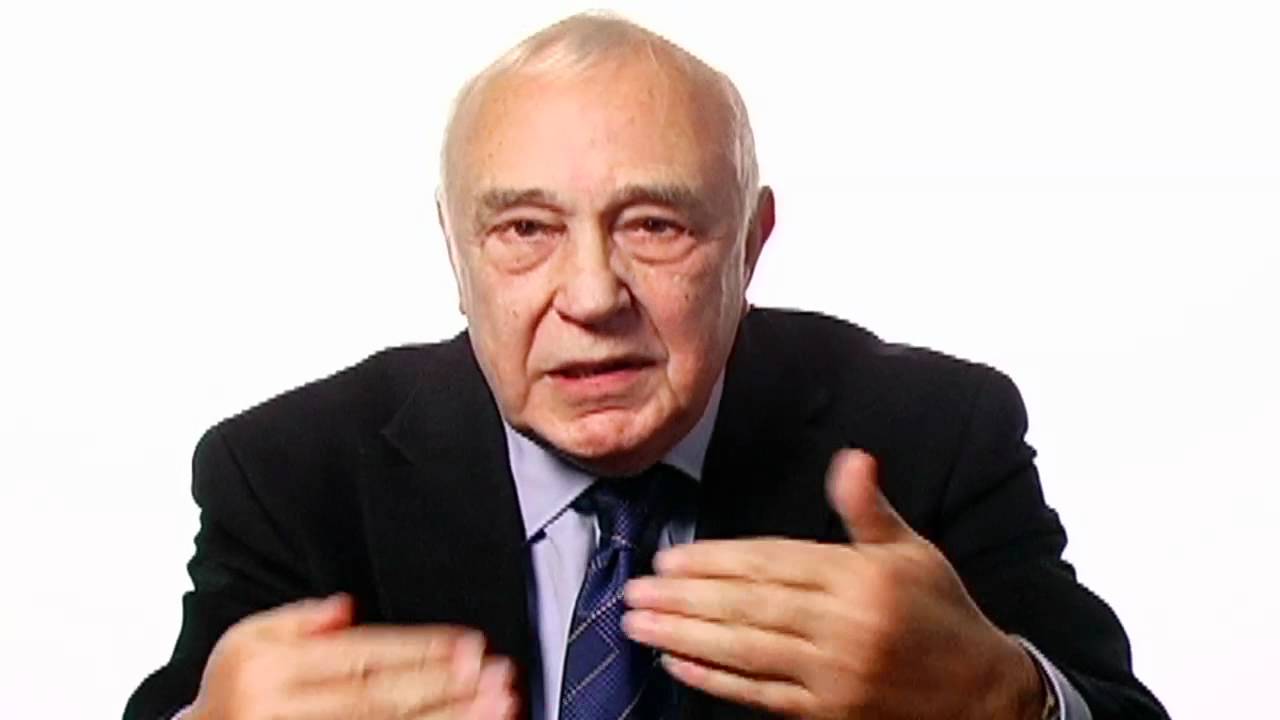
Senator Richard Shelby isn’t so sure we’d be able to reinstitute the separation between commercial and investment banks. He is sure that Fannie Mae and Freddie Mac will be gone.
----------------------------------------------------------------------------------
Richard Shelby:
Richard Shelby, Alabama's senior United States Senator, was first elected to the Senate in 1986 with an undeniable commitment to Alabama and the simple philosophy that a smaller government can also be a more effective government.
Senator Shelby is Chairman of the Banking, Housing and Urban Affairs Committee and Chairman of the Commerce, Justice, and Science Appropriations Subcommittee. In addition, he is a member of the full Appropriations Committee and the Special Committee on Aging.
----------------------------------------------------------------------------------
TRANSCRIPT:
Question: Why did you oppose the Graham-Leach-Bliley Act in 1999, which removed the long held separation between commercial and investment banks?
Richard Shelby: I opposed and I believe it was in 1999. I think I was the only Republican that voted against the repeal of Glass-Steagall because it had worked for years. What it did basically is separate investment banking, which is highly leveraged banking from commercial banking, which is highly regulated. When you repealed Glass-Steagall you put it all in commercial banking and you’ve seen a lot of problems that come with it. We were assured then, but I didn’t believe it at the time, that they would not be putting the taxpayers at risk you know by doing this. Now we know better than that. Now the question is can we change that. I don’t know if we can ever go back to Glass-Steagall as it was, but the regulators can do a lot toward making sure that the commercial banks don’t jeopardize themselves by their investment banking or proprietary trading.
Question: Would you advocate reinstituting a separation now?
Richard Shelby: I don’t know if we can reinstitute Glass-Steagall. Some people have advocated. Dr. Volcker has advocated it. Senator McCain and others have because once something has passed it’s passed, but I think if we can’t do that that we certainly could make sure through the regulatory process that the taxpayers are not put in harm’s way.
Question: Is it time to stop subsidizing mortgage indebtedness, get rid of Fannie, Freddie, FHA and mortgage interest deduction? (Arnold Kling, Econlog)
Richard Shelby: Well, you ask a lot of questions there. The Fannie and Freddie, they’re going to be gone. And they’re already gone as far as a viable private or hybrid enterprise. The question is, how long will it be before the private sector can pick up the role that they’re doing? And what role will that be? As far as mortgage deduction you know that is very popular in America and it’s probably aided and abetted a lot of homeownership, so that’s probably some that most people wouldn’t touch.
Recorded on January 22, 2010
Sentinel Indexing in Progress
Metadata and chapters are available. Claim extraction for this episode is pending.
All video content is delivered via YouTube embedded players in accordance with the YouTube Terms of Service. Sentinel provides research tools that promote discovery and accountability across political media.