Big Think
@bigthink·8.8M subscribers·10.1K videos
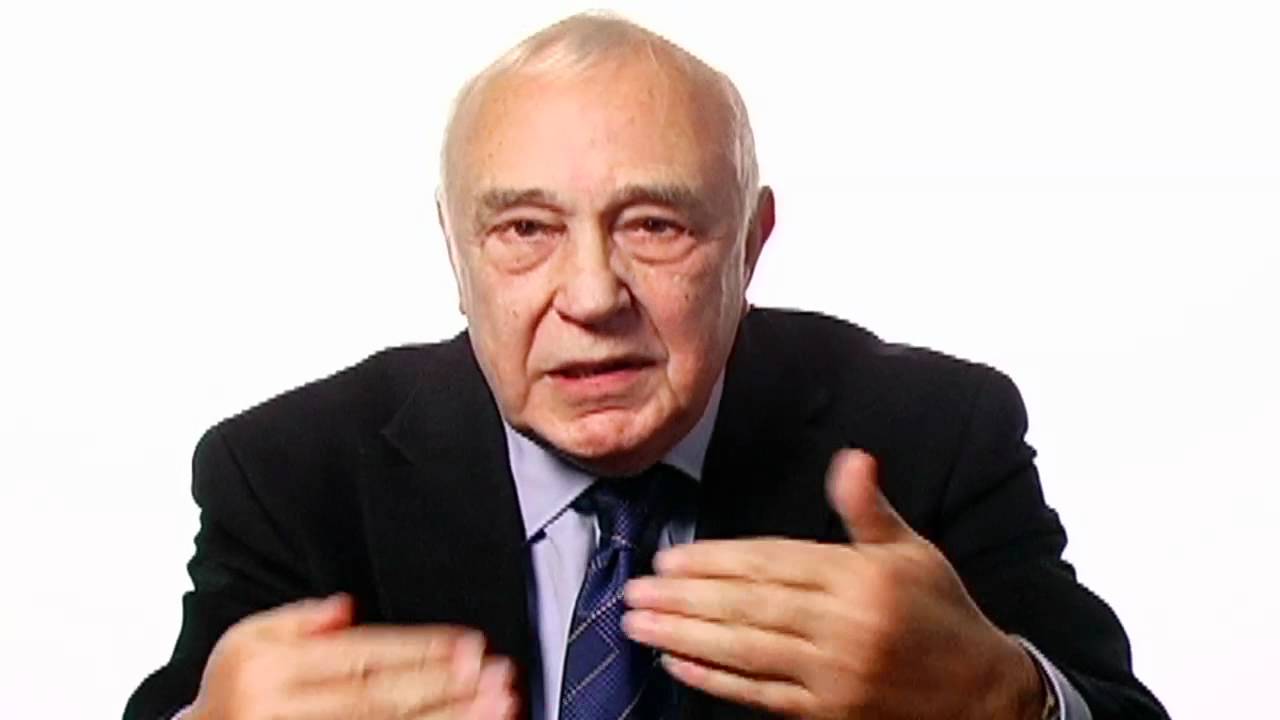
Big Think Interview with Mark Zandi | Big Think
Posted
April 24, 2012
Views
1,218
Likes
12
Engagement
0.99%
April 24, 2012
1,218
12
0.99%
Every word spoken in this episode is indexed. Type any phrase to jump straight to the moment it was said.
Type any word or phrase that may have been spoken. Click a result to seek the player to that exact moment.
Try a name, a topic, or a quoted line
You’re on April 24, 2012. Earlier episodes are to the left, later ones to the right — the row keeps loading as you go. Click any card to open it.
 Apr 24, 201216:35Now Playing
Big Think Interview with Mark Zandi
New videos DAILY
Join Big Think Edge for exclusive videos
----------------------------------------------------------------------------------
A conversation with the chief economist and co-founder of Moody’s Economy.com
----------------------------------------------------------------------------------
Mark Zandi:
Mark Zandi is Chief Economist and co-founder of Moody's Economy.com, where he directs the company's research and consulting activities. Moody's Economy.com, a division of Moody's Analytics, provides economic research and consulting services to businesses, governments and other institutions.
Mark's research interests include macroeconomic, financial, and regional economics. Recent areas of research include studying the determinants of mortgage foreclosure and personal bankruptcy, an analysis of the economic impact of various tax and government spending policies, and an assessment of the appropriate policy response to bubbles in asset markets. In addition, Mark conducts regular briefings on the economy. He is frequently quoted in national and global news outlets.
----------------------------------------------------------------------------------
TRANSCRIPT:
Question: What has fundamentally changed post-crisis in terms of the financial system?
Mark Zandi: Well, we won't be spending like we have in the past. For 25 years, from the early 80's to the mid part of this decade, consumers spent very aggressively. They borrowed heavily and used that to finance spending. Wealthier households thought they were really wealthy and didn't need to save and so they spent also very aggressively.
I think after this crisis, this great recession, that has changed in that consumers are going to be much more cautious going forward and they'll save more. Higher income, wealthier households because they know they're not wealthy and that savings values are going to rise as quickly as they thought. Low and middle income households because they'll have no choice, they just can't borrow to finance their spending. So, to see change an inflection point with respect to households and how they spend their money and how aggressively they spend their money.
Question: How will the Millennials be affected by the recession?
Mark Zandi: Actually, there's been a huge change in their saving behavior. If you look at their saving rates, people in their 20's and early 30's firmly negative, firmly negative, right up until early 2008. Since then it's positive. And not inconsequentially so. I mean, a measurable saving. So I think even younger households have changed. They're thinking about the world has changed and they're going to behave differently going forward. In part that's on their own volition because they realize and understand that economies don't move in a straight line and that they need to be prepared for things when things don't do well. But part of it is being forced upon them because they are just not able to get that credit card or get that big auto loan, or get that mortgage like they did in the past. I think people are starting to think and are starting to worry about things like, are my taxes going to go up? Whose taxes are going up? Spending by the government on Medicare and on Social Security. Am I going to be able to get Social Security and Medicare at 65? Am I going to get the same benefits as I've gotten in the past? So, those are big questions that I think people are now really starting to ask themselves and it does have political implications. There are many, but that would be one key implication.
Question: What can we learn from the spring stimulus package?
Mark Zandi: Well, in my view, I think it worked. I don't think it's any accident that the recession ended just at the same time that the stimulus – now, I'm talking about the $787 Billion package passed last February. But that stimulus is now providing its maximum benefit. So, the stimulus worked in that it brought this recession to an end and it's providing a little bit of juice for the economy into the various parts of recovery. Now, this stimulus probably isn't going to be enough to push the recovery into a self-sustaining economic expansion and that's where we are right now. It's a little bit tricky and so we may need to see more – the government may need to provide more help to make sure that that transaction does actually occur. The intent of the stimulus was to end the recession, get a recovery going, and in my view, it worked.
Question: You wrote in a recent paper. “It’s no coincidence that the great recession ended just as the stimulus package began providing its maximum economic benefit.” How do you know? (Steven Landsburg, The Big Questions)
Read the full transcript at
Sentinel Indexing in Progress
Metadata and chapters are available. Claim extraction for this episode is pending.
All video content is delivered via YouTube embedded players in accordance with the YouTube Terms of Service. Sentinel provides research tools that promote discovery and accountability across political media.