Big Think
@bigthink·8.8M subscribers·10.1K videos
Big Think Interview With Richard Shelby | Big Think
Posted
April 24, 2012
Views
2,080
Likes
14
Comments
2
Engagement
0.77%
April 24, 2012
2,080
14
2
0.77%
Every word spoken in this episode is indexed. Type any phrase to jump straight to the moment it was said.
Type any word or phrase that may have been spoken. Click a result to seek the player to that exact moment.
Try a name, a topic, or a quoted line
You’re on April 24, 2012. Earlier episodes are to the left, later ones to the right — the row keeps loading as you go. Click any card to open it.
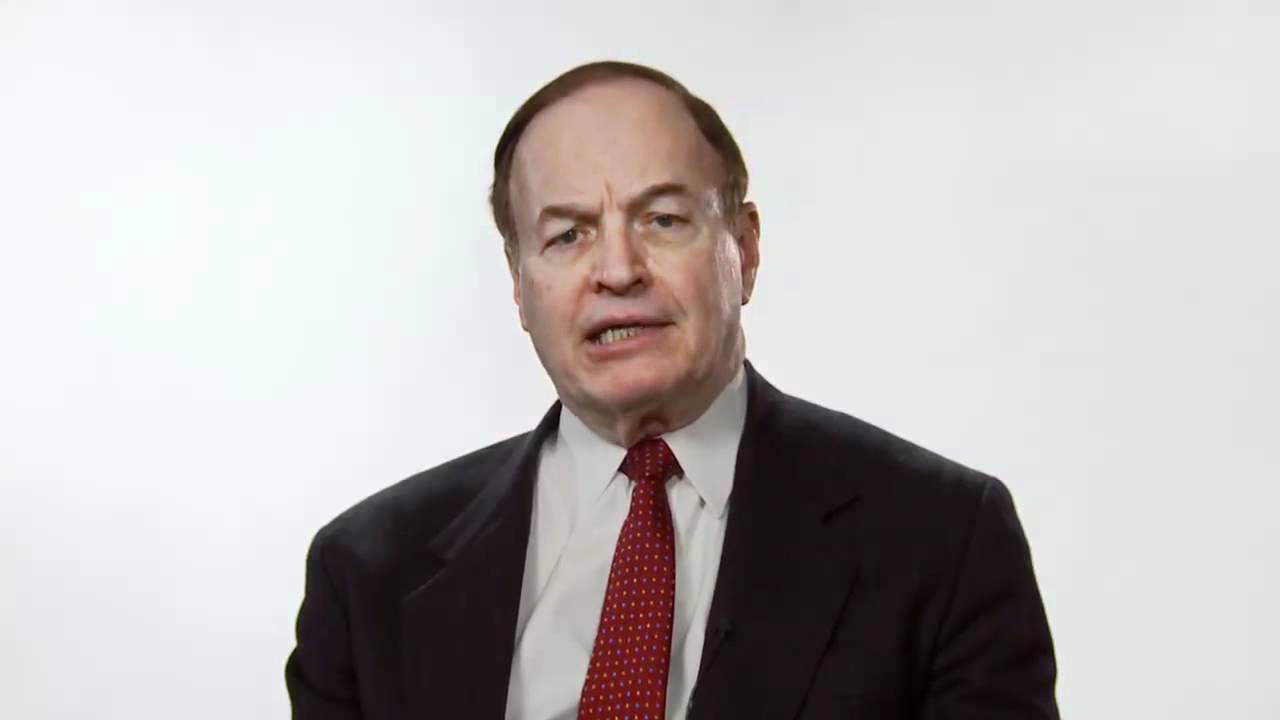 Apr 24, 201210:40Now Playing
Big Think Interview With Richard Shelby
New videos DAILY
Join Big Think Edge for exclusive videos
----------------------------------------------------------------------------------
A conversation with the Senator of Alabama.
----------------------------------------------------------------------------------
Richard Shelby:
Richard Shelby, Alabama's senior United States Senator, was first elected to the Senate in 1986 with an undeniable commitment to Alabama and the simple philosophy that a smaller government can also be a more effective government.
Senator Shelby is Chairman of the Banking, Housing and Urban Affairs Committee and Chairman of the Commerce, Justice, and Science Appropriations Subcommittee. In addition, he is a member of the full Appropriations Committee and the Special Committee on Aging.
----------------------------------------------------------------------------------
TRANSCRIPT:
Question: What are your objections to the Consumer Financial Protection Agency, and what is your plan to reduce the problem of Too Big To Fail?
Richard Shelby: I will first try to address the consumer financial regulatory body. We’re all consumer. I’m a consumer and everybody in America is a consumer, so fundamentally I’m not opposed to creating a consumer protection division of a Prudential Bank regulator. I think we should, but I am opposed to creating it outside the Prudential regulator because the number one issue with banks and it is a consumer issue, is the safety and soundness of banks. Today we have a lot of banks that are still sick or in trouble and there will be a lot of bank failures in the year 2010, so the first order of business is a sound banking system that one can take your deposits that you can sleep at night with and feel good about that will be able to make you loans and so forth, but at the same time being a consumer I think that they should look at some of the consumer aspects of the banking system and I believe the Prudential regulator, that is the regulator that deals with safety and soundness is the proper one to do that.
Question: How did Treasury’s handling of TARP spark the financial panic?
Richard Shelby: Well I think if you look back at the Troubled Asset Relief Program, TARP I opposed that from the beginning. Financial institutions were not too big to fail, that although they were big we should have let them fail and we would have been better off. It would have been a lot more efficient. It would have not been without pain, but we would be a lot ahead of the game today than we are, so my trouble with Treasury then and the Federal Reserve was the intervention there. I think we could have done better. We could have done it different ways, but only history will tell that and I would contend that nothing is too big to fail.
Question: Are you more or less confident in recent months in administration officials?
Richard Shelby: I think it’s mixed. I think as far as our banking system is concerned the Federal Deposit Insurance Corporation headed by Sheila Bair, I think that the FDIC has been on top of things. They’ve closed down a lot of banks, which they have to do. As a regulator they probably mixed like everybody else. I think the worst regulation by any agency was the Federal Reserve over the bank holding companies. Most of those banks, not all, most of those banks were the troubled banks and the ones that caused the most heartburn.
Question: What did you do as Senate Banking Committee Chair to curtail poor practices that led to the crisis?
Richard Shelby: Well first of all I was the leader in trying to make sure that Fannie and Freddie did not fail and did not cost the taxpayers a lot of money. Mixed up in all the financial crisis was the role that Fannie and Freddie played, also the rating agencies, Moody’s, S&P, Fitch, rating instruments that is securities, investment grade, triple A grade and all this when in reality they weren’t. I was the one that authored the legislation to bring competition and give the FCC, which they have now, more power to deal with the people who rate credit, we call the rating agencies.
Question: What do you expect to happen with Fannie Mae and Freddie Mac?
Read the full transcript at
Sentinel Indexing in Progress
Metadata and chapters are available. Claim extraction for this episode is pending.
All video content is delivered via YouTube embedded players in accordance with the YouTube Terms of Service. Sentinel provides research tools that promote discovery and accountability across political media.