Big Think
@bigthink·8.8M subscribers·10.1K videos
What Would Your Science Tattoo Be? | Carl Zimmer | Big Think
Posted
April 24, 2012
Views
924
Likes
8
Engagement
0.87%
April 24, 2012
924
8
0.87%
Every word spoken in this episode is indexed. Type any phrase to jump straight to the moment it was said.
Type any word or phrase that may have been spoken. Click a result to seek the player to that exact moment.
Try a name, a topic, or a quoted line
You’re on April 24, 2012. Earlier episodes are to the left, later ones to the right — the row keeps loading as you go. Click any card to open it.
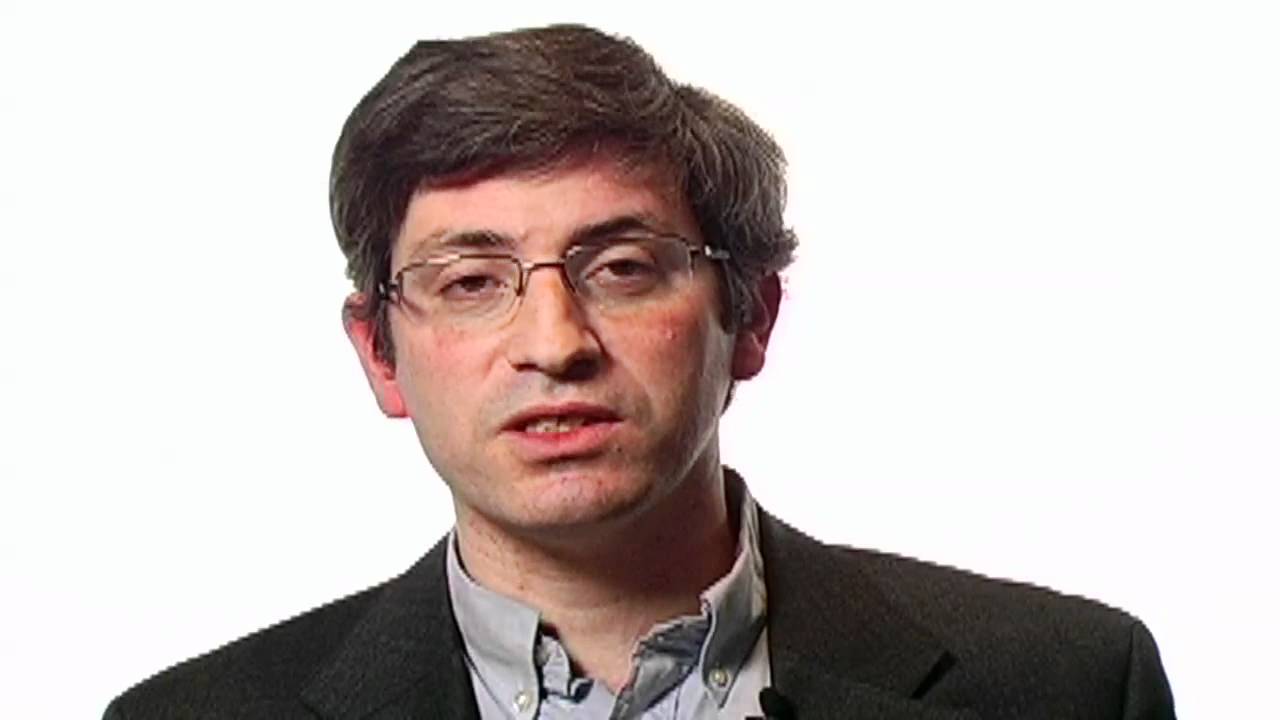 Apr 24, 20125:51Now Playing
What Would Your Science Tattoo Be?
New videos DAILY
Join Big Think Edge for exclusive videos
----------------------------------------------------------------------------------
Carl Zimmer’s blog, “The Loom,” often features pictures of readers’ science tattoos. Is he hiding any himself?
----------------------------------------------------------------------------------
Carl Zimmer:
Carl Zimmer is a science writer, lecturer, and frequent guest on such radio programs as Fresh Air and This American Life. His books include "Soul Made Flesh," "Evolution: The Triumph of an Idea," and "Parasite Rex." In addition to writing books, Zimmer contributes articles to The New York Times, as well as magazines including National Geographic, Time, Scientific American, Science, and Popular Science. He also writes an award-winning blog, The Loom. From 1994 to 1998 Zimmer was a senior editor at Discover, where he remains a contributing editor and writes a monthly column about the brain.
Zimmer is a lecturer at Yale University, where he teaches writing about science and the environment. He is also the first Visiting Scholar at the Science, Health, and Environment Reporting Program at New York University’s Arthur L. Carter Journalism Institute.
Zimmer is a Big Think Delphi Fellow.
----------------------------------------------------------------------------------
TRANSCRIPT:
Question: How did you get started as a science writer, and who were your role models?
Carl Zimmer: I didn’t really have a conscious idea that I wanted to be a science writer when I was young. I loved to write. That’s just what I did, but I would write stories or articles for the local newspaper, things like that. I also loved science, but it was just something I just did and I didn’t actually think about that fact that I might be able to write about science until I ended up with a job at Discover Magazine, a science magazine and I started working there and suddenly realized that I really enjoyed this and I have loved it ever since. I mean very quickly I discovered that I could get on the phone and talk with world experts on all sorts of different subjects and they were amazingly generous with their time and would work with me so that I would understand their ideas and their work and how it tied in with what other people did and so ever since it’s been just a fantastic way for me to learn about the world. In terms of the people who I try to model myself after there are a number of science writers who I really respect and certainly in terms of just writing really good nonfiction. You know there are people who came in the generations before me who you just kind of look to and say yeah, that’s good. For example, like John McPhee. You know there are certain books of McPhee’s where you just pull it off the shelf and open it up and read a paragraph and you remember what good writing is supposed to look like because every now and then I totally forget the whole concept of writing well, but someone like McPhee will remind you of doing it well and McPhee although he writes about a lot of things he is in some ways a science writer. He has written a number of books on geology and other things having to do with science, so people like him really help to keep me going.
Question: You often spotlight readers’ science-related tattoos. What would your own ideal tattoo be?
Carl Zimmer: Let me think about this for a second. I was very surprised to discover that a fair number of scientists have some very interesting tattoos and the way I discovered this was that a friend of mine who is a geneticist was at a pool party with his kids and he was in the pool and I noticed on his shoulder there was this DNA tattoo and I said that’s cool and he said, “Yeah, well you know what is really cool is that I’ve spelled my wife’s initials in the genetic code.” And I thought well yes, that is true geek love, but it got me thinking you know I’ve seen a couple of other scientists with tattoos and I just I wonder like you know do other scientists have it, so the nice thing about having a blog is that you can just ask questions out loud, even kind of silly questions like do people have tattoos and I was particularly interested in scientists who love what they study so much that they actually engrave themselves with it and I have lost count of how many tattoos I have been sent, maybe like 300 or something like that and a lot of times they really tell amazing stories. So for example, there is a neurologist who sent me a tattoo she has of a special kind of neuron. It’s a neuron that is vulnerable in Lou Gehrig’s disease, which her father suffered from and actually her father suffering from Lou Gehrig’s disease was what made her a neurologist and so this is not just some random tattoo.
Read the full transcript at
Sentinel Indexing in Progress
Metadata and chapters are available. Claim extraction for this episode is pending.
All video content is delivered via YouTube embedded players in accordance with the YouTube Terms of Service. Sentinel provides research tools that promote discovery and accountability across political media.