Daniel Davis Deep Dive
@danieldavisdeepdive·442K subscribers·4.9K videos
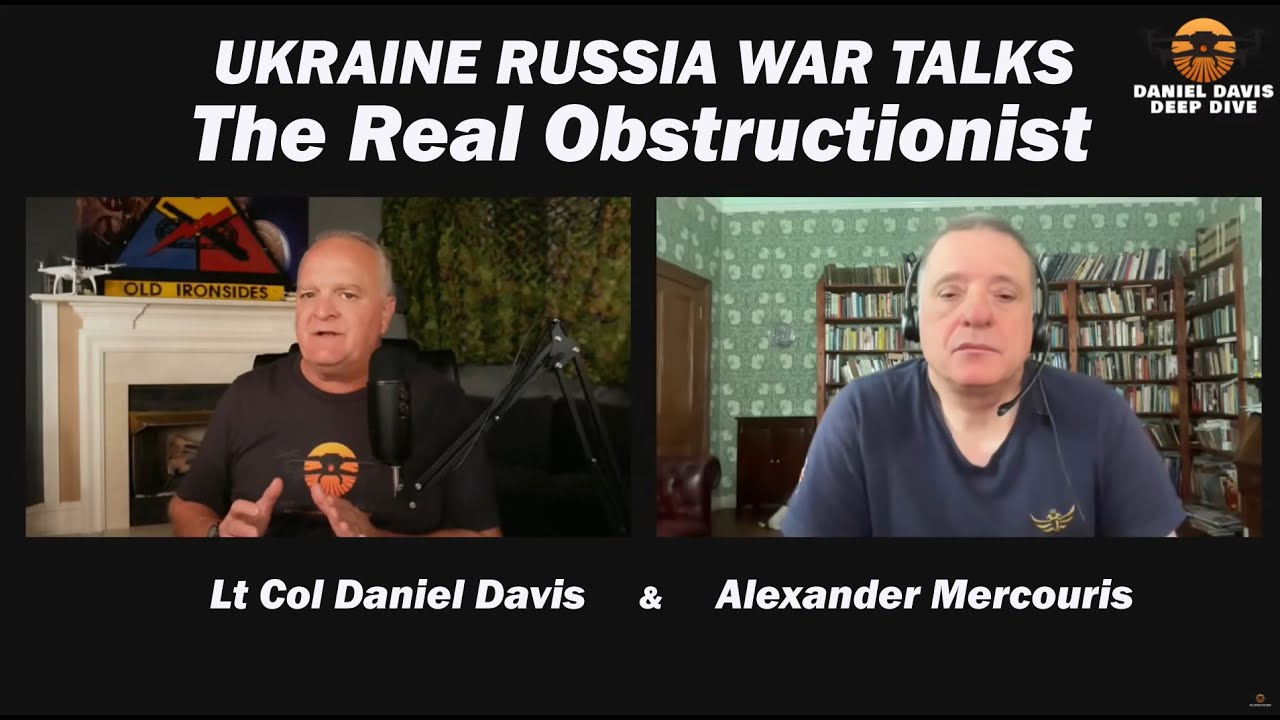
Peace Talks are DEAD, Zelensky gives Putin Ultimatum /Lt Col Daniel Davis & Alexander Mercouris
Posted
August 29, 2025
Views
105,457
Likes
5,258
Comments
1,276
August 29, 2025
105,457
5,258
1,276
6.20%
Every word spoken in this episode is indexed. Type any phrase to jump straight to the moment it was said.
Type any word or phrase that may have been spoken. Click a result to seek the player to that exact moment.
Try a name, a topic, or a quoted line
 59:52Now Playing
Daniel Davis Deep Dive Merch: Etsy store
The Strike in Kyiv
Russia launched its second-largest missile barrage of the war, hitting multiple Ukrainian cities, with Kyiv suffering the heaviest impact.
At least 18 people were killed, including children, and dozens were wounded.
A large apartment building was hit, causing major civilian casualties.
The strike damaged facilities near the UK and EU missions in Kyiv, leading to strong diplomatic backlash.
2. European & Ukrainian Response
EU foreign policy chief Kaja Kallas said this shows Putin is mocking peace efforts and that the only response is increasing pressure on Russia.
The EU (25 out of 26 states, all but Hungary) issued a statement calling the attack an intentional strike on civilians, labeling it a war crime. They promised accountability for Russian commanders and perpetrators.
The EU is preparing a 19th round of sanctions, acknowledging previous sanctions alone have not changed Russia’s behavior.
Zelensky framed the strike as not just against Ukraine, but against the wider world—Europe, the US, and others—while also pointing to countries like China and India for “aiding Russia” through oil and gas purchases.
3. Russian Intentions and Targeting
Debate exists on whether Russia deliberately struck near diplomatic missions. Analysts argued:
Russia likely had a specific target it considered militarily valuable (possibly intelligence or industrial facilities).
Ukraine has, in the past, located military assets inside civilian areas to shield them—Amnesty International has reported on this.
Nonetheless, even if military assets were present, striking heavily populated civilian structures without proportional justification may constitute a war crime.
Russia is generally calculated in its targeting, but accidents, misfires, or reckless disregard for civilian risk also occur.
4. Broader Impact
The strike alarmed European capitals, intensifying frustration with Russia and reinforcing the EU’s alignment with Ukraine.
Independent investigations are unlikely, as each side controls the narrative—truth is the first casualty of war.
The attack deepens polarization:
Ukraine and the EU push for harsher measures against Moscow.
Zelensky rejects negotiations, convinced that Western powers could still tip the balance and help Ukraine “win the war” outright.
Russia has not budged on its demands since last year, leaving both sides locked in an impasse.
5. The State of the “Peace Process”
The conversation concluded that peace efforts are essentially dead.
Instead of compromise, both sides are doubling down: Ukraine presses for more Western intervention, while Russia shows no sign of concessions.
This stalemate suggests escalation and a prolonged conflict rather than de-escalation.
Sentinel Indexing in Progress
Metadata and chapters are available. Claim extraction for this episode is pending.
All video content is delivered via YouTube embedded players in accordance with the YouTube Terms of Service. Sentinel provides research tools that promote discovery and accountability across political media.