Daniel Davis Deep Dive
@danieldavisdeepdive·442K subscribers·4.9K videos
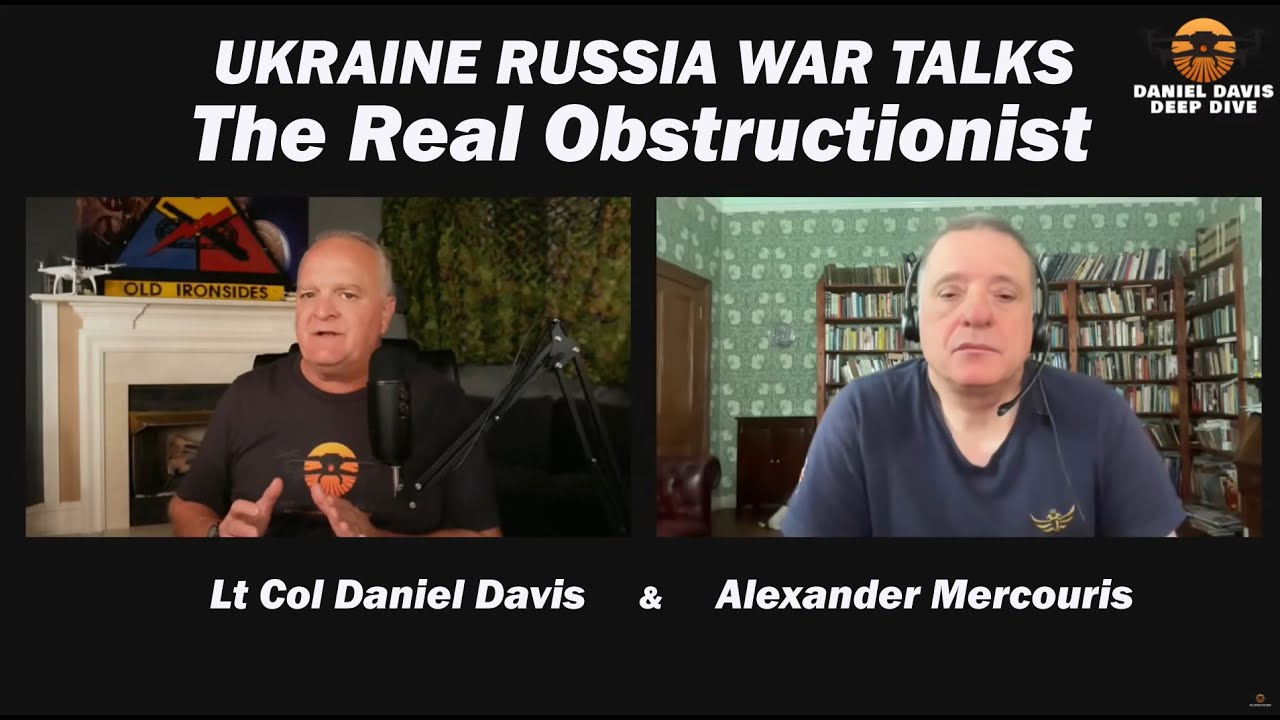
The REAL OBSTRUCTIONIST in Ukraine Russia War Talks /Alexander Mercouris & Lt Col Daniel Davis
Posted
August 30, 2025
Views
36,717
Likes
2,584
Comments
272
August 30, 2025
36,717
2,584
272
7.78%
Every word spoken in this episode is indexed. Type any phrase to jump straight to the moment it was said.
Type any word or phrase that may have been spoken. Click a result to seek the player to that exact moment.
Try a name, a topic, or a quoted line
 27:59Now Playing
Daniel Davis Deep Dive Merch: Etsy store
Please visit Alexander:
AND
The idea of arranging direct meetings between Putin and Zelensky is seen as political theater rather than a genuine effort toward peace. Zelensky avoids detailed negotiations, having rejected multiple rounds in Istanbul, preferring instead to frame the conflict as a personal standoff with Putin. This performative approach helps him sidestep substantive talks while maintaining Western backing.
On the ground, Russia holds the military advantage. Its army has been on continuous offensive operations since late 2023, supported by superior air power that Ukraine cannot match. Economic sanctions have failed to cripple Russia—the 198th sanctions package has had no meaningful effect, and further “secondary sanctions” on nations like India or China would be economically risky and unlikely to succeed. Russia’s vast size, natural resources, industrial base, energy and food self-sufficiency make it resistant to the kind of pressure that broke smaller economies like Iraq’s.
Meanwhile, European proposals to send a “peacekeeping” or “reassurance” force are militarily unrealistic. Ukraine’s frontline stretches roughly 1,000 miles; defending it would require about 300,000 troops, far beyond Europe’s means. The UK can only field around 30,000 deployable soldiers, with as few as 40 usable tanks; France is somewhat stronger, but Italy and Poland are constrained, and the U.S. has no appetite to commit. In reality, Europe repeatedly advances these ideas to try to draw in the U.S. militarily, despite Washington’s firm refusal to put “boots on the ground.”
Strategically, Europe is caught in a bind. Its leaders are heavily invested in Ukraine’s war effort but fear a negotiated settlement that involves concessions to Russia. They also worry about being sidelined if the U.S. and Russia eventually reach a broader security agreement over Europe. As a result, they keep recycling unattainable plans—escalating rhetoric about Putin’s refusal to negotiate, proposing unrealistic troop deployments, and pushing for harsher sanctions—in the hope that U.S. economic or military intervention will eventually force Russia into concessions. But given Russia’s resilience and U.S. reluctance, these strategies lack credibility, leaving Europe pursuing unattainable goals while the war grinds on.
Sentinel Indexing in Progress
Metadata and chapters are available. Claim extraction for this episode is pending.
All video content is delivered via YouTube embedded players in accordance with the YouTube Terms of Service. Sentinel provides research tools that promote discovery and accountability across political media.