Dr John Campbell
@campbellteaching·3.3M subscribers·3.1K videos
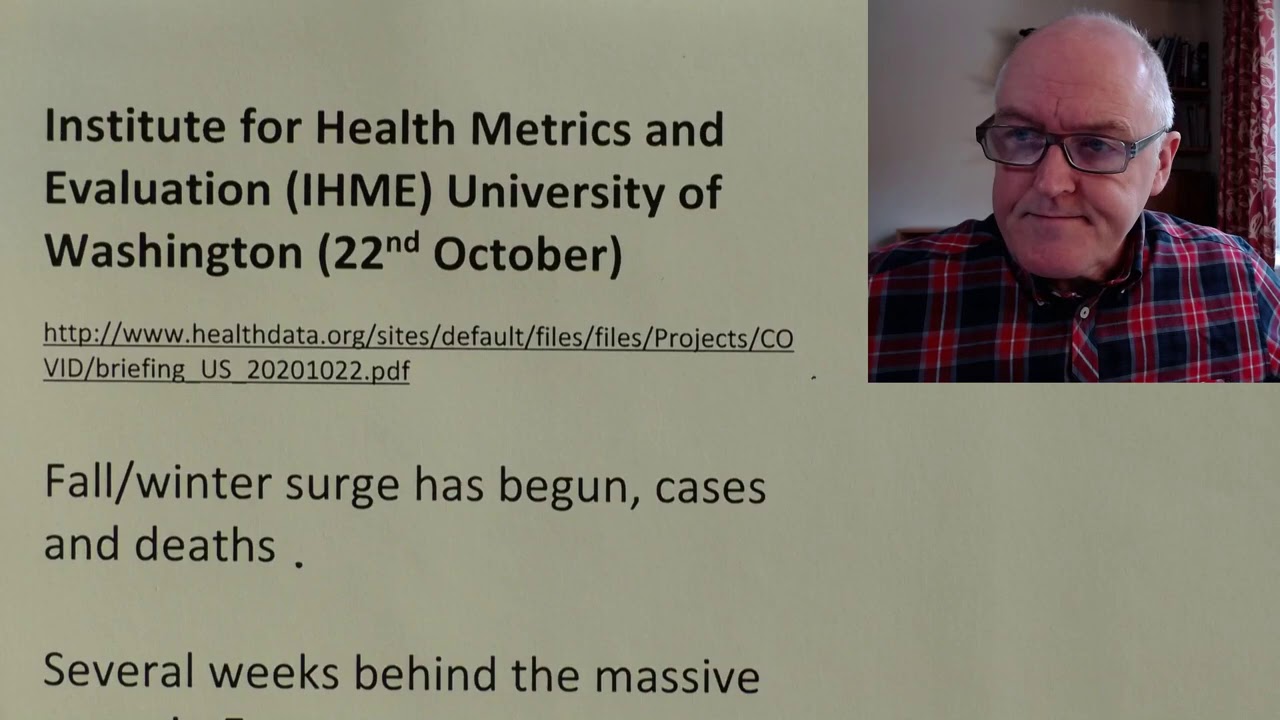
Winter Vitamin D Update
Posted
October 31, 2020
Views
801,616
Likes
12,523
Comments
2,867
Engagement
1.92%
October 31, 2020
801,616
12,523
2,867
1.92%
Every word spoken in this episode is indexed. Type any phrase to jump straight to the moment it was said.
Type any word or phrase that may have been spoken. Click a result to seek the player to that exact moment.
Try a name, a topic, or a quoted line
 27:44Now Playing
Vitamin D
Essential role in immunomodulation
Innate and adaptive immune systems
Enhances innate immunity, immune peptides, anti-viral effects, disrupt viral envelopes
Suppressing the excessive expression of proinflammatory cytokines
Regulating the expression of ACE2 receptors
Epidemiological and clinical evidence, incidence, severity and mortality
Low levels
Hypertension, diabetes, cancer, cardiovascular diseases
Effect of calcifediol treatment and best available therapy versus best available therapy on intensive care unit admission and mortality among patients hospitalized for COVID-19: A pilot randomized clinical study
50 patients treated with calcifediol
One required admission to the ICU (2%)
No deaths
All discharged, without complications
26 untreated patients
13 required ICU (50 %)
2 died
Calcifediol clinical trial, 1,000 patients, 15 hospitals
Vitamin D Status in Hospitalized Patients With SARS-CoV-2 Infection
The Journal of Clinical Endocrinology & Metabolism (Accepted, 27th October 2020)
To assess serum 25-hydroxyvitamin D (25OHD) levels in hospitalized patients with COVID-19
Analyze the possible influence of vitamin D status on disease severity
Retrospective
Case-control
216 COVID-19 patients
197 population-based controls
Results
Vitamin D deficiency was defined as serum 25OHD levels less than 20 ng/ml (50 nmol/L)
COVID patients group
Mean levels 13.8 ng/ml. (34.5 nmol/L)
82.2% vitamin D deficient
Community control group
Mean levels 20.9 ng/ml (52.25 nmol/L) (p less than 0.0001)
47.2% vitamin D deficient
Blood levels lower in men than in women
Evidence of protective role of Ultraviolet-B (UVB) radiation in reducing COVID-19 deaths (Nature scientific reports, 19th October 2020)
Ultraviolet-B (UVB) radiation, mediated by vitamin D synthesis
Dataset of 152 countries over 108 days (n = 6,524)
A permanent unit increase in UVI is associated with a 1.2 percentage points decline in daily growth rates of cumulative COVID-19 deaths
and a 1.0 percentage points decline in the CFR daily growth rate
Globally
Minus 12% of cumulative COVID-19 deaths
Minus 38% on CFR
We find a significant negative association between UVI and COVID-19 deaths
indicating evidence of the protective role of UVB in mitigating COVID-19 deaths
If confirmed via clinical studies, then the possibility of mitigating COVID-19 deaths via sensible sunlight exposure or vitamin D intervention would be very attractive
Vitamin D sufficiency, a serum 25-hydroxyvitamin D at least 30 ng/mL reduced risk for adverse clinical outcomes in patients with COVID-19 infection
Association between serum 25-hydroxyvitamin D levels and its effect on adverse clinical outcomes
n = 235
Results
Based on CDC criteria, among our study patients, 74% had severe COVID-19 infection and 32.8% were vitamin D sufficient.
Vitamin D sufficiency
25(OH)D less than 30 ng/ml. (75 nmol/L)
Reduction in clinical severity
Inpatient mortality
Serum levels of C-reactive protein (CRP)
Increase in lymphocyte percentage
Vitamin D insufficiency in southern Arizona (American Journal of Clinical Nutrition)
Population 26.1 ng/ml (65.25 nmol/L)
Below 20 ng/ml (50 nmol/L)
Blacks 55%
Hispanics 37.6%
Whites 22.7%
Also more obesity in first two groups
Adult Health Status Among Native American Families Participating in the Growing Resilience Home Garden Study (CDC August 22, 2019)
Northern Arapaho and Eastern Shoshone tribes sharing the Wind River Indian Reservation (WRIR) in Wyoming reportedly die 30 years earlier than whites in the state
Nearly 80% of adults had deficient vitamin D levels ( less than 20 ng/mL; n = 167) (50 nmol/L)
Obesity
Waist circumference, associated with higher risk of obesity-related disease
Women 95%
Men 80%
Hypertension
Diabetes
EVMS CRITICAL CARE COVID-19 MANAGEMENT PROTOCOL
If you would like to donate to John's educational projects, please use the following link, thank you,
Sentinel Indexing in Progress
Metadata and chapters are available. Claim extraction for this episode is pending.
All video content is delivered via YouTube embedded players in accordance with the YouTube Terms of Service. Sentinel provides research tools that promote discovery and accountability across political media.