Dr John Kruse
@drjohnkruse·16.8K subscribers·484 videos
A New Neurofeedback Approach for Mental Health
Posted
October 26, 2025
Views
583
Likes
34
Comments
14
Engagement
8.23%
October 26, 2025
583
34
14
8.23%
Every word spoken in this episode is indexed. Type any phrase to jump straight to the moment it was said.
Type any word or phrase that may have been spoken. Click a result to seek the player to that exact moment.
Try a name, a topic, or a quoted line
 10:50Now Playing
Main Chapters:
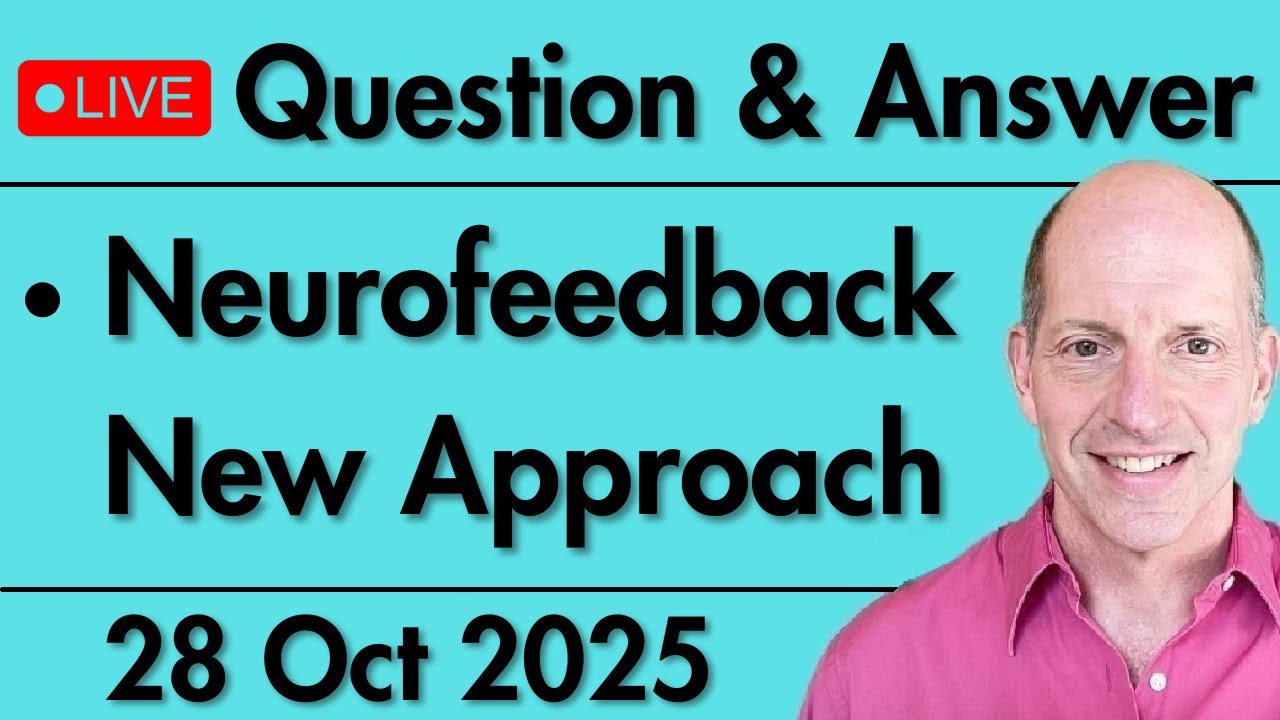
Neurofeedback research started ninety years ago, and clinics have been offering it as a treatment for ADHD and other mental health conditions for half a century. But as I described in a previous video () the research supporting whether neurofeedback really helps ADHD symptoms to improve is incredibly weak and inconsistent. This is tragic, both because many individuals can't tolerate stimulants and other medications, and because many individuals have been spending hours of their lives and hundreds or even thousands of dollars a month for neurofeedback treatments that may or may not be of benefit.
Neurofeedback using brain wave information provided by EEG can show what the brain is doing in almost perfect real time, but the localization of brain activity is imprecise. In contrast, fMRI can localize brain activity to a few millimeters, but is too slow to capture brain states that happen too quickly or briefly. Standard protocols for EEG neurofeedback commonly focus on certain brain waves (changing the ratio of theta to beta waves) or target brain wave activity emanating from a specific region of the brain (sensorimotor cortex).
A new set of studies by Gou and colleagues in China used a new approach. They individualized treatment for each subject, and the brain activity that they had each subject try to decrease was a rendering of activity throughout the whole brain when it was exposed to a cue that triggered methamphetamine craving. Subjects were able to learn to deactivate this pattern of brain activity, and subsequently were far more likely to react or feel cravings when exposed to methamphetamine cues. The authors suggest that both the individualization, and the whole-brain approach contributed to the success. It implies that for addiction (and other mental health conditions) similar-appearing behavior may be generated by different combinations of pathways, and that changing this composite picture is more important for treatment success than targeting a specific brain circuit or pathway.
-----
Free link to my Medium Article on a New Neurofeedback Approach for Mental Health:
Follow on Medium for hundreds of full length articles on this subject and more!
Access to Full Medium articles requires paid membership.
Sentinel Indexing in Progress
Metadata and chapters are available. Claim extraction for this episode is pending.
All video content is delivered via YouTube embedded players in accordance with the YouTube Terms of Service. Sentinel provides research tools that promote discovery and accountability across political media.
-----
Related Videos:
Neurofeedback and ADHD:
Gamma Oscillations and Mental Health:
References:
Improved Response Inhibition Through Cognition-Guided EEG Neurofeedback in Men With Methamphetamine Use Disorder (2025)
Neurofeedback training for executive function in ADHD children: a systematic review and meta-analysis (2025)
Neurofeedback for Attention-Deficit/Hyperactivity Disorder - A Systematic Review and Meta-Analysis (2024)
Full Chapter list:
-------------------------
Psychiatrist, neuroscientist, and author John Kruse, MD, PhD presents practical, actionable, well-researched information about treatment options that scientists and clinicians recommend for adult ADHD and other mental health conditions.
Subscribe if you're curious about how neuroatypical brains can optimize their functioning in our shared, and somewhat strange, world.
ADHD topics have a pink background, and those on more general mental health topics have a purple background. A small collection of Politics related videos have an orange background.
Dr. Kruse has posted videos in the "Videos", "Live", and "Shorts", sections of this channel.
You're welcome to email him with topics you want discussed or people you think he should interview.
drjohnkruse@gmail.com
drjohnkruse@gmail.com
#health #mentalhealth #neurofeedback