Heimlers History
@heimlershistory·1.3M subscribers·773 videos
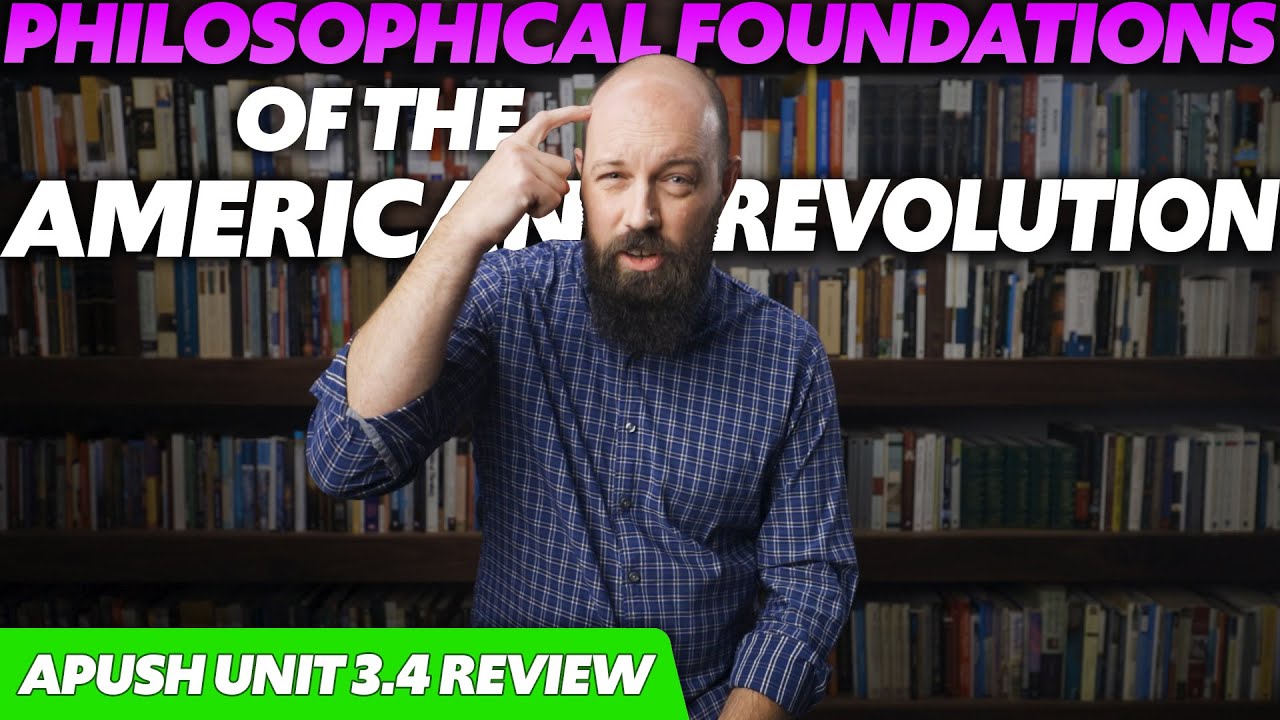
PHILOSOPHICAL Foundations of the American Revolution [APUSH Review Unit 3 Topic 4 (3.4)] Period 3
Posted
September 21, 2020
Views
529,412
Likes
5,037
Comments
71
Engagement
September 21, 2020
529,412
5,037
71
0.96%
Every word spoken in this episode is indexed. Type any phrase to jump straight to the moment it was said.
Type any word or phrase that may have been spoken. Click a result to seek the player to that exact moment.
Try a name, a topic, or a quoted line
 6:34Now Playing
GET FOLLOWALONG NOTEGUIDES for this video
AP HEIMLER REVIEW GUIDE (formerly known as the Ultimate Review Packet):
+APUSH Heimler Review Guide
+AP Essay CRAM Course (DBQ, LEQ, SAQ Help)
+Bundle Heimler Review Guide and Essay CRAM Course
HEIMLER’S HISTORY MERCH!
Instagram: @heimlers_history
For more videos on APUSH Unit 3, check out the playlist
In this video Heimler takes you through Unit 3 Topic 4 of the AP U.S. History curriculum which is set in period 3 (1754-1800).
Before we get to the American Revolution proper, we need to discuss the ideas that caused it. Many of them were rooted in Enlightenment thought put into circulation by thinkers like John Locke (Two Treatises of Government), Jean-Jacques Rousseau (The Social Contract), and Montesquieu (The Spirit of the Laws).
The American colonial leaders (especially) were taken with ideas like natural rights, the social contract, the consent of the governed, and republican forms of government.
But it took the publication of Thomas Paine's Common Sense to filter this philosophical thought down to the masses of American colonists. This little pamphlet sold like crazy and made a powerful argument for independence from Britain. And even though there was still a significant portion of the population for whom independence was intolerable, the tide was turning.
If you have any questions, leave them below and Heimler shall answer forthwithly.
This video is aligned with the AP U.S. History Curriculum and Exam Description for Unit 3 Topic 4, and the following Key Concepts: 3.2.I.A, 3.2.I.B
Sentinel Indexing in Progress
Metadata and chapters are available. Claim extraction for this episode is pending.
All video content is delivered via YouTube embedded players in accordance with the YouTube Terms of Service. Sentinel provides research tools that promote discovery and accountability across political media.