United States Institute of Peace
@unitedstatesinstituteofpeace·110K subscribers·2.2K videos
Peace and Security Issues at the Forum on China-Africa Cooperation
Posted
January 19, 2022
Views
1,377
Likes
23
Comments
2
January 19, 2022
1,377
23
2
1.82%
Every word spoken in this episode is indexed. Type any phrase to jump straight to the moment it was said.
Type any word or phrase that may have been spoken. Click a result to seek the player to that exact moment.
Try a name, a topic, or a quoted line
 1:08:45Now Playing
FOCAC's Missing Piece
In November 2021, Chinese and African political leaders met in Senegal for the eighth ministerial meeting of the Forum on China-Africa Cooperation (FOCAC). Since its creation in 2000, China has viewed the forum as an important opportunity to highlight priority areas in the China-Africa relationship, assess shifts in bilateral relationships and negotiate economic and trade deals. While President Xi Jinping touted peace and security as a priority during this year's FOCAC, there were fewer commitments to projects in this category than in previous years.
But despite receiving little attention in this year's ministerial meeting, China's influence on Africa's peace and security landscape is anything but insignificant. Over the past decade, China has steadily contributed to U.N. peacekeeping forces in Africa, funded Africa's regional institutions, extended military cooperation, established a military base on the continent and played an important role in Africa's arms and technology market.
Please join USIP for a discussion on the key takeaways from FOCAC 2021, China's long-term strategy in Africa's peace and security landscape, how China's bilateral relationships in Africa affect conflict dynamics — for example, in Ethiopia, where China has played an outsized economic role — and what it all means for U.S. foreign policy.
Join the conversation on Twitter with #USIPFOCAC.
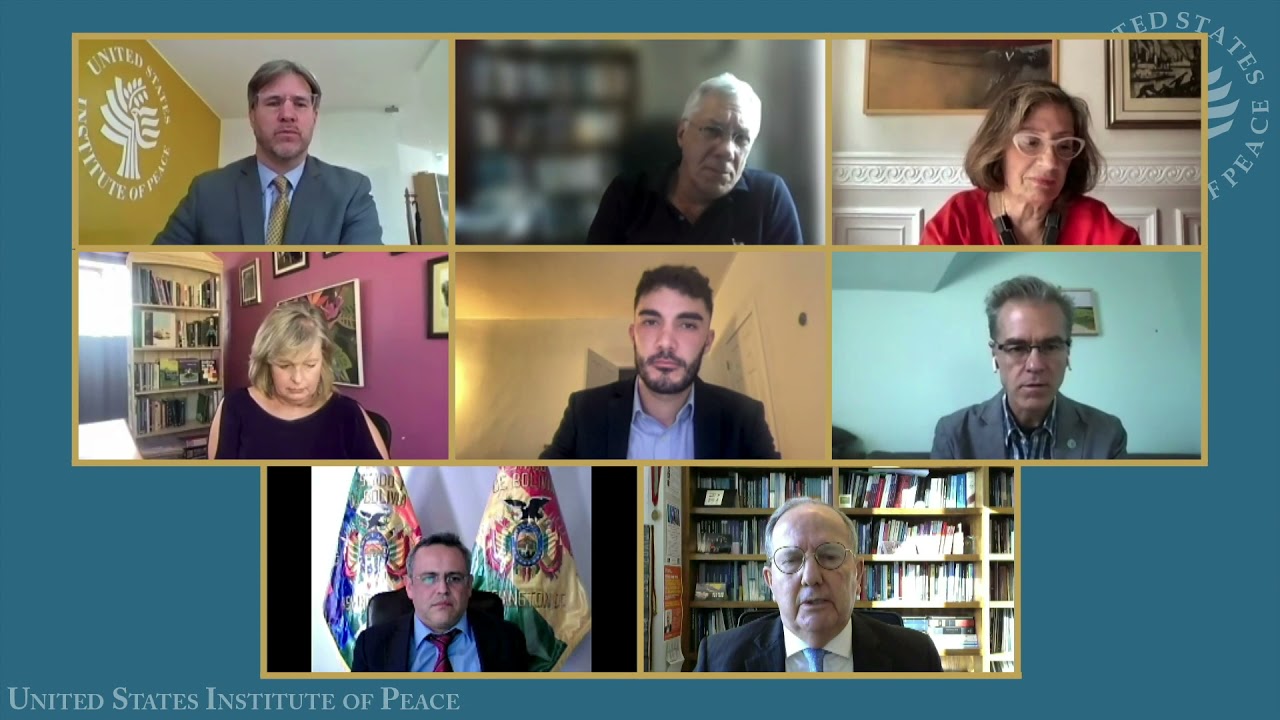
Speakers
Lise Grande, opening remarks
President and CEO, U.S. Institute of Peace
Abdul Hakeem Ajijola
Chair, African Union Cyber Security Expert Group
Kamissa Camara
Senior Visiting Expert for the Sahel, U.S. Institute of Peace
Garth le Pere
Professor, University of Pretoria; Senior Associate, Mapungubwe Institute for Strategic Reflection
Henry Tugendhat, moderator
Senior Policy Analyst, China, U.S. Institute of Peace
Joseph Sany, closing remarks
Vice President, Africa Center, U.S. Institute of Peace
For more information about this event, please visit
Connect with us!
Subscribe to our YouTube channel
Newsletters
The United States Institute of Peace is a national, nonpartisan, independent institute, founded by Congress and dedicated to the proposition that a world without violent conflict is possible, practical and essential for U.S. and global security. In conflict zones abroad, the Institute works with local partners to prevent, mitigate, and resolve violent conflict. To reduce future crises and the need for costly interventions, USIP works with governments and civil societies to build local capacities to manage conflict peacefully. The Institute pursues its mission by linking research, policy, training, analysis and direct action to support those who are working to build a more peaceful, inclusive world. Learn more about USIP
Sentinel Indexing in Progress
Metadata and chapters are available. Claim extraction for this episode is pending.
All video content is delivered via YouTube embedded players in accordance with the YouTube Terms of Service. Sentinel provides research tools that promote discovery and accountability across political media.