Big Think
@bigthink·8.8M subscribers·10.1K videos
A Study on Racial Profiling | Laurence Steinberg | Big Think
Posted
April 24, 2012
Views
12,067
Likes
78
Comments
12
Engagement
0.75%
April 24, 2012
12,067
78
12
0.75%
Every word spoken in this episode is indexed. Type any phrase to jump straight to the moment it was said.
Type any word or phrase that may have been spoken. Click a result to seek the player to that exact moment.
Try a name, a topic, or a quoted line
You’re on April 24, 2012. Earlier episodes are to the left, later ones to the right — the row keeps loading as you go. Click any card to open it.
 Apr 24, 20124:53Now Playing
A Study on Racial Profiling
New videos DAILY
Join Big Think Edge for exclusive videos
----------------------------------------------------------------------------------
A psychologist explains a study into how racial associations affect expectations of guilt.
----------------------------------------------------------------------------------
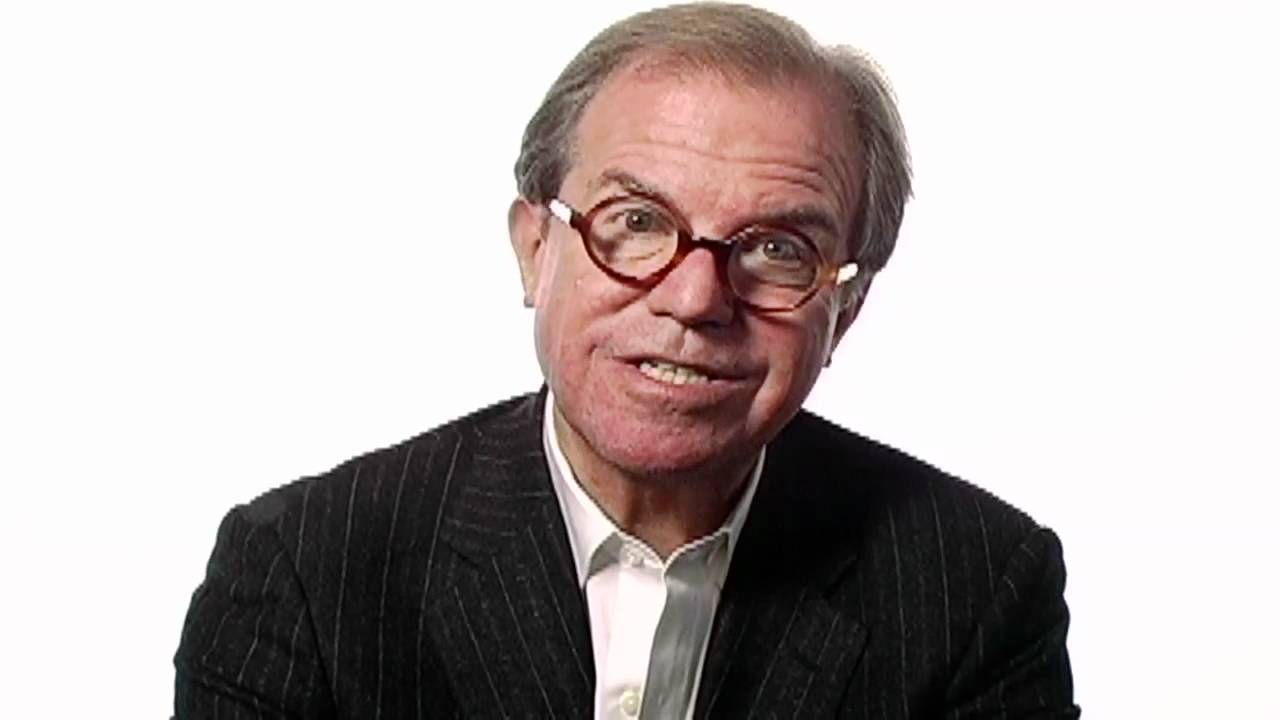
Laurence Steinberg:
Laurence Steinberg is the Distinguished University Professor of Psychology at Temple University. An internationally renowned expert on psychological development during adolescence, he is the author of more than 250 articles and essays on growth and development during the teenage years, and the author or editor of eleven books, including Adolescence the leading college textbook on adolescent development. A graduate of Vassar College and Cornell University, he was named as the first recipient of the Klaus J. Jacobs Research Prize in 2009, one of the largest prizes ever awarded to a social scientist, for his contributions to improving the lives of young people and their families.
----------------------------------------------------------------------------------
TRANSCRIPT:
Question: Can you explain your study into racial associations?
Laurence Steinberg: Our group did a really interesting study of this. We brought people into the lab, and in this experiment one sample were police officers and one sample were probation officers. We found the same thing in each sample. So we bring them into the lab and we say, we're going to ask you to read through this hypothetical discussion of a crime. And the person is going to be given a couple of paragraph to read that describe a crime but that don't have any information about the perpetrator's race. In each case it's a juvenile. Now, we tell you that before you read this we want you to do an exercise to kind of clear your mind. And we ask you to look at a computer and to tell us whether a point of light that you're going to see flashing is on the right side or the left side of the screen.
Now, in reality it's not a point of light; it's a word. But it's flashed so quickly that you can't process it; it's all subliminal. Half the people in the study get a list of words that we associate with African-Americans, things like Oprah or reggae. So not bad things, but things that we tend to associate with being black. Half the sample gets a list of words that has no racial association but that are matched for their word length. And then people are given these crimes to read, and they're asked, how guilty is the person? How much punishment does the person deserve? How likely is the person to reoffend? How adult-like is this offender? And in both samples, regardless of the race of the person in the experiment, if you got primed to think of African-Americans, you rated the person, the criminal, as guiltier, more deserving of punishment, more likely to reoffend, more adult-like. And this happened, as I said, regardless of the race of the person in the experiment. So black police officers were just as likely to do this as white police officers, black probation officers just as likely as white probation officers. But it gets to something that's important about understanding disproportionate minority involvement in the system, which is that we have unconscious biases that affect the decisions that we make.
Question: Why do you feel there is a disproportionate number of minority adolescents in prison in America?
Laurence Steinberg: Well, racial disproportionality in the justice system is seen at virtually every level that you look at. So it's seen in terms of who gets arrested, it's seen in terms of how people are charged, it's seen in terms of who gets detained, it's seen in terms of who gets incarcerate, and it's seen in terms of who gets transferred. At all of those levels of involvement in the system, you see more black and Latino kids than you do white kids, controlling for their criminal behavior. There isn't one thing that causes this to happen. It's, I think, probably the sum of many smaller things but then when added up have a large effect. So we know that there is racial profiling going on in terms of how law authorities work. We know that people have unconscious biases against kids of color that might lead them to see them as more dangerous when they may not be. You tend to see disproportionality the most at less serious crimes. So, just in a concrete way, if you're talking about somebody who's murdered somebody, it really doesn't matter, for the most part, whether that criminal is black or white; they're going to be punished for murder. But if you're talking about somebody who's arrested for drug dealing, you know, there's a lot of subjectivity that goes on in how the charge is made and in what the outcome of the charge is.
Read the full transcript at
Sentinel Indexing in Progress
Metadata and chapters are available. Claim extraction for this episode is pending.
All video content is delivered via YouTube embedded players in accordance with the YouTube Terms of Service. Sentinel provides research tools that promote discovery and accountability across political media.