Big Think
@bigthink·8.8M subscribers·10.1K videos
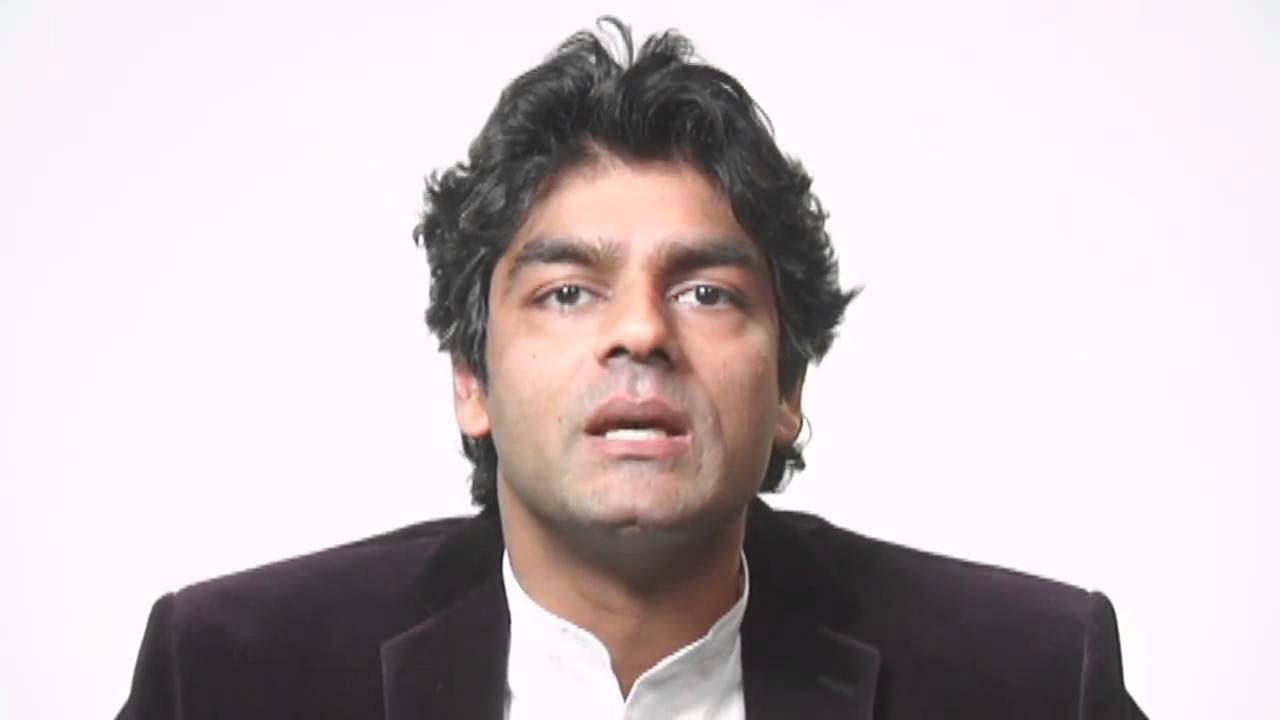
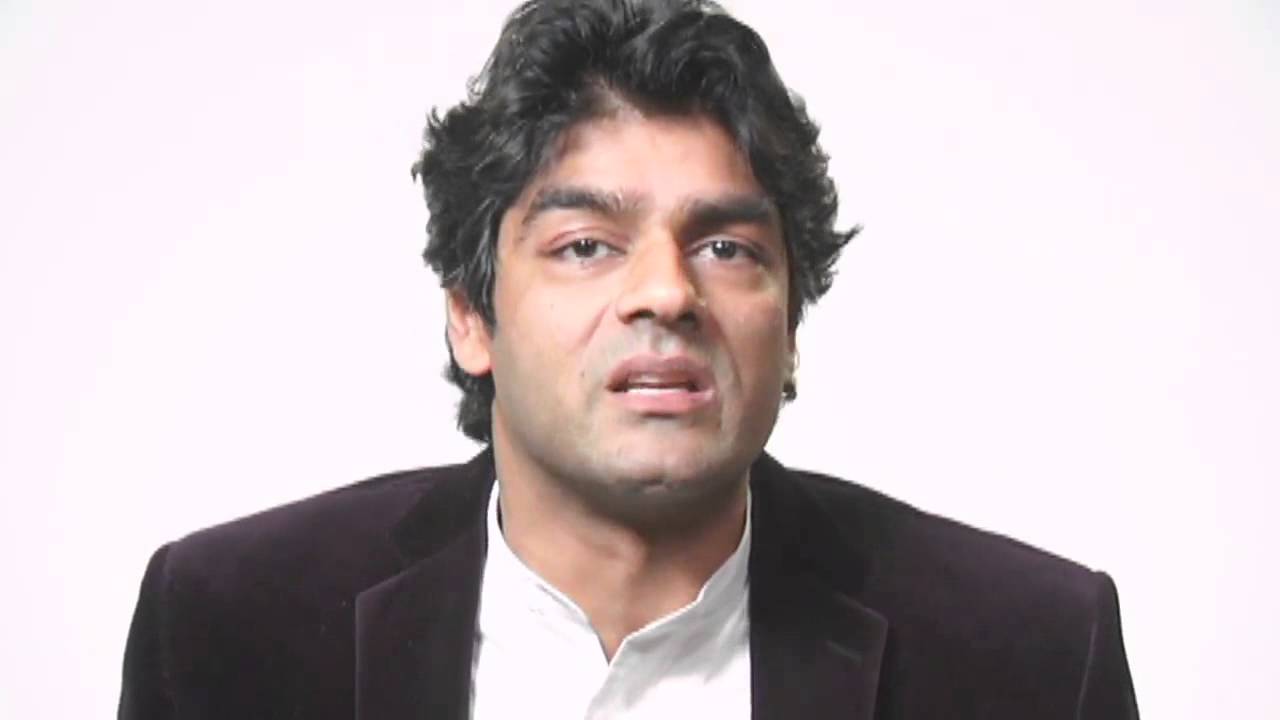
Big Think Interview With Iain Couzin | Big Think
Posted
April 24, 2012
Views
2,335
Likes
32
Comments
1
Engagement
1.41%
April 24, 2012
2,335
32
1
1.41%
Every word spoken in this episode is indexed. Type any phrase to jump straight to the moment it was said.
Type any word or phrase that may have been spoken. Click a result to seek the player to that exact moment.
Try a name, a topic, or a quoted line
You’re on April 24, 2012. Earlier episodes are to the left, later ones to the right — the row keeps loading as you go. Click any card to open it.
 Apr 24, 201223:56Now Playing
Big Think Interview With Iain Couzin
New videos DAILY
Join Big Think Edge for exclusive videos
----------------------------------------------------------------------------------
A conversation with the Princeton University biologist.
----------------------------------------------------------------------------------
Iain Couzin:
Iain Couzin is an Assistant Professor in the Department of Ecology and Evolutionary Biology at Princeton University, where he manages the Couzin Lab. His research focuses on collective behavior and self-organized pattern formation in a variety of biological systems, including fish schools, bird flocks, insect swarms, human crowds, and cellular networks.
----------------------------------------------------------------------------------
TRANSCRIPT:
Question: As an expert on animal collectives, do you consider yourself part of the crowd?
Iain Couzin: Well, I feel myself very much part of the crowd and part of society and sort of, but I'm also susceptible to, you know, being swayed in a similar way to other people. And so one of the fascinating things when we look at nature, when we look at collective behavior in nature, is how prevalent it is, you know, from, you know, looking at ants forming a swarm to, you know, bees, to, you know, fish schools, bird flocks, you know, all around us, and of course, our own human societies. And so it really, what I'm trying to understand and what I'm fascinated by, is how and why natural selection leads to individuals living in societies or living in groups.
Question: Is your favorite band, the Pixies, non-conformist or mainstream?
Iain Couzin: When you're old like me, no, I mean, in the late '80's and the early '90's, the Pixies were revolutionary. They wouldn't have been bands like Nirvana had it not been for the Pixies and, you know, Kurt was one of the first people to say that. You know, they were incredibly influential. And of course, the nice thing about music as well as science, is that things can build upon other things and Pixies had an enormous role to play in that and had a sort of influential, you know, hit me at an influential time in life. So I love them as a band, in fact, I saw them here in New York City just a few weeks ago and it was fantastic. And I was one of the oldest people there! I think the median or mean age was about 22, 23, I was very surprised and very impressed.
Question: What are some of the most surprising behaviors animal groups display?
Iain Couzin: Well, I started working on ants because I was fascinated by how very small animals, you know, with relatively small brains, can live in these large societies. And one of the things I was studying was traffic organization. And so I decided to look at an ant that's literally blind, so we have a case of the blind leading the blind, they're called army ants, they live in Central and South America, and you literally have a million and a half of these blind individuals living together and forming huge swarm raids across the forest floor and collectively able to subdue much larger prey items than themselves, which they rip apart and they bring back to the nest. And what I found was that these ants, even though they're blind, even though they're just interacting locally, would spontaneously form lanes on the trails to minimize congestion.
So whereas we, you know, I just walked through New York City and there's congestion everywhere, these ants have just developed very simple rules to minimize that so they can maximize the flow of resources back to the nest.
Question: How do some animal groups achieve such extraordinary coordination?
Iain Couzin: Well, the ants are exceptional in some respects because they have a very strange genetic relatedness, it's called haploid diploidy, which means that they're more closely related to each other, their sisters, than they would be to their own offspring. And so the workers actually forego reproduction to benefit the colony. And that's quite a special type of evolution because it means that the ant colony itself behaves as some people have described as a super organism. You know, the queen is the productive entity and the workers then work for the benefit of the whole colony. And so there we have some of the most exquisite collective behaviors, because of course, it's in everyone's interests to do so.
Now if look, you know, at the other extreme and say human crowds, we actually get some similar types of patterns. If you were to look above a crowd, sort of unbeknown to you, you actually also spontaneously form lanes. You fall in the slipstream of other individuals walking in the same direction as you.
Read the full transcript at
Sentinel Indexing in Progress
Metadata and chapters are available. Claim extraction for this episode is pending.
All video content is delivered via YouTube embedded players in accordance with the YouTube Terms of Service. Sentinel provides research tools that promote discovery and accountability across political media.