Big Think
@bigthink·8.8M subscribers·10.1K videos
Has Wall Street Captured Washington? | Chrystia Freeland | Big Think
Posted
April 24, 2012
Views
148
Comments
1
Engagement
0.68%
April 24, 2012
148
1
0.68%
Every word spoken in this episode is indexed. Type any phrase to jump straight to the moment it was said.
Type any word or phrase that may have been spoken. Click a result to seek the player to that exact moment.
Try a name, a topic, or a quoted line
You’re on April 24, 2012. Earlier episodes are to the left, later ones to the right — the row keeps loading as you go. Click any card to open it.
 Apr 24, 201211:40Now Playing
Has Wall Street Captured Washington?
New videos DAILY
Join Big Think Edge for exclusive videos
----------------------------------------------------------------------------------
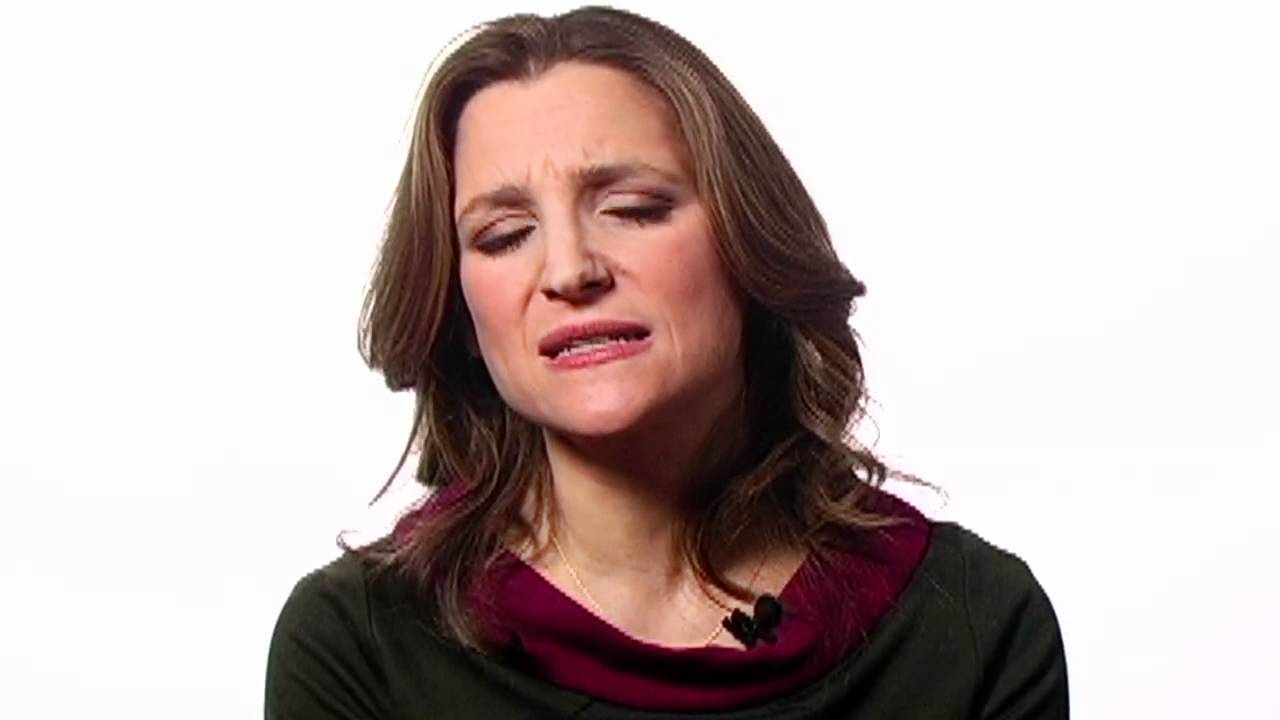
We have collectively stopped thinking about how, when legislation on financial regulation gets hammered out, political economy enters into the picture, says Chrystia Freeland, the U.S. Managing Editor of the Financial Times.
----------------------------------------------------------------------------------
TRANSCRIPT:
Question: Simon Johnson has suggested that policymakers have been captured by the financial industry. Do you agree?
Chrystia Freeland: I think that Simon is a brilliant economist and the essay he wrote in The Atlantic was terrific. As it happens, Simon and I have known each other for a long time and share a background in being involved, me reporting and Simon as an economist, and the collapse of the former Soviet Union and I think that it was that mindset which shaped Simon's intellectual response and offered him a prism through which to look at the relationships between government and the big banks here and see – I think that Simon would absolutely agree that there's not this sort of crony capitalism here that you would see in Russia, but to see some similarities.
One thing that I think has become much clearer in the wake of the crisis, which I think maybe was not so apparent beforehand is the extent to which, intellectually, we were ill equipped to really understand the dynamics of what were going on in the developed western capitalist economies. And I do think that one of the things that happened was, with the collapse of communism, a lot of us, and not just people who had a vested financial interest in this, but also academics, journalists, policymakers, a lot of us really bought into, for the best of possible reasons, the sort of end of history argument. The view that this big economic question, which was the big question of the 20th century of what sort of economic system do you want? A communist system or a capitalist system had been definitively answered by the collapse of the Soviet Union and arguably by China's effective embrace of a market economy as well. And I think that's right. I think that big question has been answered.
But I think what we then collectively tended to do is assume therefore that questions of political economy were no longer so central and that it wasn't so important in thinking about the economic rules of the game to think about those very basic, even sort of Marxist questions, about who benefits and who loses from any particular economic setup. I think what we tended to start thinking; the intellectual toolkit which we used in thinking about economic decisions was really more engineering. And we started to think that the big questions were going to be resolved just by sort of, smart people getting together figuring out what works best. And that was the way, that sort of very pragmatic approach was going to be the way that big economic questions got resolved. I think there is still something to that and certainly when we write editorials in the Financial Times, that's the sort of approach which we try to have.
But what I think we collectively stopped thinking about was – stopped really properly focusing on, was that when these big issues, when legislation about financial regulation, for example, gets actually hammered out by legislators, political economy enters into it. And it's incredibly important to be thinking about which particular interests, which particular companies are going to benefit from this version of the law and which companies are going to benefit from that version of the law. And it would be absolutely naive not to appreciate that's what lobbyists are for. And also naive not to appreciate that as companies become bigger and more powerful they have more resources to throw into that lobbying game. I don't think there is anything wrong with that. That's democratic politics. Everyone ought to, and does, lobby for their own interests.
But I do think that we, as business journalists, and I would also say the community of economists need to factor into the equation a little bit more this notion. This appreciation of the fact that when there are debates, for example, over the regulation off credit derivatives: I think that's the hottest one in this space right now. It's not purely about intellectually opposing points of view, it's also about players on different sides of the debate standing to make or lose a very great deal of money. And we fail our readers, legislators fail their voters when they don’t make clear that this particular way of regulating this particular market will make Bank X, much, much richer and maybe will carry the collective costs.
Read the full transcript at
Sentinel Indexing in Progress
Metadata and chapters are available. Claim extraction for this episode is pending.
All video content is delivered via YouTube embedded players in accordance with the YouTube Terms of Service. Sentinel provides research tools that promote discovery and accountability across political media.