Big Think
@bigthink·8.8M subscribers·10.1K videos
Big Think Interview With Rachel Maines | Big Think
Posted
April 24, 2012
Views
996
Likes
8
Comments
2
Engagement
1.00%
April 24, 2012
996
8
2
1.00%
Every word spoken in this episode is indexed. Type any phrase to jump straight to the moment it was said.
Type any word or phrase that may have been spoken. Click a result to seek the player to that exact moment.
Try a name, a topic, or a quoted line
You’re on April 24, 2012. Earlier episodes are to the left, later ones to the right — the row keeps loading as you go. Click any card to open it.
 Apr 24, 201233:25Now Playing
Big Think Interview With Rachel Maines
New videos DAILY
Join Big Think Edge for exclusive videos
----------------------------------------------------------------------------------
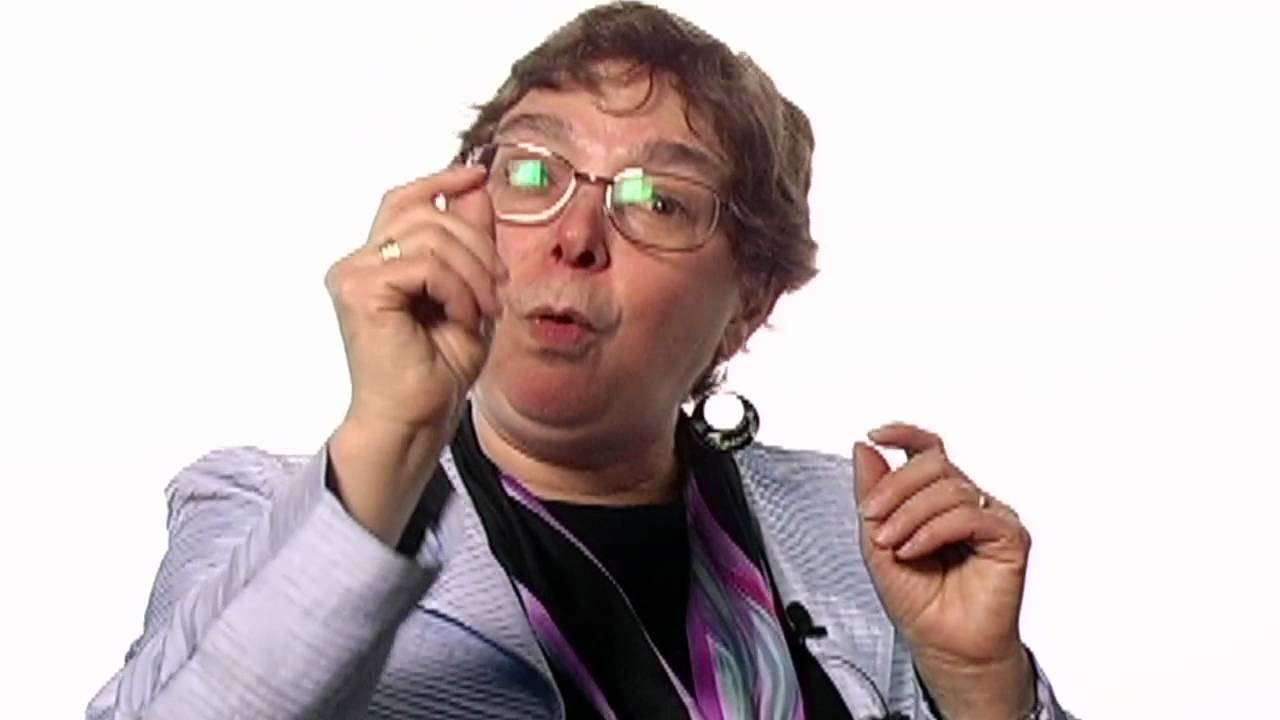
Rachel Maines:
Rachel Maines is a visiting scientist in the Cornell University School of Electrical and Computer Engineering. Her principal research interests lie in the history of technology, especially issues relating to technology and the body, such as sexuality, medicine, technological risk, and injury epidemiology. She is the author of three books: "The Technology of Orgasm: 'Hysteria,' Vibrators, and Women's Sexual Satisfaction" (1999), "Asbestos and Fire: Technological Tradeoffs and the Body at Risk" (2005), and her most recent, "Hedonizing Technologies: Pathways to Pleasure in Hobbies and Leisure," published by Johns Hopkins University Press in 2009.
----------------------------------------------------------------------------------
TRANSCRIPT:
Question: Did researching the vibrator pose professional obstacles for you?
Rachel Maines: I expected it to derail my career, and it did. I have never been like a tenured faculty member anywhere, I've been a professor, now I'm a visiting scientist and I love it, but because, when I first started working on it, it was so controversial, that nobody wanted to touch it. I couldn't even get an article published on it, except for this little magazine associated with the Bakken Library and Museum of Electricity and Life, which is out in Minneapolis, and even they later began to think better of it, but it was too late by then, of course, once you're published, you're published.
But then after working on the thing for like, well, I guess it was more than 20 years, it came out in 1999, which turned out to be the perfect year for it, although I didn't know that, I couldn't have, but, you know, that's when I finished it and it came out and people just went bonkers over it. They even did a “Law & Order Special Victims Unit” thing with a little vignette from my book. I was like, it's not what a historian expects. But it's been quite a trip and now there's been a movie and a play, which is running right now at the Lyceum and I'm told, Scout's honor, a puppet musical.
Question: What did you hope the impact of the study would be?
Rachel Maines: You're going to laugh at me, because what I thought was going to happen was that my colleagues would talk about it a lot and it would be reviewed in the scholarly journals and that's all I expected. I thought maybe a few people might use it as a textbook, but actually it's used as a textbook in about 150 colleges and universities around the world. It's been translated now, I think it's now in three languages, and people just loved my hypothesis, and that's all it is really, is an hypothesis, that women were treated with massage for this disease, hysteria, which has supposedly existed since the time of Hippocrates, 450 B.C., and that the vibrator was invented to treat this disease. Well, people just thought this was such a cool idea that people believe it, that it's like a fact. And I'm like, "It's a hypothesis! It's a hypothesis!" But it doesn't matter, you know? People like it so much they don't want to hear any doubts about it. Eventually somebody will sit down and say, "Now, maybe there's another way to interpret this data," but in the meantime, I'm really kind of enjoying all the attention. As you can imagine.
Question: What was the relationship between so-called hysteria and sexual frustration?
Rachel Maines: Well, hysteria was diagnosed by Hippocrates, as I mentioned, that's 450 B.C., so that's really quite a long time. It didn't really go out of fashion as a diagnosis, well, it was legislated out of existence in 1957 by the American, I think it's the American Psychiatric Association, but there's still a catch-all category for things. Charles Lasegue, who was a 19th century French physician, once said that, "Hysteria was the wastepaper basket of otherwise unemployed medical symptoms." And into this wastepaper basket went all sorts of thing from antiquity until, well, until Freud's time and then he put a new interpretation on it, what hysteria was, and that's the one that we kind of remember most often.
But the disease that, "disease," that is described by Hippocrates and by Thomas Sydenham, who's a, trying to remember, 17th century? He's called the English Hippocrates, a historical British physician, it really sounds like a lot more like sexual frustration, she's nervous, she has trouble sleeping, she has trouble with anxiety, she has these vague feelings of heaviness in the abdomen. And then my two favorite symptoms, you don't see this in every description, but you see them in enough to make you suspicious.
Read the full transcript at
Sentinel Indexing in Progress
Metadata and chapters are available. Claim extraction for this episode is pending.
All video content is delivered via YouTube embedded players in accordance with the YouTube Terms of Service. Sentinel provides research tools that promote discovery and accountability across political media.