Big Think
@bigthink·8.8M subscribers·10.1K videos
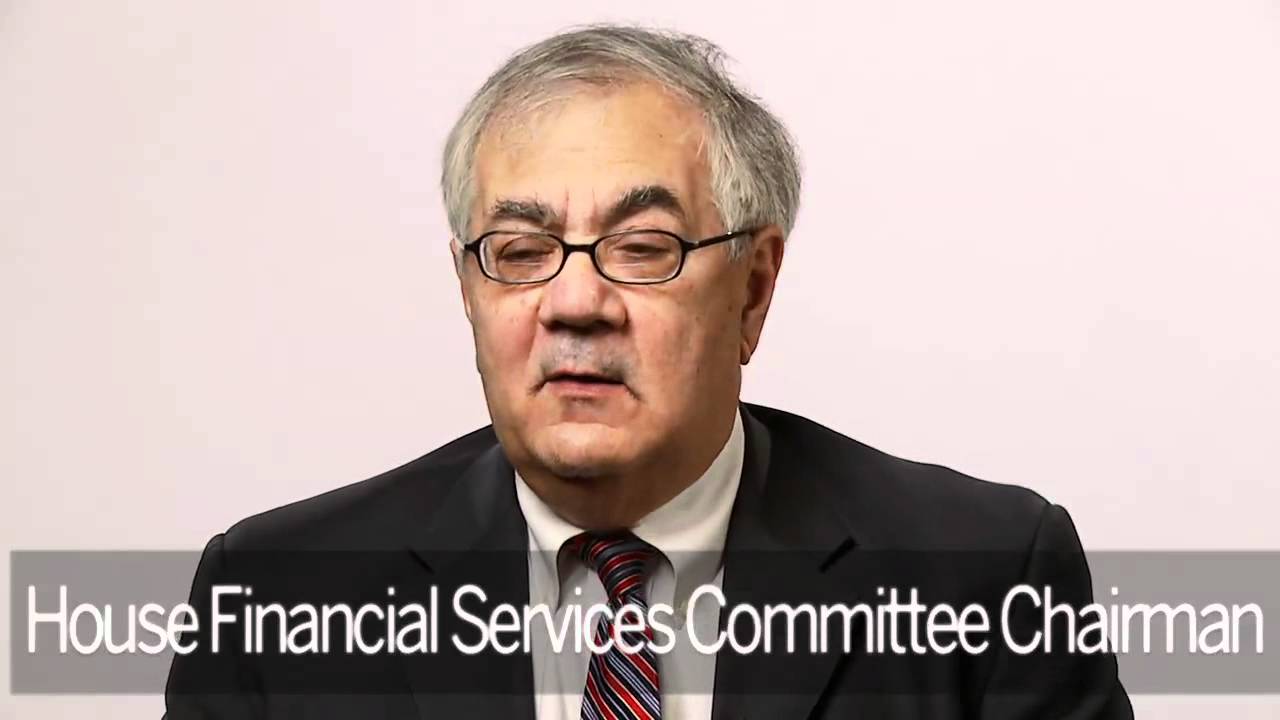
Big Think Interview With Barney Frank | Big Think
Posted
April 24, 2012
Views
1,982
Likes
2
Comments
1
Engagement
0.15%
April 24, 2012
1,982
2
1
0.15%
Every word spoken in this episode is indexed. Type any phrase to jump straight to the moment it was said.
Type any word or phrase that may have been spoken. Click a result to seek the player to that exact moment.
Try a name, a topic, or a quoted line
You’re on April 24, 2012. Earlier episodes are to the left, later ones to the right — the row keeps loading as you go. Click any card to open it.
 Apr 24, 201221:30Now Playing
Big Think Interview With Barney Frank
New videos DAILY
Join Big Think Edge for exclusive videos
----------------------------------------------------------------------------------
A conversation with the House Financial Services Committee Chairman.
----------------------------------------------------------------------------------
Barney Frank:
Barney Frank served as a Massachusetts congressman for 32 years before retiring in 2013. While in Washington, Frank served as Chairman of the Financial Services Committee and was a major leader in the Democratic Party. In 1987 he became the first member of Congress to voluntarily come out as gay. Frank has also served as a Massachusetts State Representative and an assistant to the Mayor of Boston. He has taught at several Boston area universities.
----------------------------------------------------------------------------------
TRANSCRIPT:
Question: When do you expect financial reform to be enacted?
Barney Frank: I'm hoping it'll be done in March. The senators are working hard. Senator Dodd has been doing a very good job, but he does have the problem of the 40 vote barrier. It's unfortunate that the Constitution has been amended de facto to say that you need 60 senators to pass something. I don't think that's the spirit of majority rule, but that's where we are. He's working on it and we've been in touch. I expect him to be able to get a bill done by March. We have the February break coming up and I do think the bills will be close enough. There's a great similarity. We've been working together, working with the administration so that it won't take us more than a week or so to reconcile the two, so I am very hopeful the President will assign that before we break for spring.
Question: What will it look like?
Barney Frank: It's going to be a significant improvement in every area. There will be much tighter regulation of derivatives which caused a great deal of problems. Most importantly, there will be an entity, probably a counsel of the existing Federal Regulators, who will be charged with something that no one was charged with before. Looking out for systemic risk, looking out for that pattern of activity or individual entity that could cause such problems that the whole system would fall. And, we deal with that in two ways in our bill, and I think their bill will be very close.
First of all, we give the regulators the power to stop it. Stop issuing credit default swaps. Greatly increase your capital. In other words, we want to stop people well before they get to the cliff. If for some reason that doesn't work, and some institution does become so indebted that its failure to pay its debts would cause systemic problems, that institution is a balance. There will be no more too big to fail. If you get into trouble, you will fail. As I've said, we will enact death penalties in the Congress, but they'll be for financial institutions that ought to be put to death.
There may be the need for the Federal Government to pay some of the debts if we give them the power to pick and choose. The problem we had in 2008 was that as interpreted by the Bush Administration, Secretary Paulson, Fed Chairman Bernanke, Bush appointees-- they believe that if an institution failed and owes a lot of money in ways that would cause problems, they had to pay everybody or nobody. They had no option. And we say no. The assumption should be pay nobody and if you have to pay to avoid terrible damages, you can do that selectively. And most importantly, the money won't come from the federal taxpayer. It will come from fees raised by the financial institutions themselves.
AIG is the most egregious example of a federal intervention where we probably won't get the money back. It was a Bush Administration decision without any Congressional input. Chairman Bernanke and Secretary Paulson came to us in September of 2008 and said, "We have decided to use powers that the Federal Reserve has-- to use money they control to bail out the people who AIG owed money to." We curtailed that. In the future, the Federal Reserve, if our bill's passed, will not have the power to go in and make payments to a particular company.
An addiction, and this is very important, we have created a Consumer Protection Agency. Right now consumer protection is done almost as an afterthought, frankly, by the bank regulators. The Federal Reserve is the largest holder of consumer statutory powers, consumer regulatory powers. They don't focus on that. Alan Greenspan, in particular, didn't believe in it as a philosophy. He thought the market would take care of everything. To his credit, he's admitted that was wrong. We create a separate Consumer Financial Protection Agency.
Read the full transcript at
Sentinel Indexing in Progress
Metadata and chapters are available. Claim extraction for this episode is pending.
All video content is delivered via YouTube embedded players in accordance with the YouTube Terms of Service. Sentinel provides research tools that promote discovery and accountability across political media.