Big Think
@bigthink·8.8M subscribers·10.1K videos
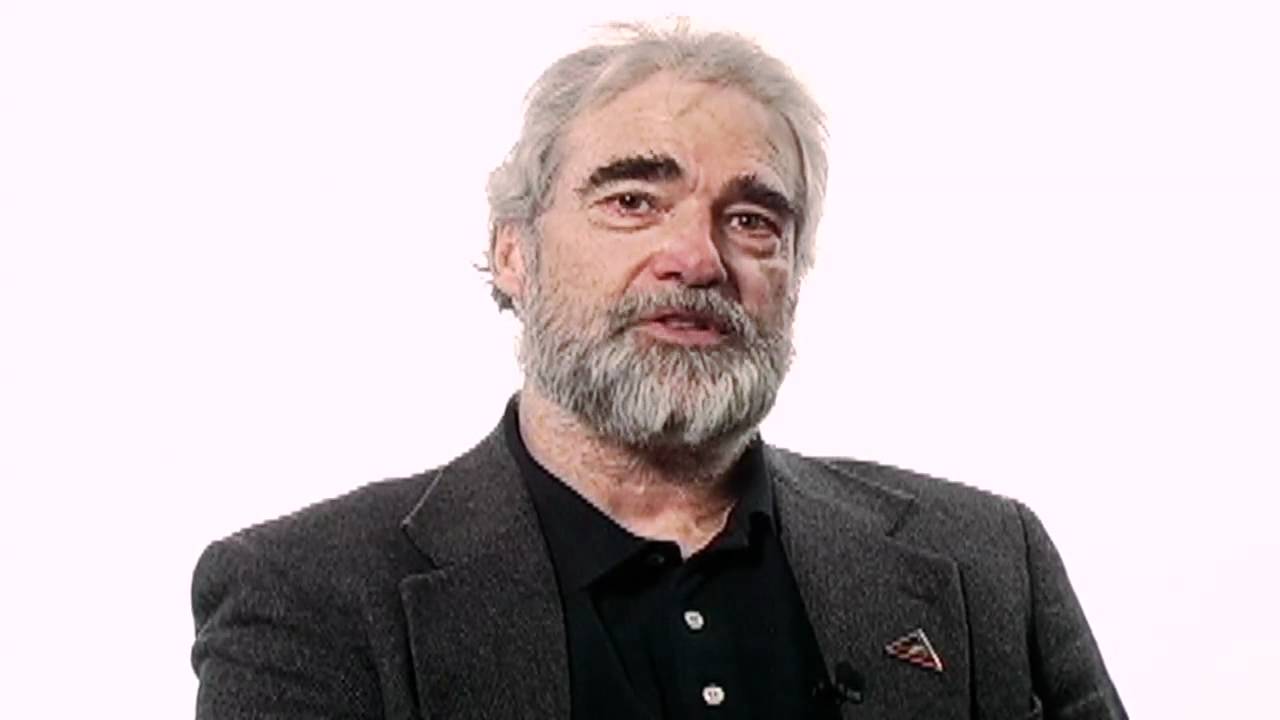
Big Think Interview With Peter Ward | Big Think
Posted
April 24, 2012
Views
8,736
Likes
168
Comments
24
Engagement
2.20%
April 24, 2012
8,736
168
24
2.20%
Every word spoken in this episode is indexed. Type any phrase to jump straight to the moment it was said.
Type any word or phrase that may have been spoken. Click a result to seek the player to that exact moment.
Try a name, a topic, or a quoted line
You’re on April 24, 2012. Earlier episodes are to the left, later ones to the right — the row keeps loading as you go. Click any card to open it.
 Apr 24, 201230:29Now Playing
Big Think Interview With Peter Ward
New videos DAILY
Join Big Think Edge for exclusive videos
----------------------------------------------------------------------------------
An interview with the biologist and paleontologist at the University of Washington in Seattle.
----------------------------------------------------------------------------------
Peter Ward:
Peter Ward conducts his research within The Environment Institute's Sprigg Geobiolgy Centre at the University of Adelaide.
Peter Ward has been active in Paleontology, Biology, and more recently, Astrobiology for more than 40 years. Since his Ph.D. in 1976, Ward has published more than 140 scientific papers dealing with paleontological, zoological, and astronomical topics.
He is an acknowledged world expert on mass extinctions and the role of extraterrestrial impacts on Earth. Ward was the Principal Investigator of the University of Washington node of the NASA Astrobiology Institute from 2001-2006, and in that capacity led a team of over 40 scientists and students. His career was profiled by the Pulitzer Prize winning reporter William Dietrich in The Seattle Times article "Prophet, Populist, Poet of Science."
Peter has written a memoir of his research on the Nautilus for Nautilus magazine's "Ingenious" feature entitled "Nautilus and me. My wonderful, dangerous life with the amazing Nautilus."
His books include the best-selling "Rare Earth: Why Complex Life Is Uncommon in the Universe" (co-author Donald Brownlee, 2000), "Under a Green Sky: Global Warming, the Mass Extinctions of the Past, and What They Can Tell Us About Our Future" (2007), and "The Medea Hypothesis: Is Life on Earth Ultimately Self-Destructive?" (2009).
----------------------------------------------------------------------------------
TRANSCRIPT:
Peter Ward: Peter Ward, W-A-R-D. Department of Geology and Department of Biology at the University of Washington in Seattle.
Question: Based on your findings in Antarctica, how do you rnassess the future of the planet?
Peter Ward: Well, the earth has certainly gone through a lot rnof hot times and cold times back and forth, and forth and back. And rnwhat I do is study deep time by looking at CO2 levels and relative rntemperatures and we are coming out of a cold time and moving into a hot rntime. However, for this particular time in history, we should be movingrn back into a cold time.
If we take the entire ice ages in the last 2 ½ million years, we’ve rnbeen in a 10,000 year calm of warmth, and it’s time to go cold again, rnand yet it doesn’t seem to be in our cards because of all the carbon rndioxide we have put into the system. In fact, we are now at levels thatrn the world has not seen for the last 40 million years and we will soon rnbe at carbon dioxide levels that were 100 million years ago when we had arn true hothouse world.
So, the game has been changed.
Question: What specific research did you conduct during rnyour Antarctic expedition?
Peter Ward: Our Antarctic work is to look at the nature of rnglobal temperatures at the end of the Cretaceous Period. Cretaceous rnended 65 million years ago. The **** end, and I do believe this is thatrn large asteroid hit us in the Yucatan Peninsula causing the mass rnextinction. But we’re trying to see what happened in the 10 million rnyears prior to that because we know at that time; there was a gigantic rnvolcanic event in India. These are a big flood basalts they’re called. rn It’s not a single point source volcano, but imagine enormous areas of rnthe earth, creeping lava coming out of the cracks and flowing slowly allrn around scaring dinosaurs to death, probably running in front of this rnstuff, probably killed a few dinosaurs, but what it did do was vent an rnenormous quantity of volcanic carbon dioxide and other gasses into the rnatmosphere.
Now, we wanted to know, was there any precursor to the impact. Was rnthe impact just the coup de grace coming on an already affected world rnand it does seem to be that? And the best place to look at this – the rnbest place to understand anything about global warming isn’t at the rntropics. That’s where temperatures change the least, but it’s at the rnpoles where you have the greatest absolute change. So, we found a ten rndegrees centigrade change from colder to warmer in the last two to threern million years prior to the impact itself. The place really did warm rnup, and fast, from a lot of CO2 in the atmosphere. Now, there’s rnobviously parallels to what’s going on in the world today.
Question: What was your methodology in measuring CO2 levelsrn in Antarctica?
Read the full transcript at
Sentinel Indexing in Progress
Metadata and chapters are available. Claim extraction for this episode is pending.
All video content is delivered via YouTube embedded players in accordance with the YouTube Terms of Service. Sentinel provides research tools that promote discovery and accountability across political media.