Big Think
@bigthink·8.8M subscribers·10.1K videos
Big Think Interview With Benjamin Jealous | Big Think
Posted
April 24, 2012
Views
1,230
Likes
21
Comments
1
Engagement
1.79%
April 24, 2012
1,230
21
1
1.79%
Every word spoken in this episode is indexed. Type any phrase to jump straight to the moment it was said.
Type any word or phrase that may have been spoken. Click a result to seek the player to that exact moment.
Try a name, a topic, or a quoted line
 42:09Now Playing
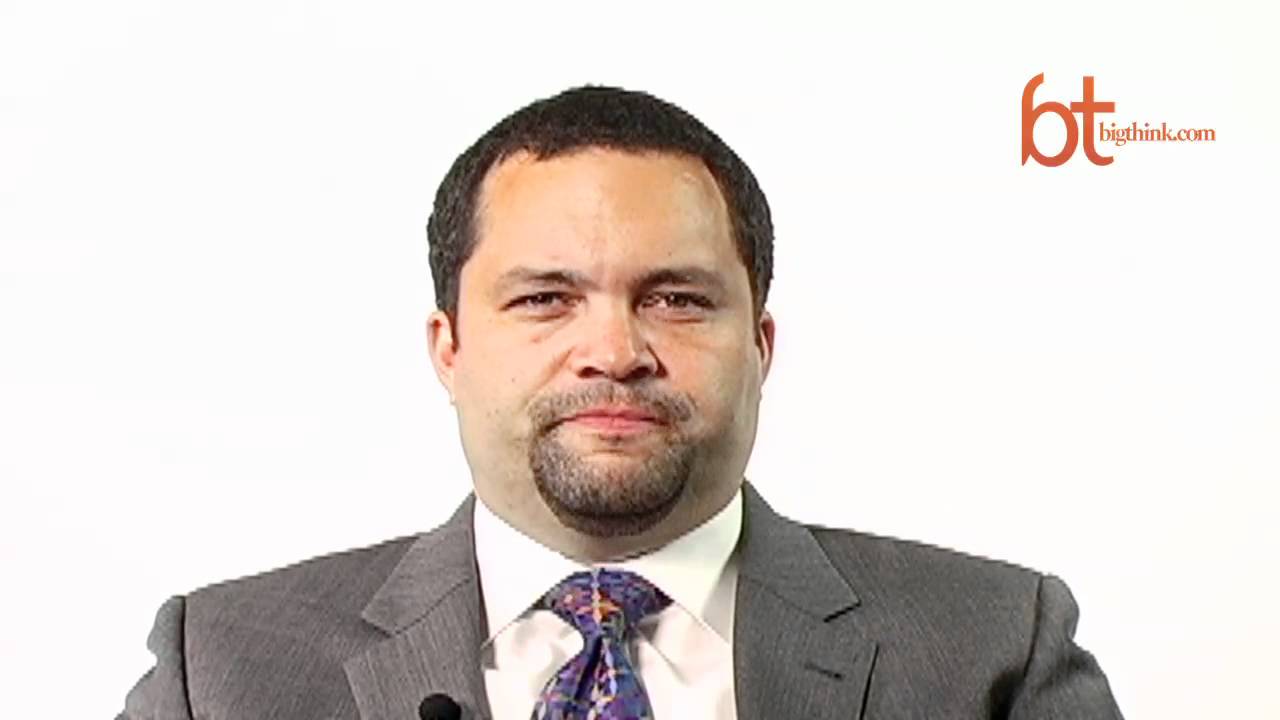
Big Think Interview With Benjamin Jealous
New videos DAILY
Join Big Think Edge for exclusive videos
----------------------------------------------------------------------------------
An interview with the president of the NAACP.
----------------------------------------------------------------------------------
Benjamin Todd Jealous:
Benjamin Todd Jealous is the 17th President and Chief Executive Officer of the NAACP and rnthe youngest person to hold this position in the organization’s nearly rn100-year history.rn During his career, he has served as president of the Rosenberg rnFoundation,rn a private independent institution that funds civil and human rights rnadvocacy to benefit California's working families; Director of the U.S. Human Rights Program at Amnesty International, where he led efforts to pass federal legislation against prison rnrape, rebuild public consensus against racial profiling in the wake of rnthe September 2001 terrorist attacks, and expose the widespread rnsentencing of children to life without the possibility of parole; and Executive Director of the National Newspaper rnPublishers Association (NNPA), a federation of more than 200 black community newspapers.rnWhile at the NNPA, hern rebuilt its 90-year old national news service and launched a Web-based rn initiative that more than doubled the number of black newspapers rnpublishing online. rn
In civic life, Jealous is a board member of the California rnCouncil for the Humanities and the Association of Black Foundation rnExecutives, as well as a member of the Asia Society. He is married to rnLia Epperson Jealous, a professor of constitutional law and former civilrn rights litigator with the NAACP Legal Defense and Educational Fund.
----------------------------------------------------------------------------------
TRANSCRIPT:
Ben Jealous: Myrnname is Ben Jealous, I'm President of NAACP.
Question: What firstrnmotivated you to pursue a career in social justice?
Ben Jealous:rnYeah, my parents were both active in the 1950's and '60's, and my grandparentsrnas well. And I was raised in arnfamily where we were taught that the best thing you could do with your life wasrnto really kind of push the cause of progress and justice and human rights inrnthis country forward.
Question: What forms ofrndiscrimination have you experienced personally?
Ben Jealous:rnYeah, growing up black in the States, even in the 1970's, meant that you werernsubjected. And probably the thingsrnprobably the most glaring to me was I think both the way I was treated as arnchild in stores, like the local five and dime. I grew up in a town that didn't have many black folks, andrnit was pretty clear that the black kids were treated different than the blackrnkids; more suspect, more shop owners were afraid we might steal something. And also the white people responded tornmy parents’ marriage. My dad'srnwhite and my mom's black, and it wasn't very socially acceptable. When I was born it would have beenrnlegal for just over five years. rnSo, it was a different time.
Question: In what waysrndoes the perspective of your generation influence your NAACP leadership?
Ben Jealous: Yournknow, my generation, they used to refer to us as the "children of therndream." The kids whornwere born just as and just after the big civil rights victories were born. And we were told when we were comingrnup, look, all the big victories have been won. Your job, young man, or young woman, is to just go out andrnplay hard by the rules, because the rules are now fair. And that worked well for many ofrnus. I mean, I went to greatrnuniversities and won great scholarships and all that stuff. But for many of us, it didn't. I mean, we came of age as a generationrnjust in time to find ourselves the most murdered generation in this country andrnthe most incarcerated generation on the planet. And that's the shadow, if you will, of the shining victoriesrnof the 1960's.
Question: How does thernolder generation feel about your generation’s handling of civil rights issues?
Read the full transcript at
Sentinel Indexing in Progress
Metadata and chapters are available. Claim extraction for this episode is pending.
All video content is delivered via YouTube embedded players in accordance with the YouTube Terms of Service. Sentinel provides research tools that promote discovery and accountability across political media.